Trauma-Informed Individual Counseling in Farmington Hills

Available in-person and virtually across Michigan.

Deep trauma healing begins with safety, not force.

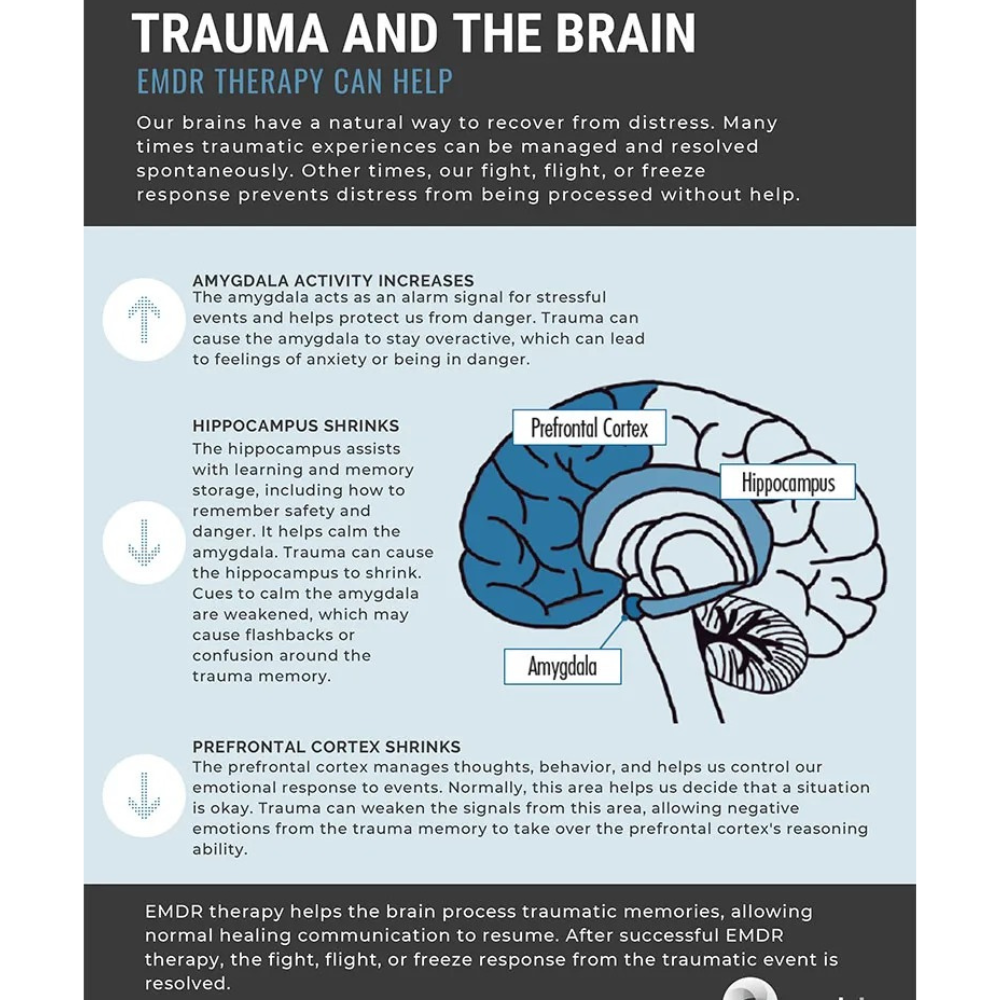
Trauma does not live only in your memories — It lives in your body, your nervous system, and the parts of you that stepped in to protect you

When life felt too overwhelming, too fast, too unsafe, or too lonely. 

Many people believe trauma is only about the event. But trauma is actually about the imprint — The internal shifts that happen when your system has to survive more than it could process. 

This page will help you understand:

  • Why you react the way you do 
  • How trauma shapes your body and emotions 
  • Why triggers, shutdown, or overwhelm happen 
  • The difference between trauma, Post-Traumatic Stress, and Complex Post-Traumatic Stress
  • Why talk therapy alone often isn’t enough 
  • How healing truly works 

*Your reactions make sense. Your body has been trying to protect you.*

Trauma is not defined by the event — It is defined by how your nervous system experienced that event. 

Trauma occurs when something is:
  • Too much 
  • Too fast 
  • Too sudden 
  • Too overwhelming 
  • Too unsafe 
  • Too unsupported 

Trauma is what happens inside you

Not what happened outside you.

It is the internal experience of:

  • Shock 
  • Fear 
  • Helplessness
  • Powerlessness 
  • Disconnection 
  • Emotional aloneness 

*Trauma is not what happened — It’s what stayed in your body afterward.*

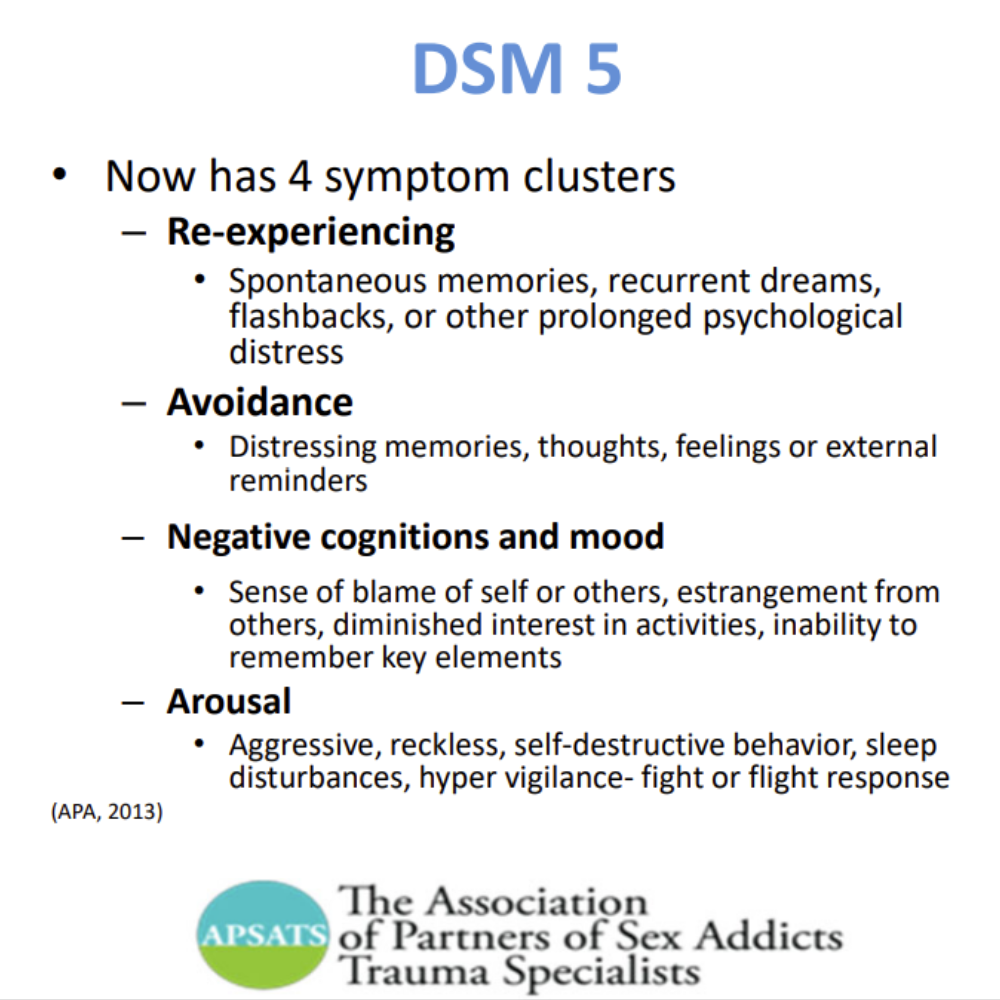
  • Emotional overwhelm 
  • Panic attacks 
  • Numbness or shutdown 
  • Anxiety 
  • Avoidance 
  • Repetitive relational patterns 
  • Loss of identity 
  • Chronic stress 
  • Self-abandonment 
  • Hypervigilance 
  • Fear of intimacy 
  • Shame and self-blame 
  • Dissociation 
  • Body-based memories 

*You are not “too much.” You are carrying too much — And you don’t have to carry it alone.*

Trauma is stored in:

  • Body 
  • Subconscious 
  • Nervous system 
  • Emotional memory 
  • Protective parts 
Trauma heals when:
  • The body feels safe again 
  • The nervous system can regulate 
  • Old memories lose their charge 
  • Emotional parts feel seen and supported 
Trauma healing is:
  • Somatic 
  • Relational 
  • Experiential 
  • Nervous-system-informed 

*Trauma is not cognitive — It is embodied. Healing must be, too.*

When your body senses danger, it activates survival states: 

Fight

Anger, irritability, frustration

Flight

Anxiety, overthinking, restlessness

Freeze

Numbness, shutdown, dissociation

Fawn

People-pleasing, self-abandonment

These are not personality traits.

They are nervous-system strategies.

When trauma is unresolved, your nervous system can get stuck in survival mode, even when you are technically “safe.”

Common experiences include: 

Body Sensations:
  • Tight chest 
  • Knots in the stomach 
  • Chronic pain 
  • Exhaustion 
  • Sensory overwhelm 
Relational Patterns:
  • Avoidance 
  • Fear of abandonment 
  • Over-attachment 
  • Attracting emotionally unsafe partners 
Emotional Experiences:
  • Shame 
  • Fear 
  • Rage 
  • Emotional flashbacks 
  • Disconnection 
Thought Patterns:
  • Overthinking 
  • Feeling “out of body” 
  • Difficulty concentrating 
  • Spiraling or mental shutdown 

*Your body remembers what your mind had to forget.*

Not all trauma looks the same — But all trauma matters

Because the nervous system responds to overwhelm, not the size of the event. 

Big “T” Trauma 

Overt, recognizable events such as: 

  • Assault
  • Car accidents 
  • Medical emergencies
  • Sudden loss 
  • Natural disasters 
  • Acute danger 

Little “t” trauma 

Subtle, chronic, or relational experiences that shape your identity and self-worth, such as:

  • Feeling unseen or unimportant 
  • Being criticized or compared 
  • Emotional neglect 
  • Rejection or abandonment 
  • Never feeling “good enough” 
  • Growing up without consistent support 
  • Betrayal or repeated relational wounding 

The body does not distinguish between the two.  Both can create emotional patterns, survival strategies, and nervous-system responses that continue long after the moment has passed.

*If it overwhelmed your system, it was trauma — Regardless of how “big” or “small” it looked.*

Not all trauma is the same.

Post-Traumatic Stress often comes from:
  • A single overwhelming event 
  • A crisis 
  • A sudden loss 
  • A medical event 
  • An accident 
  • Assault or acute danger 
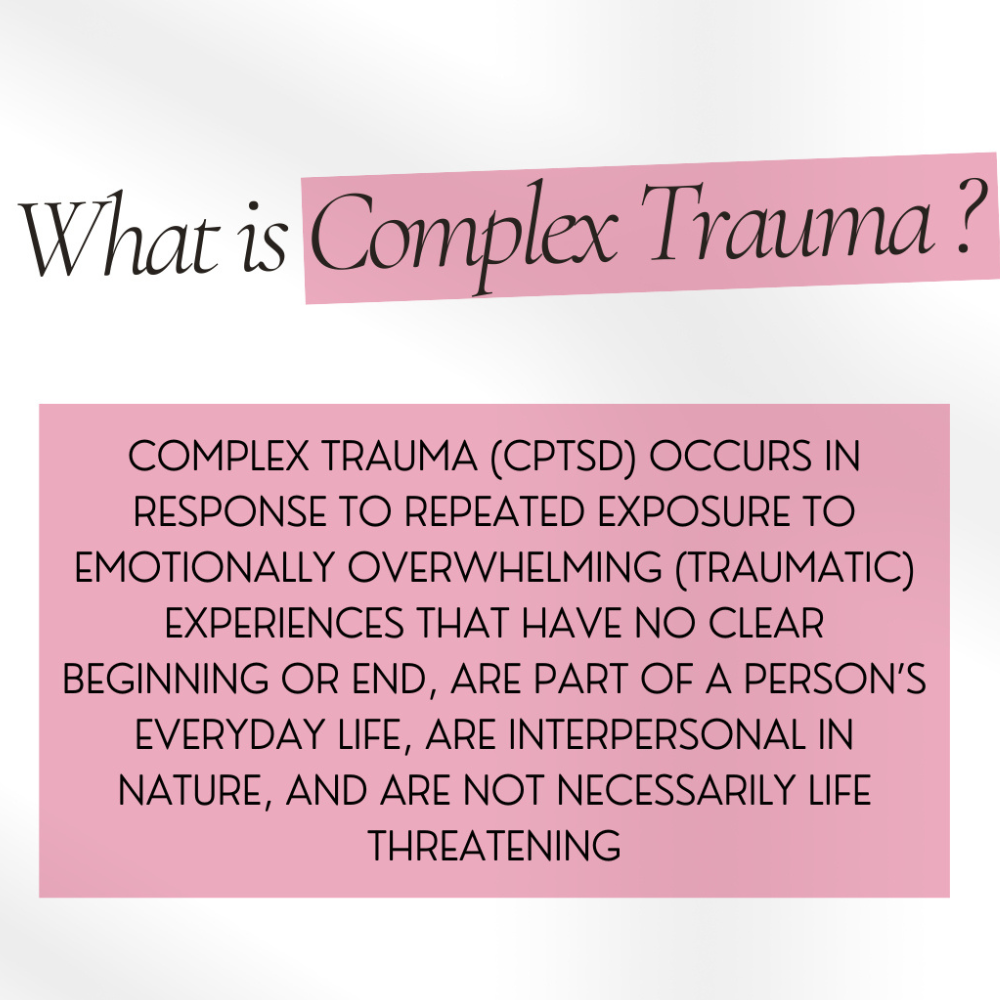
Complex Post-Traumatic Stress comes from:
  • Childhood emotional neglect 
  • Unpredictable or unsafe caregivers 
  • Chronic criticism or shaming 
  • Abandonment 
  • Parentification 
  • Emotional abuse 
  • Betrayal trauma 
  • Growing up with an addicted or unstable parent 
  • Relational trauma across years 

Post-Traumatic Stress

Affects


The memory of what happened. 

Complex Post-Traumatic Stress

Affects


The beliefsidentityrelationships, and nervous system formed in that environment. 

*Post-Traumatic Stress is about the incident.

Complex Post-Traumatic Stress is about the environment.

Both are real, and both are treatable.*

How We Help You Heal From Trauma

*Your trauma has many layers — So your healing deserves many pathways.*

You don’t have to understand everything before taking the first step. 

Your nervous system is already asking for relief — And we’re here to respond with compassion, clarity, and expertise. 

follow us on

If you are in crisis or experiencing an emergency, please call 911 or your local emergency services, or visit the nearest emergency room.

Thrive Beyond Trauma Counseling does not provide crisis or emergency services.

Scroll to top