Up until now, everything you’ve felt has been the body’s survival response. This is where the work shifts — from protection to rebuilding. This is where neuroscience and therapy meet.
Where your body begins to understand:
“You are safe again.”
“You are allowed to breathe.”
“You are allowed to choose.”
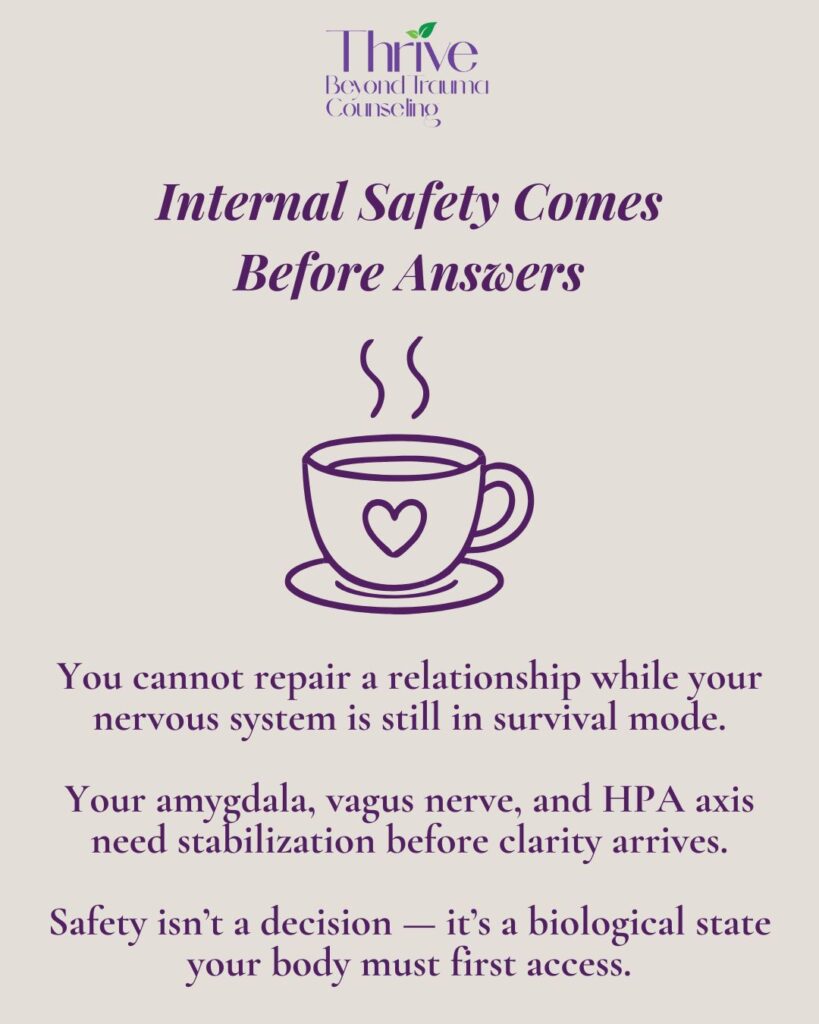
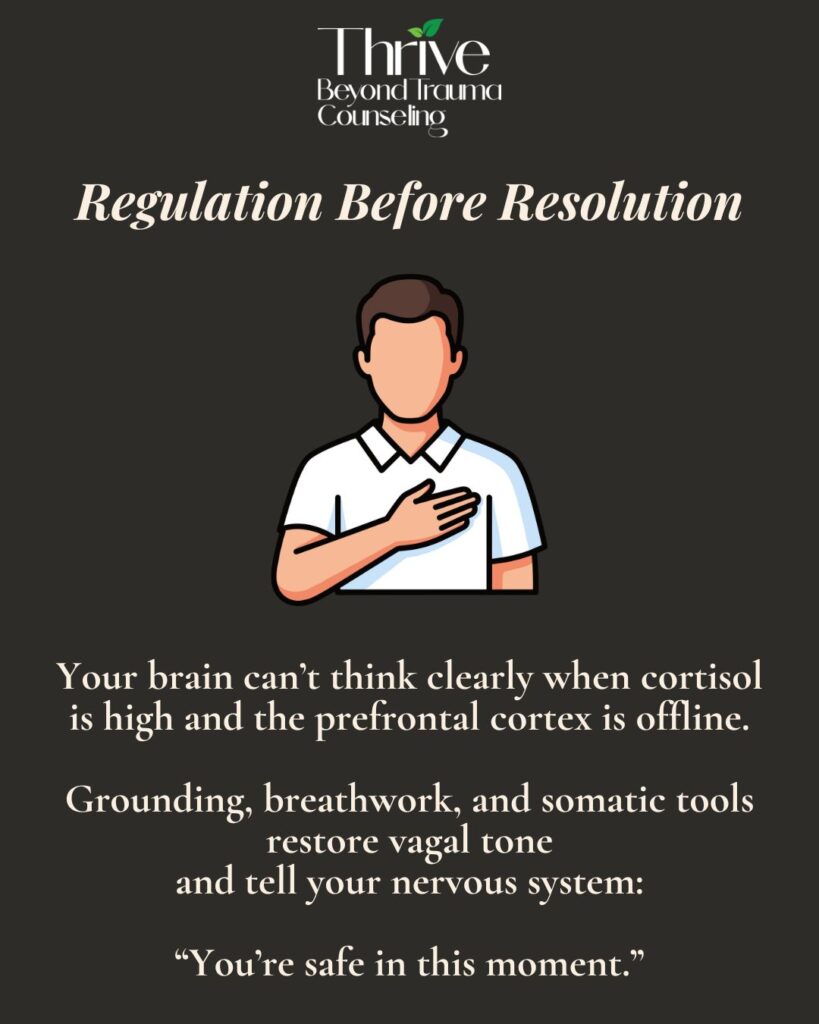
You cannot repair a relationship while your nervous system is still bracing for impact. Therapeutic stabilization is the first layer of healing. Grounding, pacing, containment, safe sessions, predictable structure — these cues begin calming your overactive amygdala and restoring vagal tone.
For many, this phase feels like a homecoming:
slowly remembering what safety feels like inside your own body.
After betrayal, the question becomes:
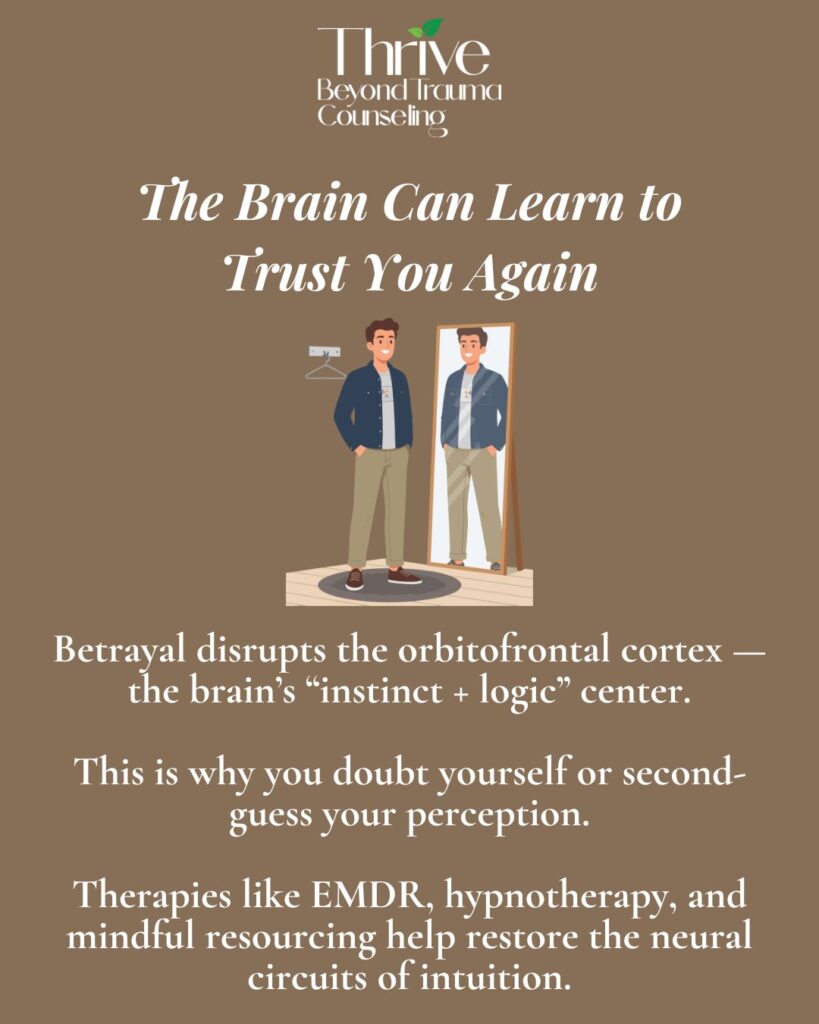
“How do I trust my perception again?”
EMDR, breathwork, hypnotherapy, and neural resourcing reconnect the prefrontal cortex and the emotional centers of the brain. You begin to interpret cues accurately again — not through fear, not through hypervigilance, but through clarity.
Self-trust is not regained through logic. It is rebuilt through regulation.
Rebuilding a relationship requires two regulated nervous systems. Not two perfect people. Two regulated systems. Without that, communication becomes collapse, conflict, or shutdown.
CCPS and CSAT frameworks help couples move through:
Reconnection is not a decision. It is a capacity — one that only emerges when your brain no longer interprets your partner as a threat.
After betrayal, physical closeness can feel dangerous — even when you want it. Your body remembers hurt faster than it remembers comfort.
We rebuild intimacy with micro-moments:
• consent-based touch
• hand-holding exercises
• co-regulated breathing
• somatic attunement
• gentle exposure to closeness
Not forcing connection. Letting the body relearn safety.
Shame shuts down the brain’s capacity for connection.
Self-compassion reopens it.
Every time you speak to yourself gently, you activate oxytocin, serotonin, and regulation pathways that betrayal trauma had shut off.
Self-compassion is not soft.
It is biochemical rewiring.
You don’t “go back” to who you were. You return to yourself with deeper boundaries, sharper intuition, softer self-regard, and a more honest relationship with truth.
The rebuilt you is not smaller.
You’re steadier.
Clearer.
More grounded.
More you.
Healing doesn’t look like perfection. It looks like choice.
Choice is what emerges when the amygdala calms, vagal tone rises, and the prefrontal cortex comes back online. Choice is the moment you:
pause instead of panic,
respond instead of react,
breathe instead of brace.
That pause is neuroscience.
That pause is healing.
That pause is power.
If any part of this feels familiar, breathe. Your body is not betraying you. It is protecting you exactly as it should.
Every numb moment.
Every angry outburst.
Every hypervigilant instinct.
Every longing for what was good.
These are survival signals — not flaws.
At Thrive Beyond Trauma Counseling, we specialize in helping betrayed partners rebuild internal safety, self-trust, and clarity — while supporting the partner in recovery through CSAT and relational healing.
You don’t have to decide the future of your relationship today. Right now, your only job is to stay with yourself :
your instincts,
your boundaries,
your truth,
your breath.
Because this story doesn’t end with what broke you. It continues with what you rebuild :
one breath, one boundary, one rewired neuron, one moment of safety at a time.