The Partner in Recovery

How Their Healing Impacts Yours

Healing after betrayal is not a single journey; it is two parallel processes unfolding at the same time. Yours and your partner’s. And while both matter deeply, they do not move at the same pace, in the same way, or through the same nervous system pathways.

This is where many couples feel stuck. Because one partner may be working hard, showing change, taking accountability, while the other still feels unsafe, activated, or emotionally overwhelmed. This can feel confusing, even discouraging. But what’s important to understand is this: recovery and safety are not the same thing.

Why Our Approach Works for Both Partners

At Thrive Beyond Trauma Counseling, we don’t begin with “fixing the relationship.” We begin with stabilizing both individuals. Each partner carries their own nervous system response; one shaped by trauma, the other by shame, avoidance, or compulsive coping patterns. Trying to repair the relationship without addressing these internal systems often leads to repeated rupture.

Instead, we treat both nervous systems individually and then guide couples toward safe reconnection through trauma-informed pacing. Because sustainable healing is not built on urgency; it is built on science, compassion, and structure.

Recovery Needs Structure, Not Willpower

One of the biggest misconceptions about addiction recovery is that it is about stopping behavior through discipline. In reality, recovery requires a structured, evidence-based approach. We integrate CSAT-level addiction treatment, relapse prevention, accountability frameworks, and empathy-building work. Alongside this, we focus on nervous system stabilization; helping individuals regulate emotions, tolerate discomfort, and build internal safety. Because the goal is not just to stop harmful patterns; but to become a safe, present, and emotionally attuned partner.

Your Healing Comes First

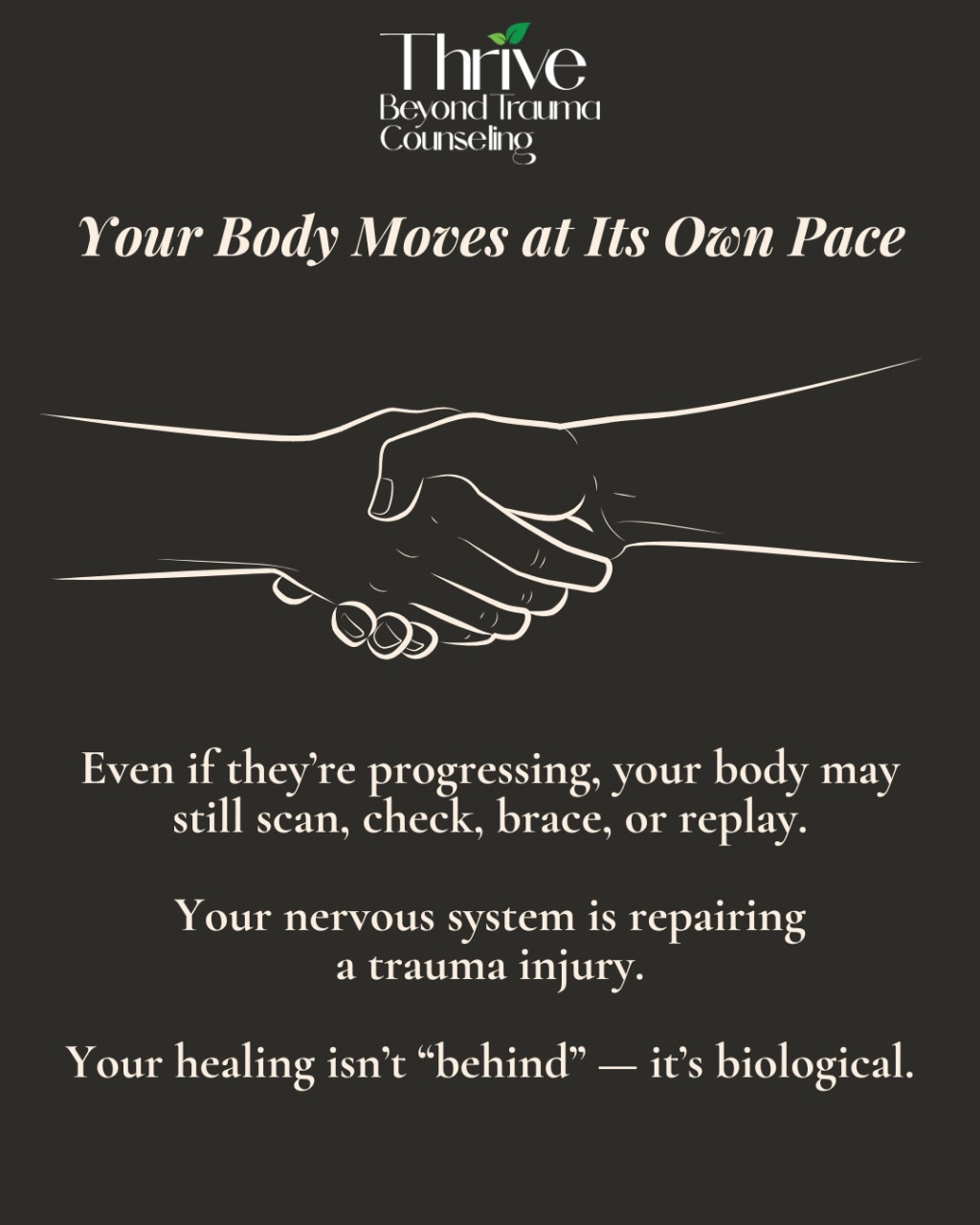
For the betrayed partner, healing is not dependent on how quickly the other person changes. Your body holds the impact of betrayal as a trauma response, not just a relational injury. This is why even when your partner begins to show progress, your body may still feel unsafe. At Thrive, we support this process through CCPS-informed betrayal trauma treatment, EMDR for nervous system repair, somatic grounding, and breathwork. The focus is simple but powerful: helping your body feel safe again; independent of your partner’s timeline.

Consistency, Not Perfection

Healing does not look like flawless behavior. It looks like:

  • Accountability
  • Emotional presence
  • Transparency
  • Empathy
  • Structure

Recovery is not about getting everything right. It is about showing up consistently, even when it’s uncomfortable. Because true healing is slow, layered, and built through repetition; not perfection.

Your Journey Is Separate, And Sacred

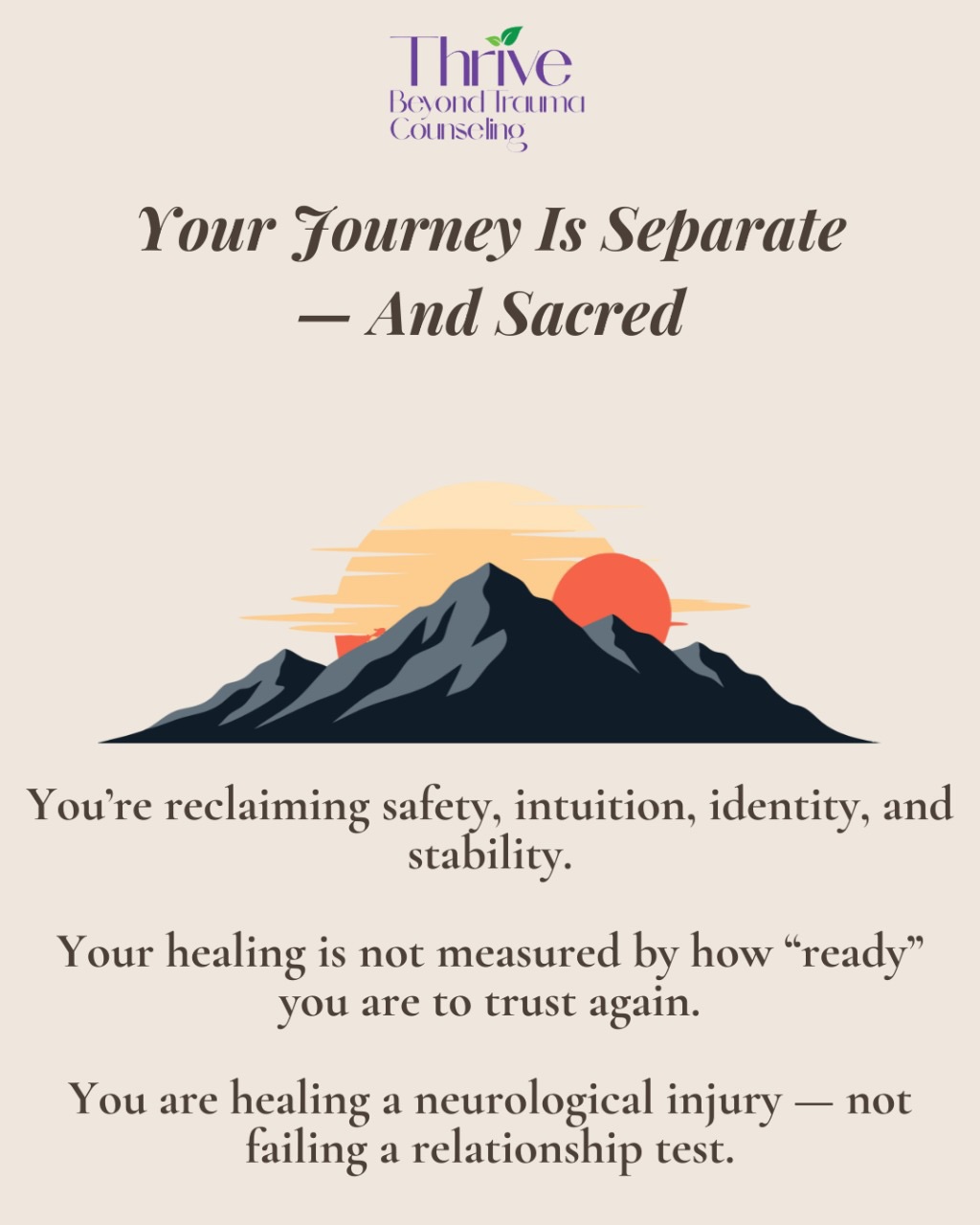
One of the most important shifts in this process is understanding that your healing is your own. It is not measured by how quickly you can trust again. It is not dependent on your partner’s progress. You are not “falling behind.” You are healing a neurological injury, not failing a relationship test. This means reclaiming your sense of safety, identity, intuition, and emotional stability; on your own terms.

Why Positive Change Can Still Feel Painful

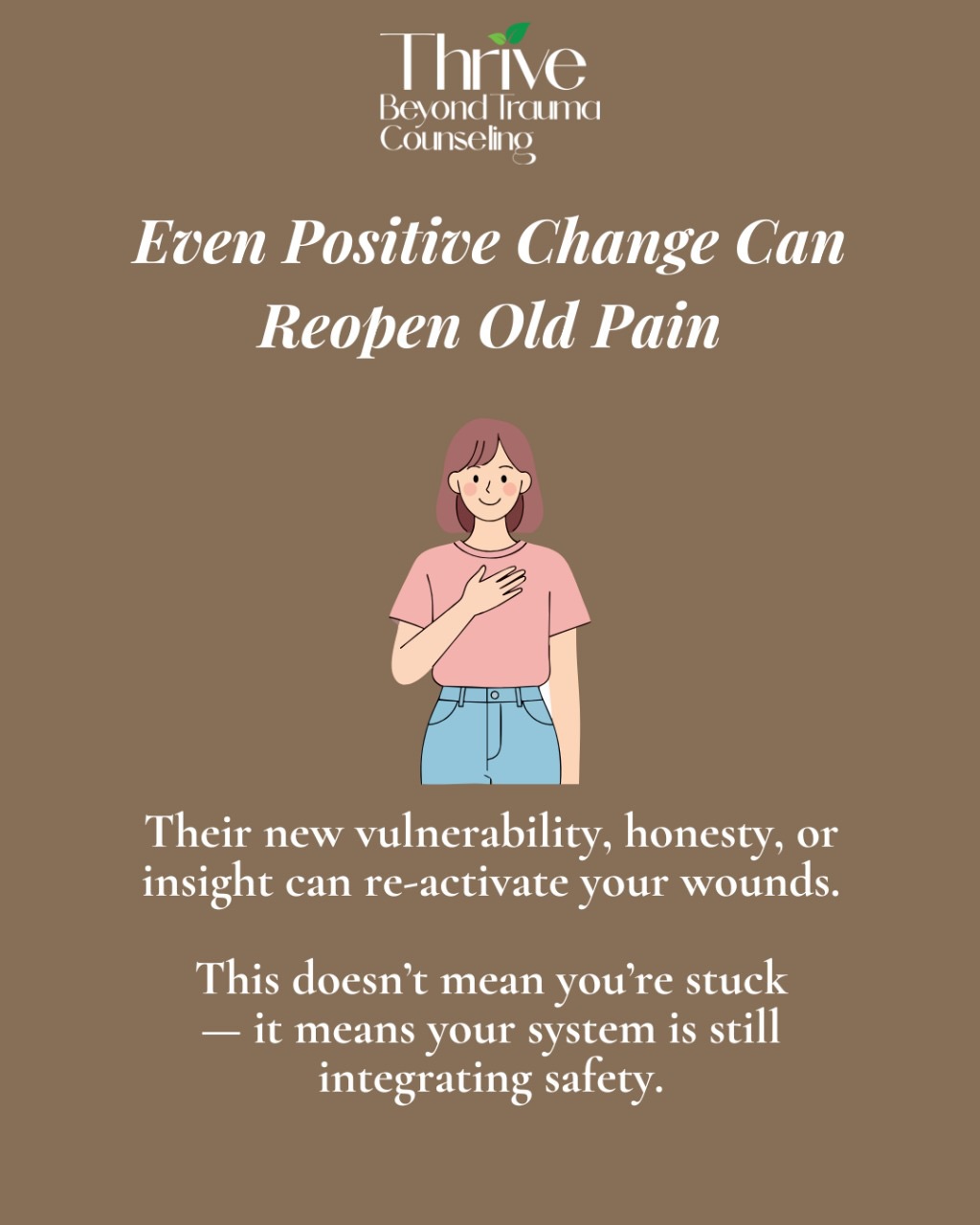
A confusing but very real part of recovery is this: even when your partner begins to show honesty, vulnerability, or insight, it can still trigger pain. This does not mean healing isn’t happening. It means your nervous system is still processing and integrating safety. Trauma does not resolve the moment behavior changes. The body needs time to learn that the threat is no longer present. Until then, reactions like hypervigilance, emotional waves, or doubt are completely valid.

Why Positive Change Can Still Feel Painful

A confusing but very real part of recovery is this: even when your partner begins to show honesty, vulnerability, or insight, it can still trigger pain. This does not mean healing isn’t happening. It means your nervous system is still processing and integrating safety. Trauma does not resolve the moment behavior changes. The body needs time to learn that the threat is no longer present. Until then, reactions like hypervigilance, emotional waves, or doubt are completely valid.

When Clarity Feels Overwhelming for Them

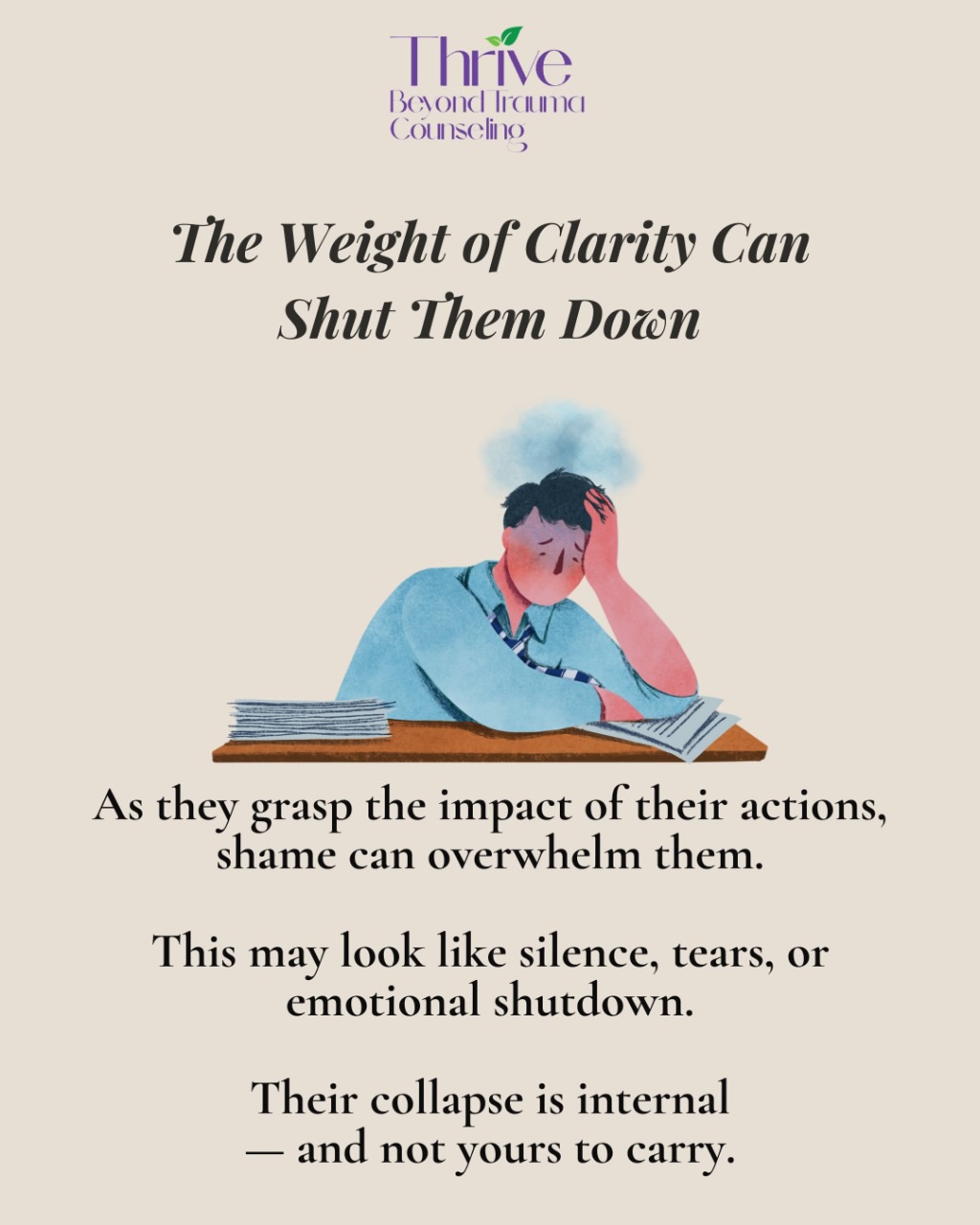
On the other side, as the partner in recovery begins to understand the impact of their actions, they may experience intense shame. This can show up as:

  • Withdrawal
  • Silence
  • Emotional shutdown
  • Avoidance

This is not indifference. It is often a shame-based collapseAnd it’s important to understand: their internal experience is theirs to work through. It is not yours to carry.

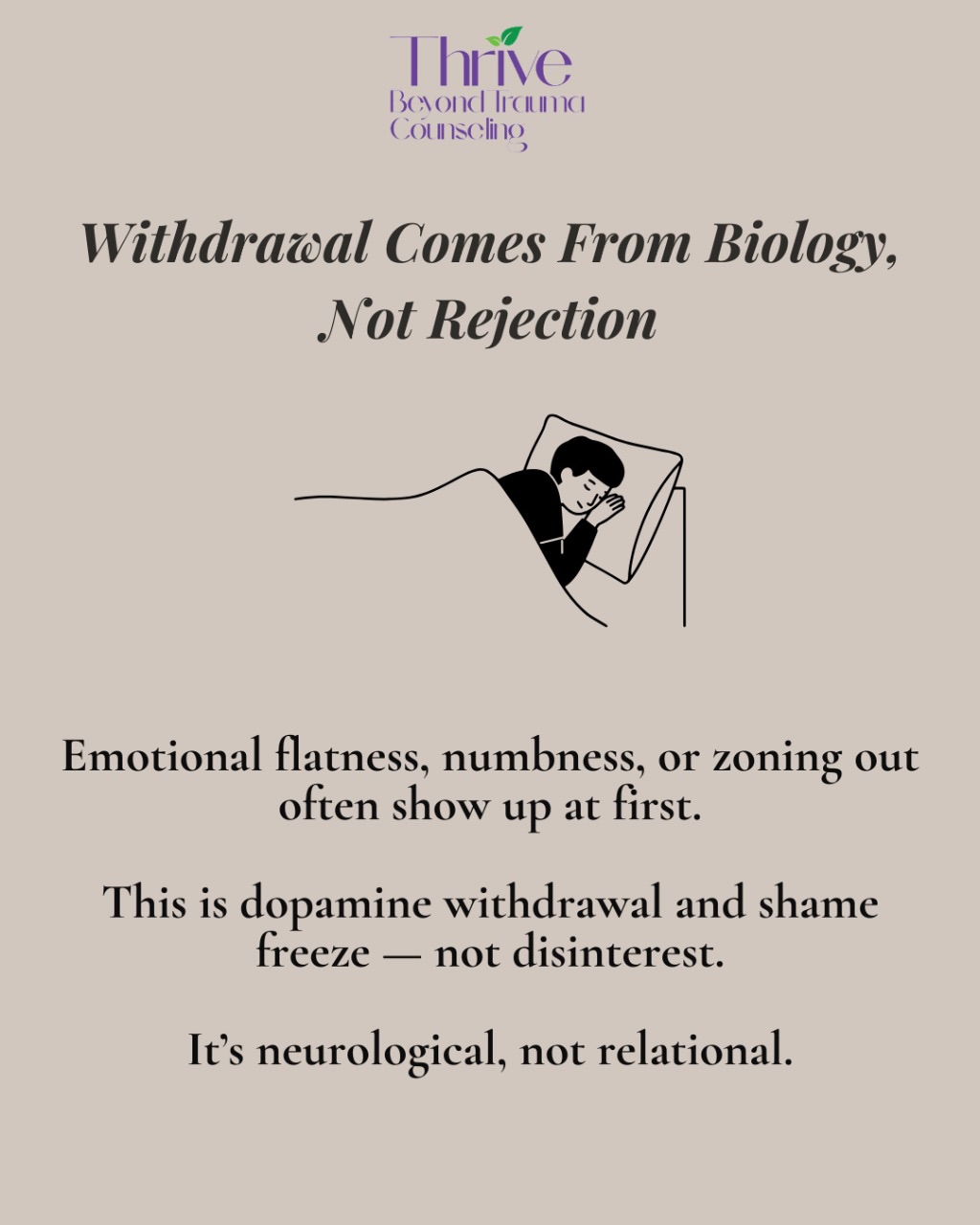
Withdrawal Is Biological, Not Rejection

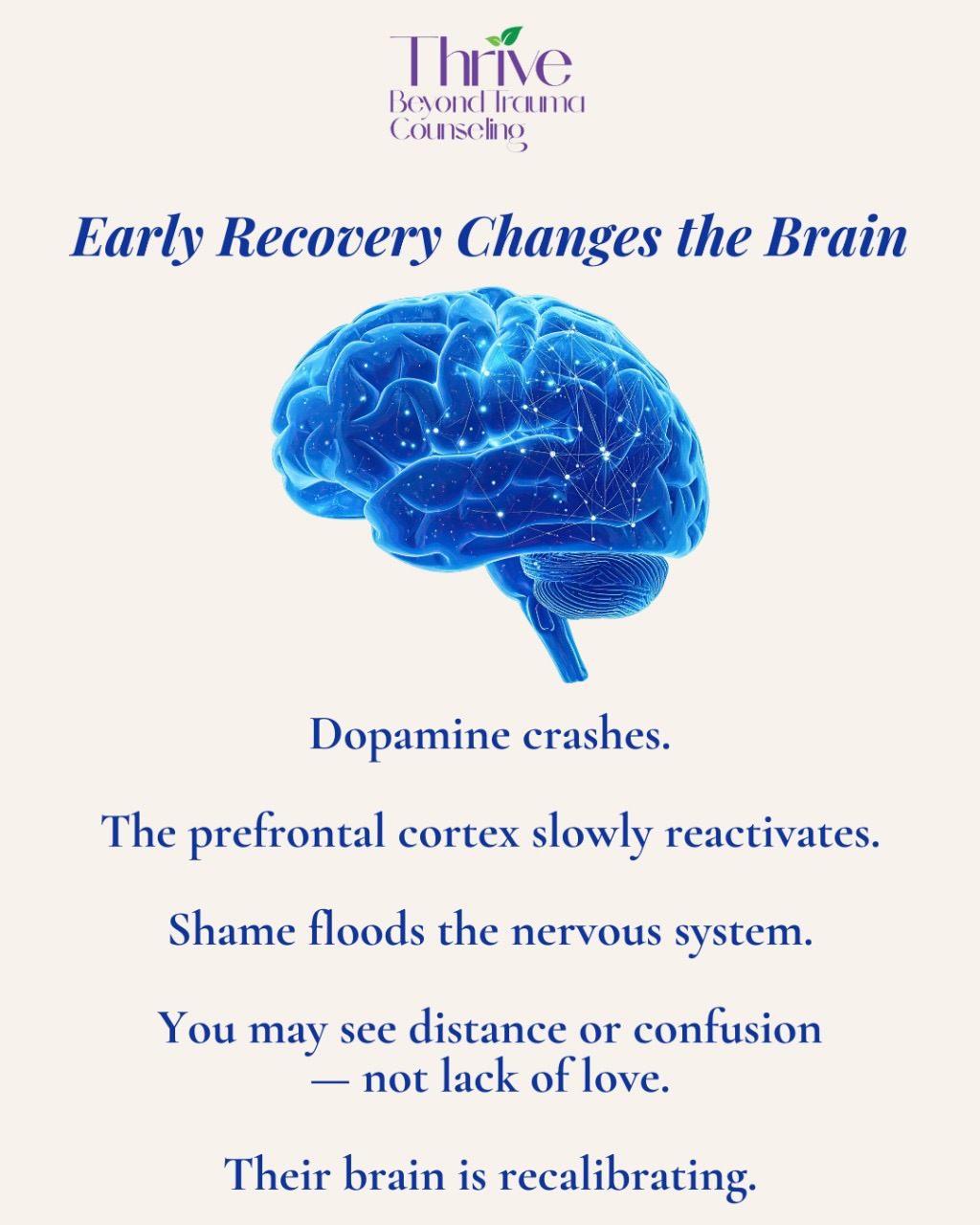
In early recovery, emotional distance can increase temporarily. You may notice numbness, flatness, or disconnection. This is often linked to dopamine withdrawal and nervous system recalibration, not a lack of care or love. As the brain adjusts, the prefrontal cortex slowly re-engages, and emotional capacity begins to return. What you are seeing is not disinterest. It is neurological reorganization.

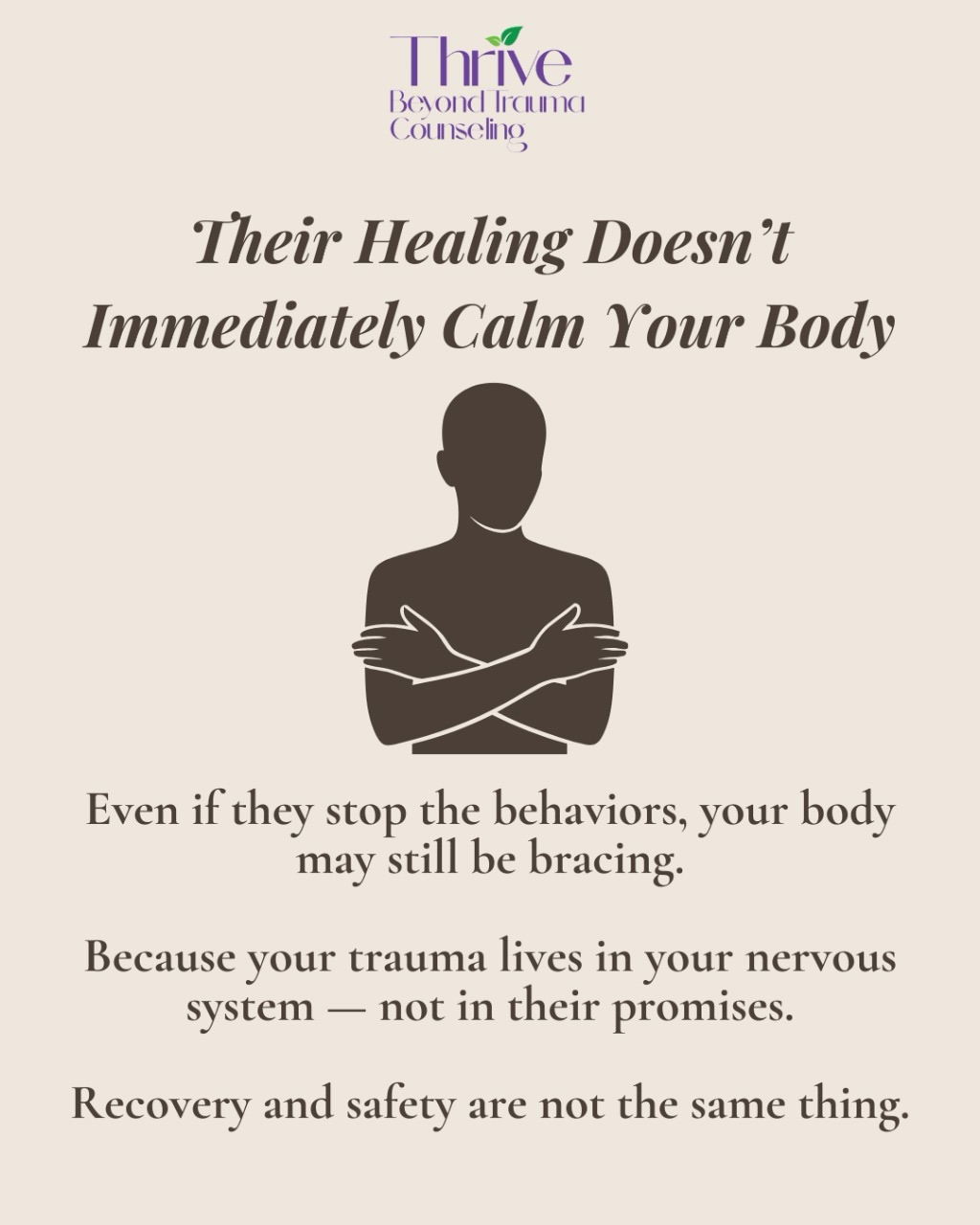
Their Healing Doesn’t Immediately Calm Your Body

Even if your partner is doing everything “right,” your body may still feel on edge. Because your trauma does not live in their promises. It lives in your nervous system. This is why individual healing and relational recovery must happen together; but not depend on each other.

Moving Toward Real Healing

True recovery happens when both partners are supported in their own process, while slowly building connection in a safe, structured way. This is not about rushing back into closeness. It is about creating real safety first.

One breath.
One boundary.
One step toward truth at a time.

At Thrive Beyond Trauma Counseling, we support both partners through trauma-informed care, helping you heal individually and rebuild safely together. If you are navigating recovery or betrayal trauma, reach out to begin your healing journey with the right guidance and support.

Address: Suite C, 37923 W. 12 Mile Rd, Farmington Hills, MI

Phone: (248) 392-3733

FOLLOW US ON

If you are in crisis or experiencing an emergency, please call 911 or your local emergency services, or visit the nearest emergency room.

Thrive Beyond Trauma Counseling does not provide crisis or emergency services.

Scroll to top