Thrive Beyond Trauma Counseling
Healing Doesn't End at Survival; It Begins With Thriving. Helping Individuals, Couples, & Families Heal, Grow & Thrive Beyond Trauma.
Thrive Beyond Trauma Counseling
Thrive Beyond Trauma Counseling
Healing Doesn't End at Survival; It Begins With Thriving. Helping Individuals, Couples, & Families Heal, Grow & Thrive Beyond Trauma.
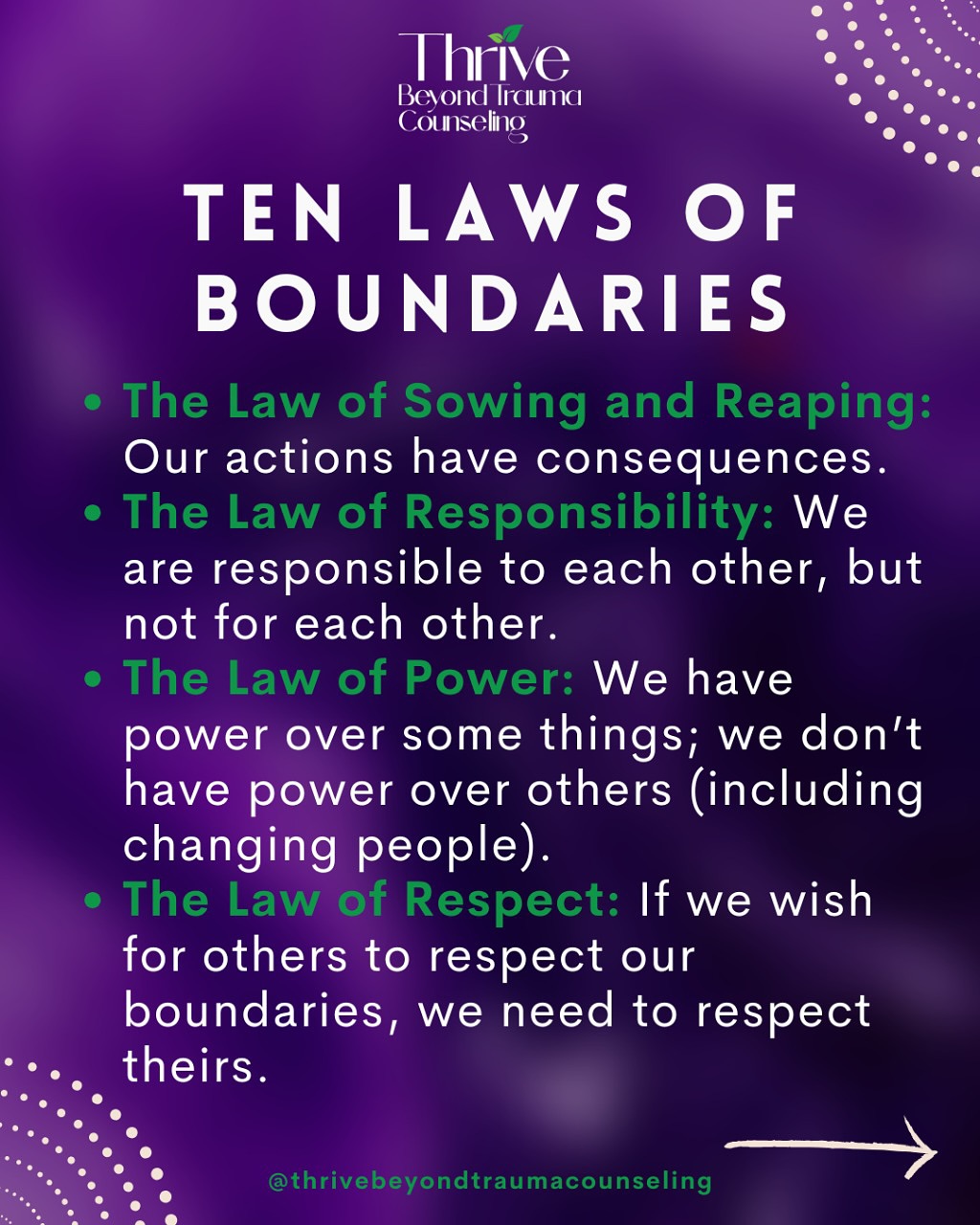
Ten Laws of Boundaries
Building Healthier Relationships and Emotional Clarity
Boundaries are not just rules we set for others, they are the foundation of self-respect, emotional safety, and healthy relationships. When boundaries are unclear or absent, it often leads to resentment, confusion, and emotional exhaustion. But when they are understood and practiced, they create clarity, confidence, and mutual respect. The concept of boundaries becomes easier to understand when broken down into guiding principles. These principles, often referred to as the “Ten Laws of Boundaries,” offer a framework for how we relate to ourselves and others in a healthy, balanced way.
The Law of Sowing and Reaping
Our actions have consequences. This law reminds us that behaviors, whether ours or others’, come with outcomes. Respecting boundaries means recognizing that choices lead to results, and those results must be acknowledged rather than avoided.
The Law of Responsibility
We are responsible to each other, but not for each other. This distinction is crucial. Supporting someone does not mean carrying their emotional burden or solving their problems. Healthy boundaries allow care without over-responsibility.
The Law of Power
We have power over some things; we don’t have power over others, including changing people. One of the most common boundary struggles comes from trying to control what is outside our control. True empowerment lies in focusing on our own actions, responses, and choices.
The Law of Respect
If we wish for others to respect our boundaries, we need to respect theirs. Boundaries are not one-sided. Mutual respect creates trust and strengthens relationships, while ignoring others’ limits weakens connection.
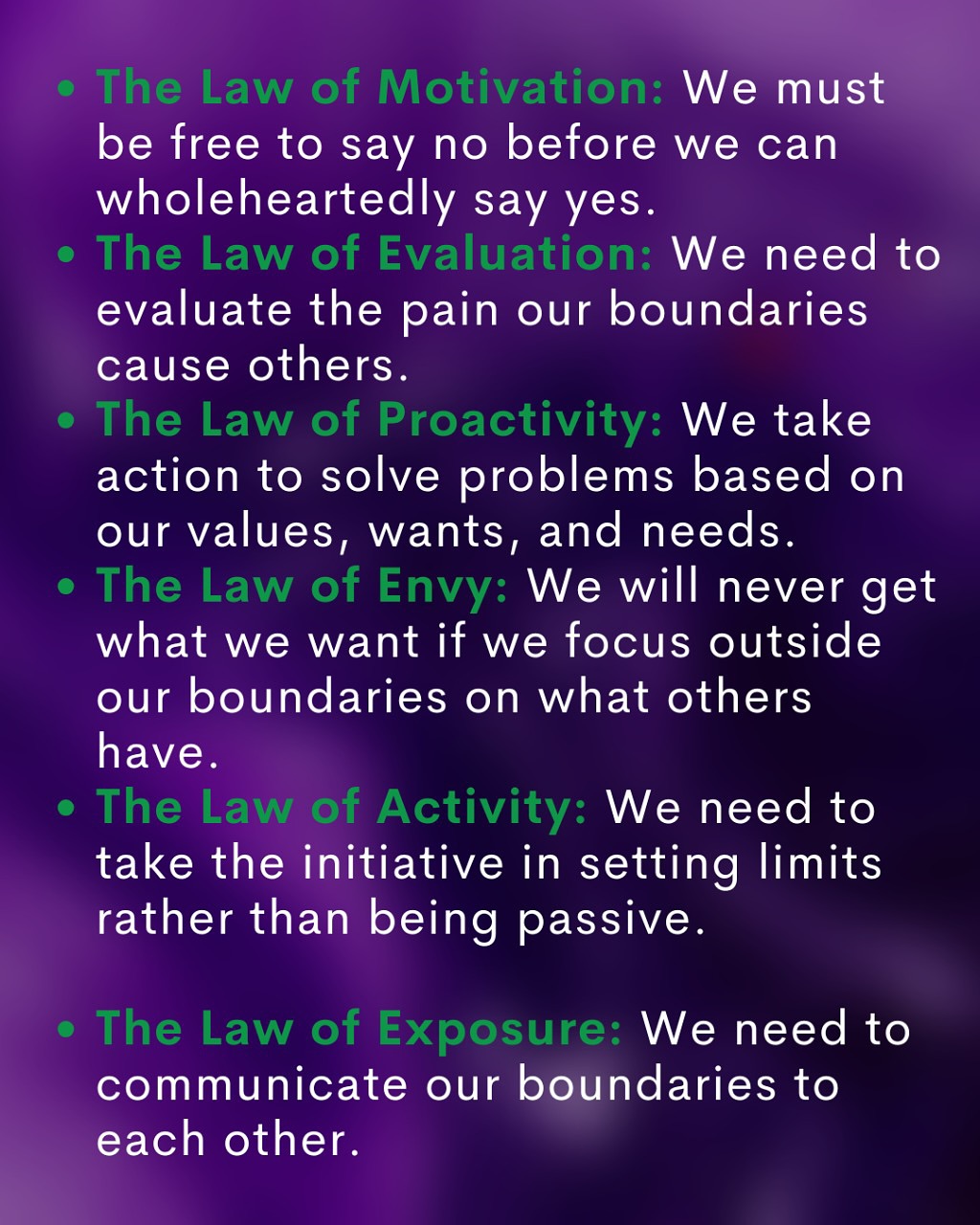
The Law of Motivation
We must be free to say no before we can wholeheartedly say yes. When people feel forced or obligated, resentment builds. True willingness comes from choice, and boundaries create the space for authentic decisions.
The Law of Evaluation
We need to evaluate the pain our boundaries cause others. Setting boundaries can sometimes create discomfort or disappointment, but that does not mean they are wrong. This law encourages awareness without guilt, helping us balance compassion with self-respect.
The Law of Proactivity
We take action to solve problems based on our values, wants, and needs. Boundaries require initiative. Waiting for situations to improve on their own often leads to repeated patterns. Proactivity means choosing to act in alignment with what truly matters to you.
The Law of Envy
We will never get what we want if we focus outside our boundaries on what others have. Comparing ourselves to others distracts from our own growth. Boundaries help redirect focus inward, toward our own goals, values, and well-being.
The Law of Activity
We need to take the initiative in setting limits rather than being passive. Boundaries are not created through silence. They require clear action and communication. Passivity often leads to others unknowingly crossing limits.
The Law of Exposure
We need to communicate our boundaries to each other. Boundaries that are not expressed cannot be respected. Open communication is essential for building understanding and preventing misunderstandings.
Why These Laws Matter
Together, these laws highlight an important truth: boundaries are not about control, distance, or rejection. They are about clarity, responsibility, and respect. They allow individuals to show up in relationships without losing themselves. When boundaries are practiced consistently, relationships become more stable and authentic. There is less resentment, more honesty, and a stronger sense of emotional safety. People feel seen, heard, and respected, not controlled or overwhelmed.
Final Thoughts
Learning to set and maintain boundaries is a process. It requires self-awareness, courage, and consistency. At times, it may feel uncomfortable, especially if you are used to prioritizing others over yourself. But over time, boundaries create a healthier way of relating, to yourself and to those around you. Boundaries are not walls. They are guidelines that protect your energy, define your values, and support meaningful connection.
At Thrive Beyond Trauma Counseling, we help individuals build healthy boundaries rooted in self-awareness and emotional safety. If you’re ready to create more balanced relationships and strengthen your sense of self, connect with us and begin your journey toward clarity and confidence.
Address: Suite C, 37923 W. 12 Mile Rd, Farmington Hills, MI
Phone: (248) 392-3733
FOLLOW US ON
If you are in crisis or experiencing an emergency, please call 911 or your local emergency services, or visit the nearest emergency room.
Thrive Beyond Trauma Counseling does not provide crisis or emergency services.