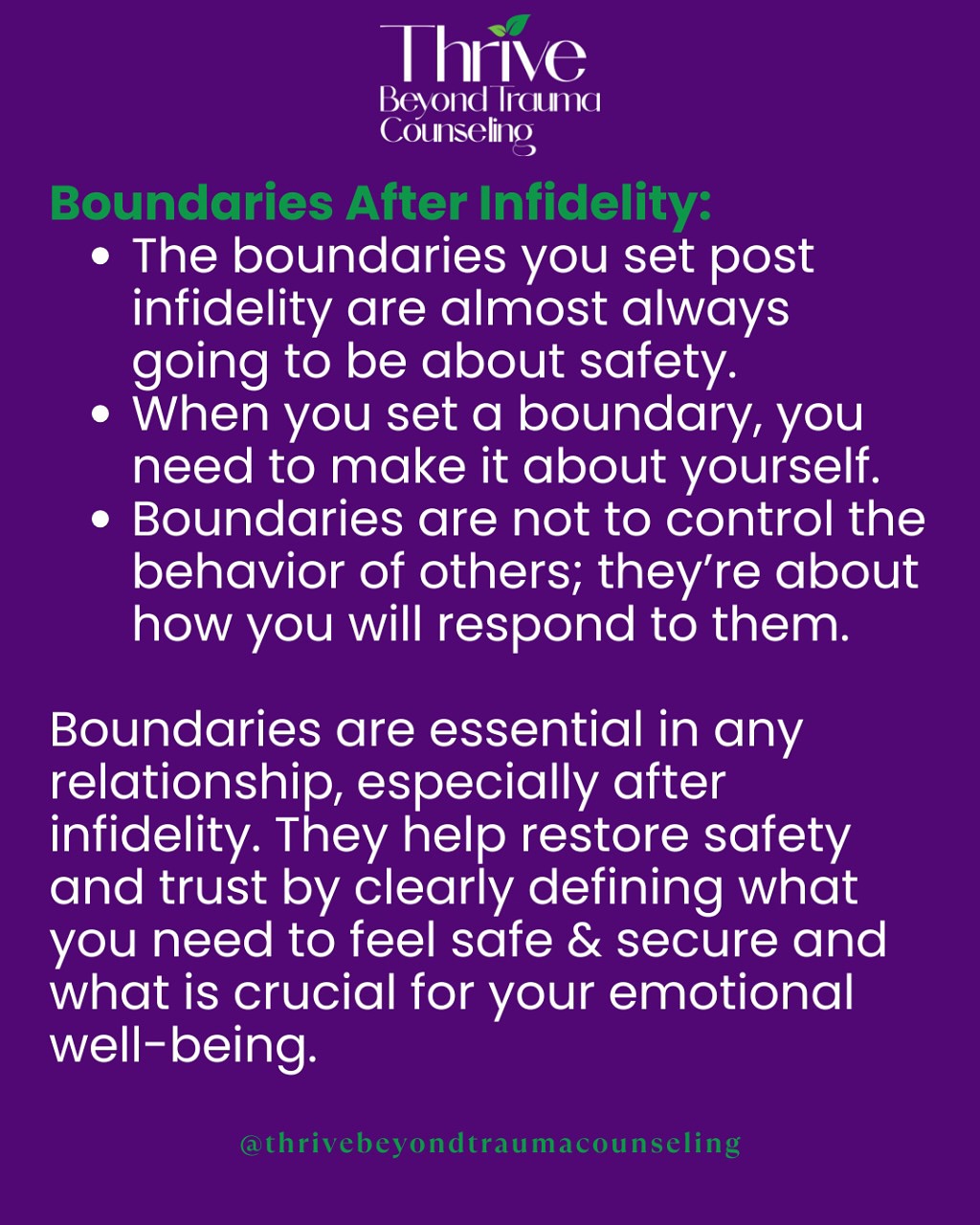
Boundaries After Infidelity

Rebuilding Safety, Trust, and Emotional Security

Discovering infidelity can be one of the most painful and destabilizing experiences in a relationship. It shakes the foundation of trust, creates emotional insecurity, and leaves many individuals questioning their sense of safety. In such situations, setting clear and healthy boundaries is not about controlling your partner, but about protecting yourself and rebuilding emotional stability.

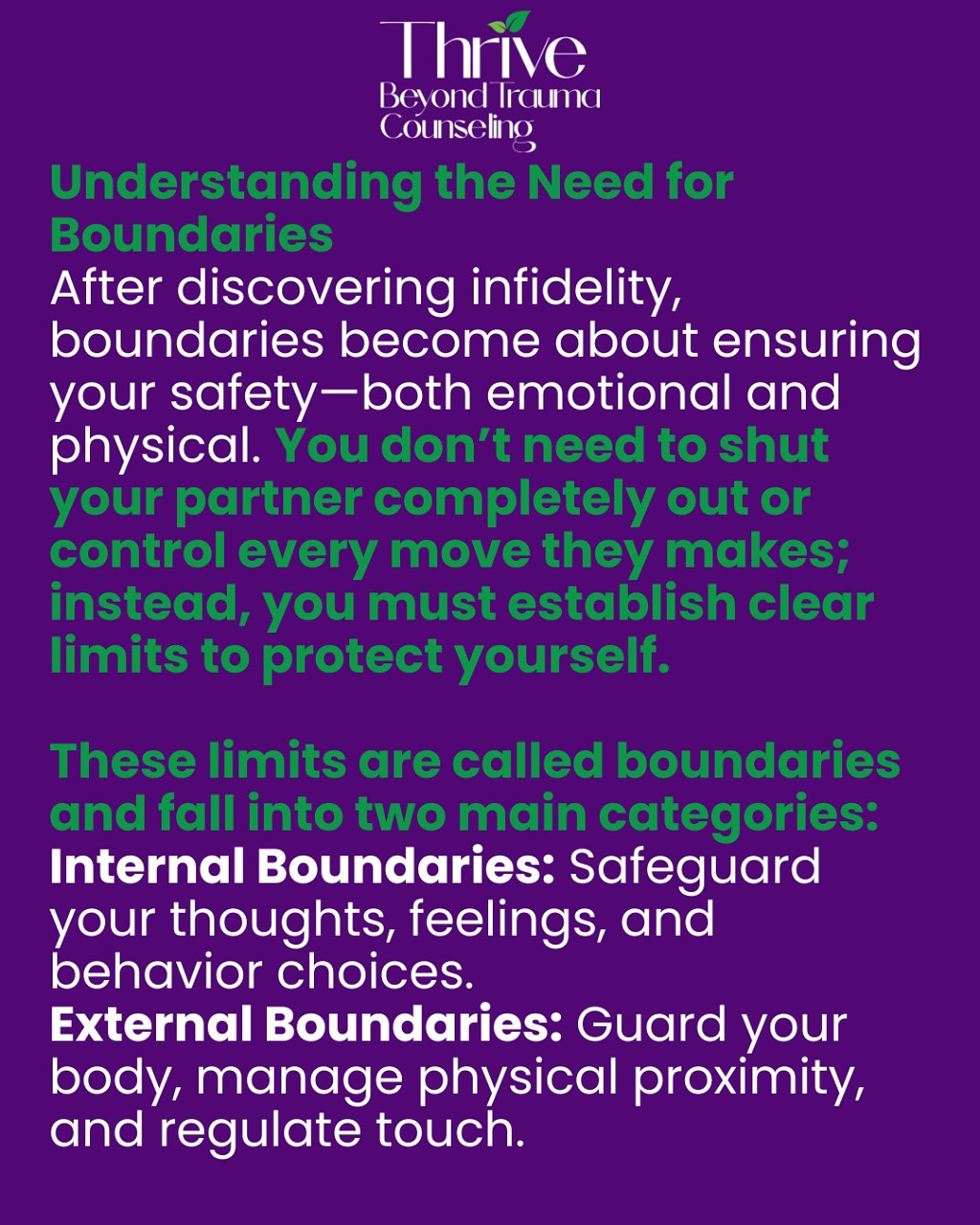
Understanding the Need for Boundaries

After infidelity, boundaries become essential for ensuring both emotional and physical safety. It is important to understand that you do not need to control every action your partner takes or completely shut them out. Instead, boundaries help you define what you need in order to feel safe again.

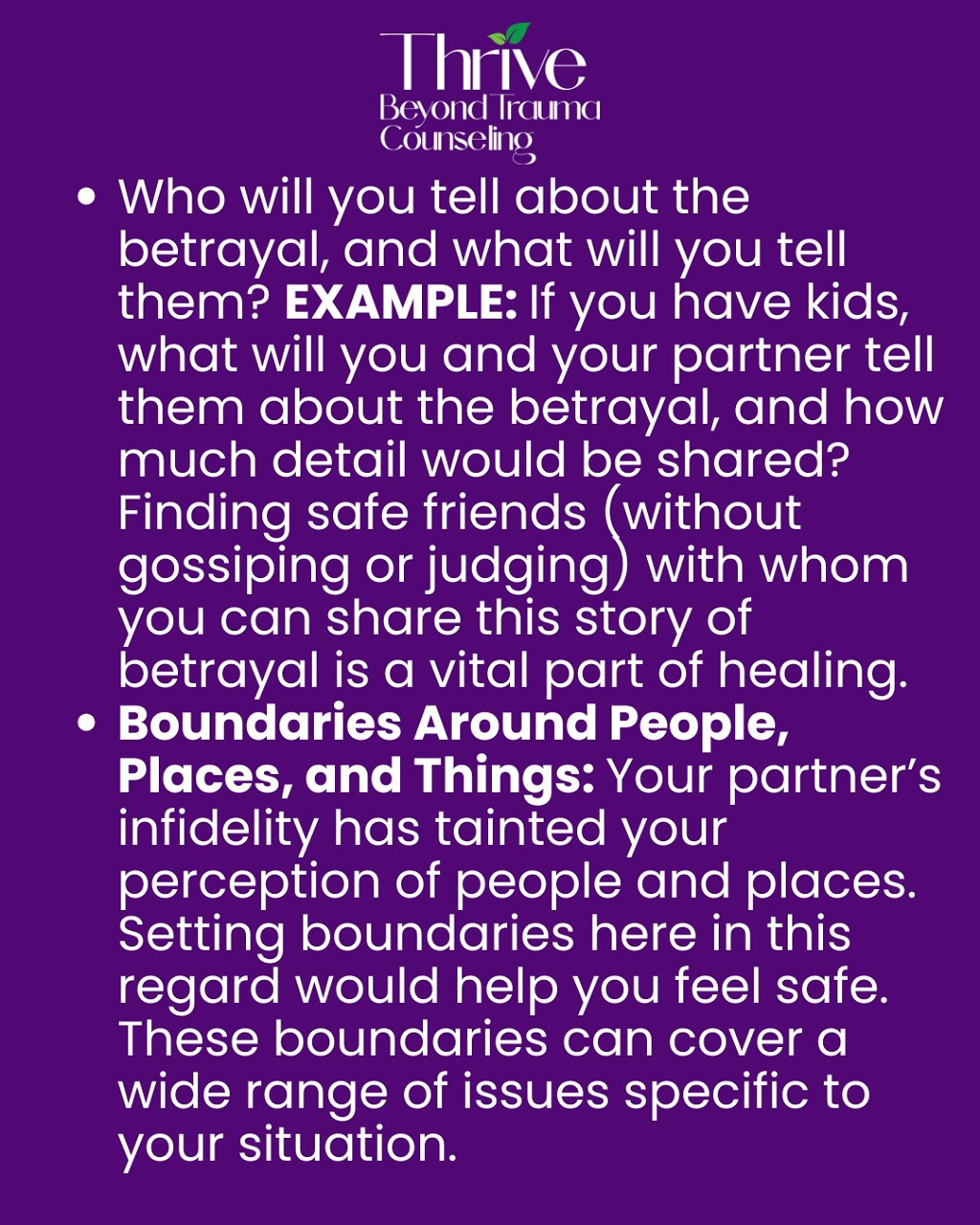
These limits are known as boundaries and generally fall into two categories. Internal boundaries focus on your own thoughts, feelings, and behavioral choices. External boundaries, on the other hand, involve managing physical proximity, touch, and interactions with your partner and others.

Boundaries Are About You, Not Control

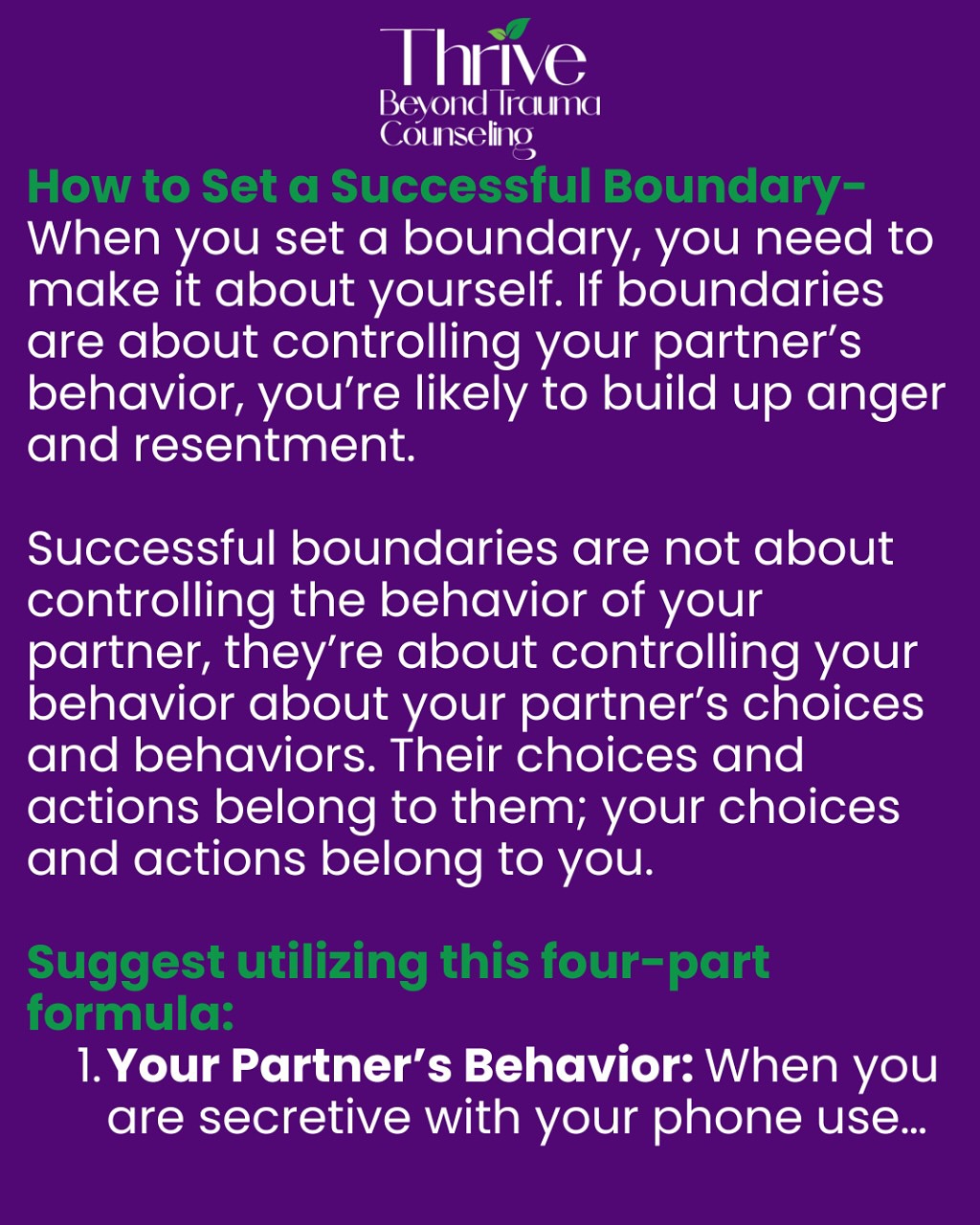
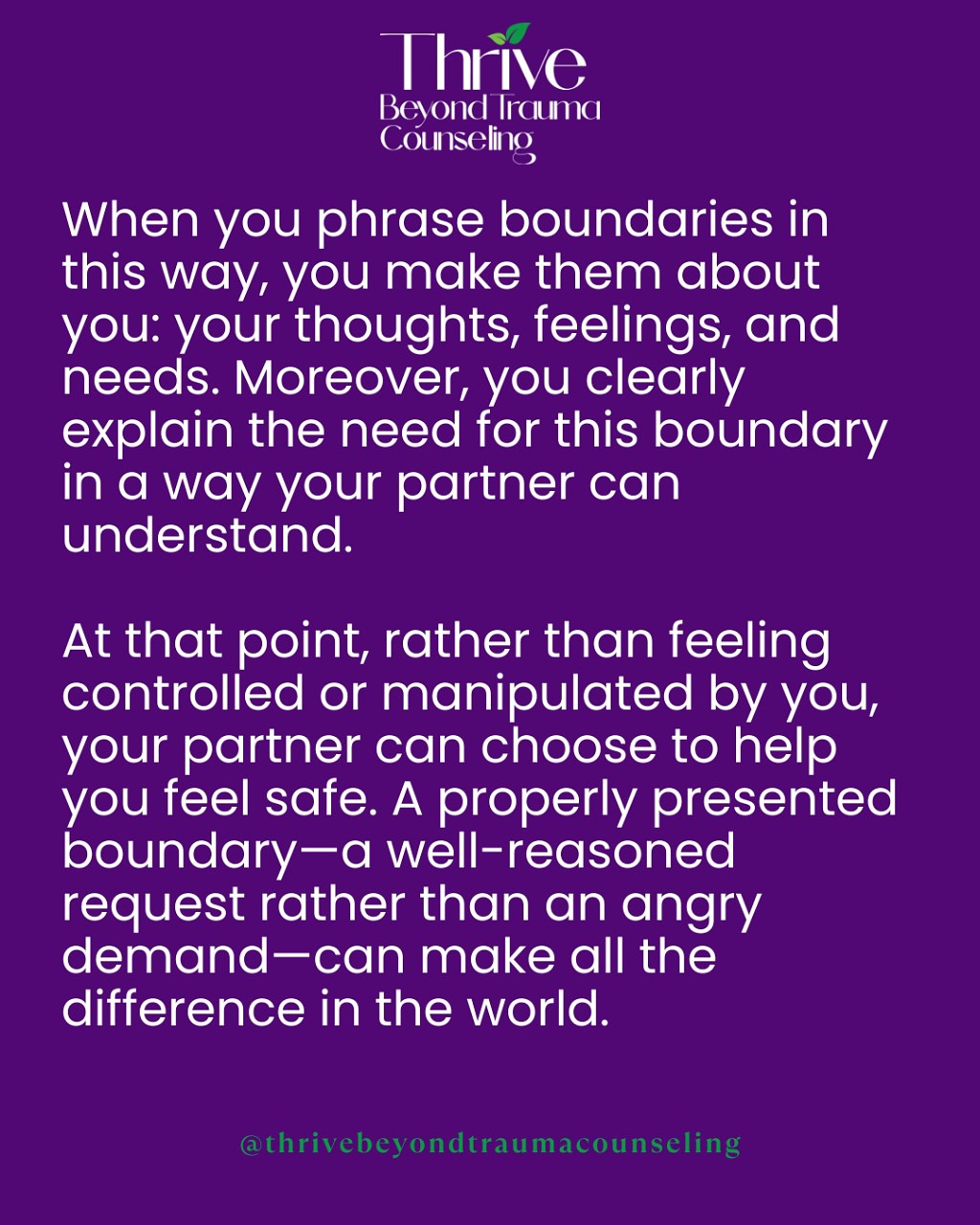
One of the most important aspects of setting boundaries is learning how to communicate them effectively. Successful boundaries are not about controlling your partner’s behavior. Instead, they are about how you choose to respond to their actions. When boundaries are framed as demands or attempts to control, they can lead to anger and resentment. However, when expressed as personal needs, they encourage understanding and cooperation. A helpful approach is to use a structured format:

  • Describe your partner’s behavior
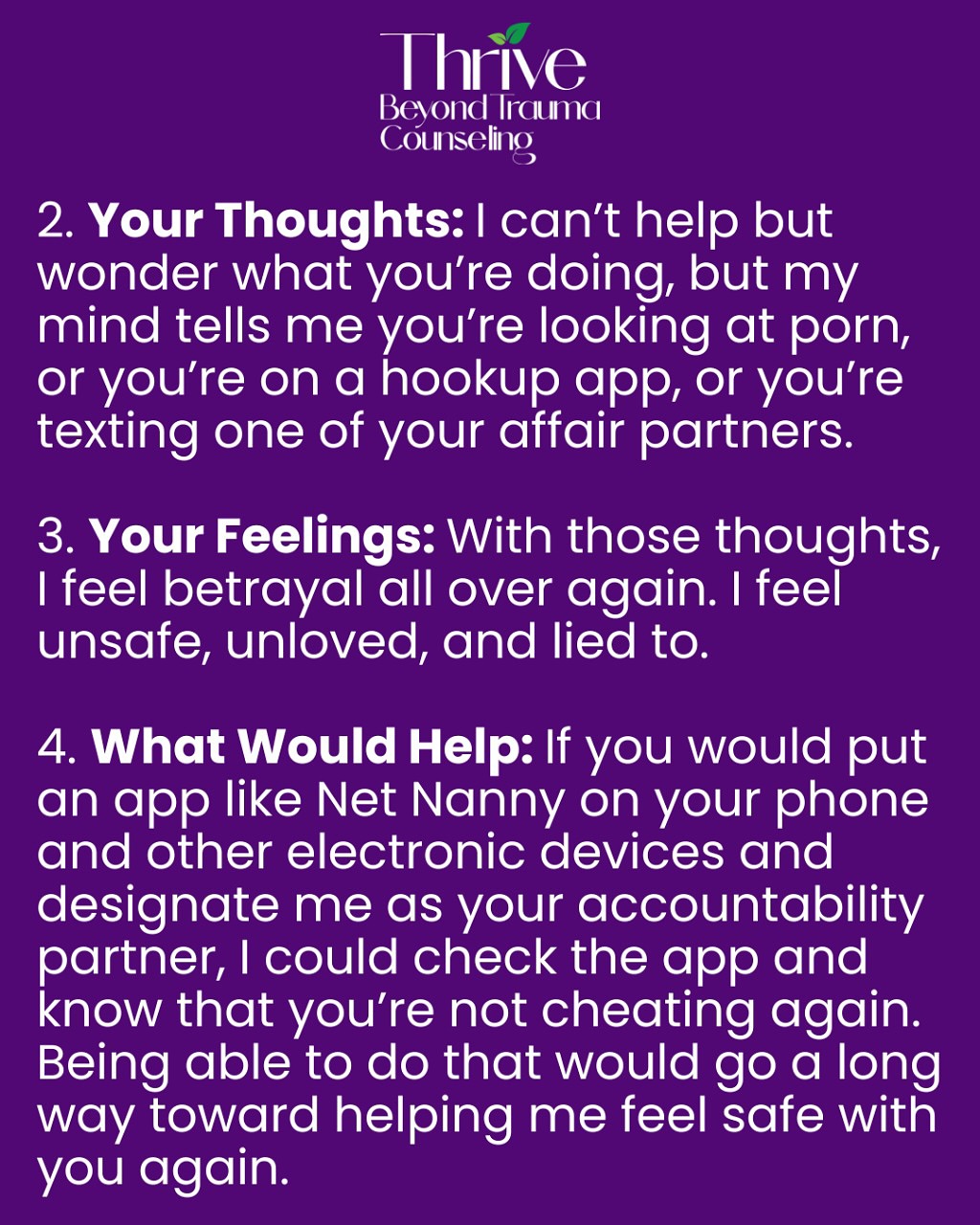
  • Share your thoughts about it
  • Express how it makes you feel
  • Clearly state what would help you feel safe

When you communicate boundaries this way, you shift the focus to your emotional experience. This allows your partner to understand your needs without feeling attacked or controlled, making them more likely to support your healing process.

Key Areas Where Boundaries Are Needed

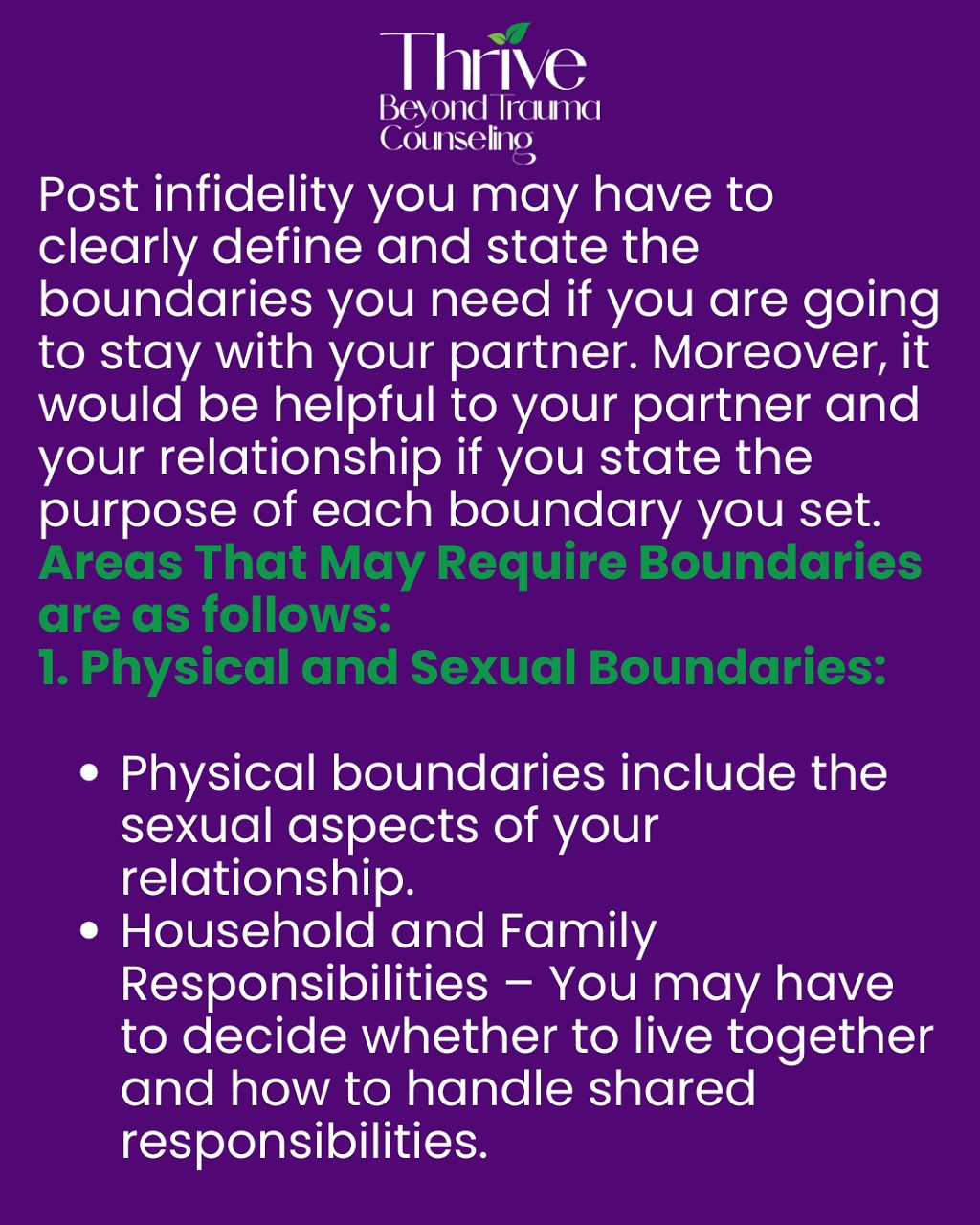
After infidelity, boundaries may need to be established across multiple areas of the relationship:

  • Physical and Sexual Boundaries
  • Emotional Boundaries
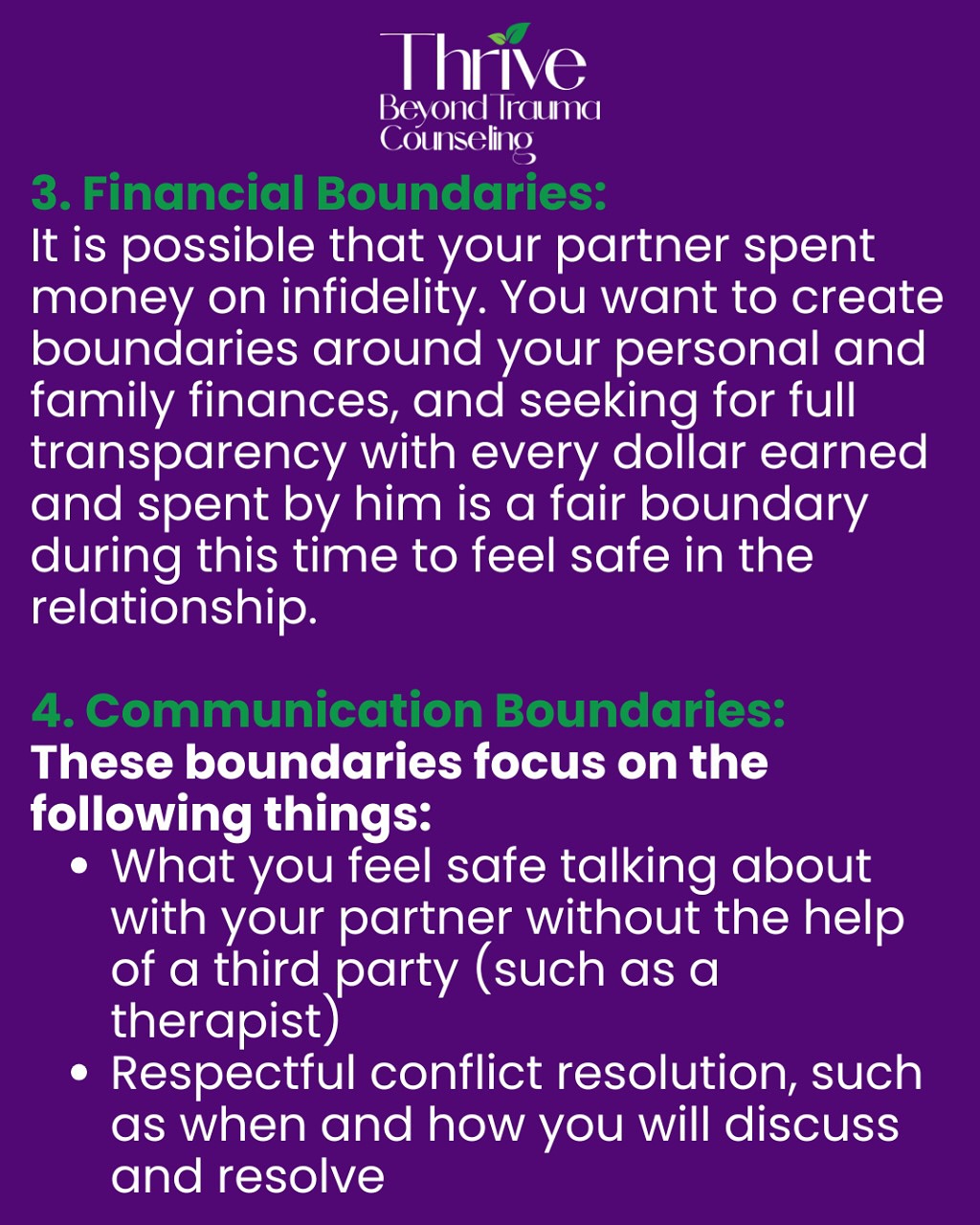
  • Financial Boundaries
  • Communication Boundaries
  • Privacy and Social Boundaries

Physical and Sexual Boundaries

These include defining what level of physical intimacy feels safe and appropriate. You may also need to set expectations around personal space, touch, and rebuilding physical trust over time. Additionally, decisions about living arrangements and shared responsibilities may fall under this category.

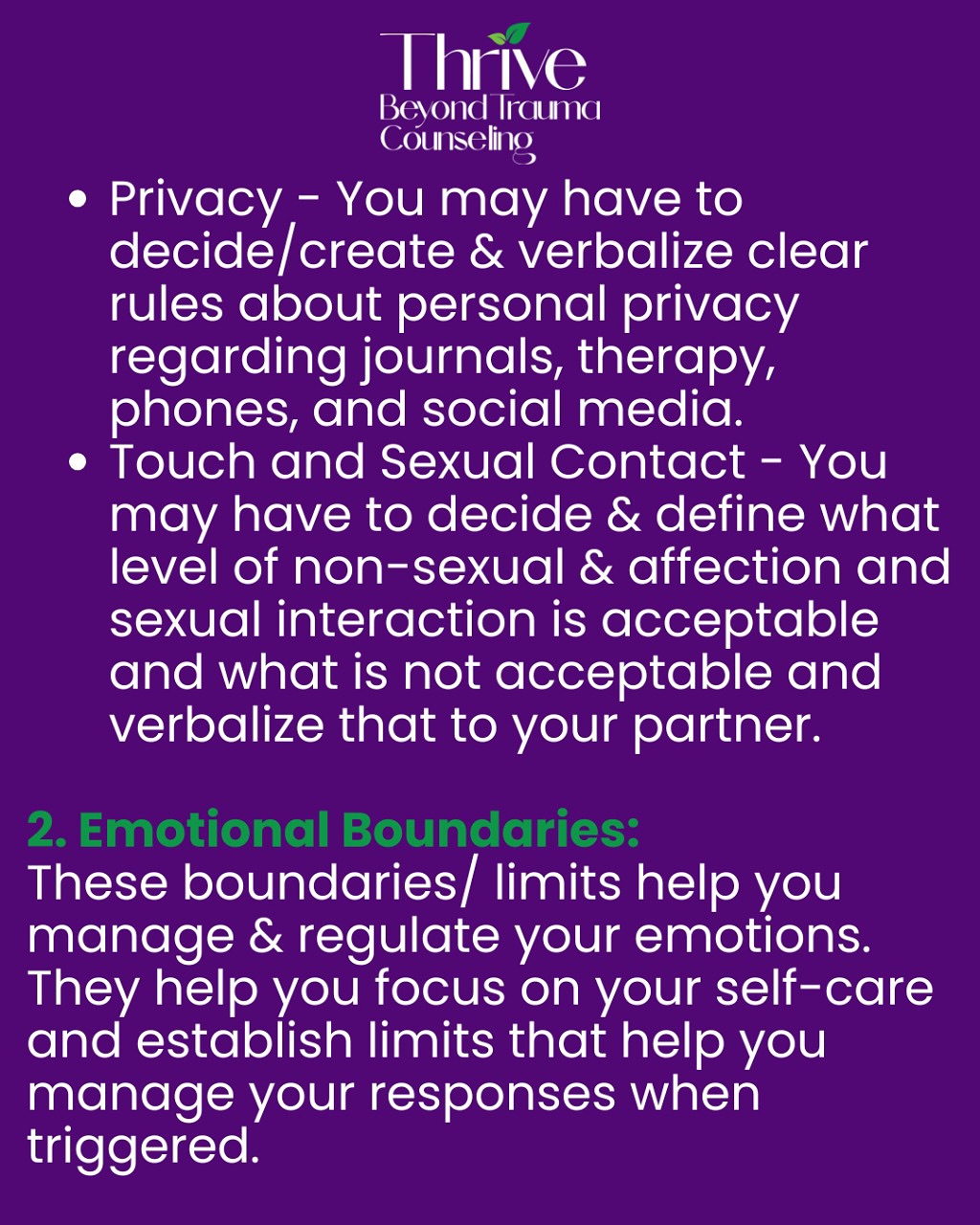
Emotional Boundaries

Emotional boundaries help you regulate your feelings and responses. They allow you to prioritize self-care and prevent emotional overwhelm. These boundaries are especially important when you feel triggered, anxious, or insecure.

Financial Boundaries

In some cases, infidelity may involve financial dishonesty. Establishing transparency around finances, including spending and income, can help restore a sense of stability and trust.

Communication Boundaries

Healthy communication is crucial during the healing process. This includes:

  • Deciding what topics feel safe to discuss without external help
  • Setting guidelines for respectful conflict resolution
  • Choosing when and how to have difficult conversations

It may also involve deciding who you will share your experience with. Finding trusted individuals who can support you without judgment is an important part of healing.

Privacy and Social Boundaries

You may need to create clear rules around privacy, including access to phones, social media, or personal spaces. Additionally, boundaries around people, places, and situations that trigger discomfort can help you regain a sense of control.

Boundaries Help Rebuild Trust

Boundaries after infidelity are almost always centered around safety. They are not meant to punish your partner but to create an environment where healing becomes possible. By clearly defining what you need to feel safe and secure, you begin to rebuild trust step by step. Boundaries also empower you to take control of your emotional well-being, rather than relying entirely on your partner’s actions. Over time, consistent communication and respect for these boundaries can help restore a sense of stability in the relationship.

Final Thoughts

Setting boundaries after infidelity is not easy, but it is necessary. It requires honesty, self-awareness, and the courage to prioritize your needs. When done correctly, boundaries can transform pain into growth and create a stronger, more secure foundation for the future.

At Thrive Beyond Trauma Counseling, we support individuals and couples in setting healthy boundaries and rebuilding trust after infidelity. If you’re ready to heal, regain emotional safety, and move forward with clarity, connect with us today and take the first step toward a healthier relationship.

Address: Suite C, 37923 W. 12 Mile Rd, Farmington Hills, MI

Phone: (248) 392-3733

FOLLOW US ON

If you are in crisis or experiencing an emergency, please call 911 or your local emergency services, or visit the nearest emergency room.

Thrive Beyond Trauma Counseling does not provide crisis or emergency services.

Scroll to top