After Experiencing Betrayal Trauma

A Simple Do & Don't Guide

Betrayal trauma shakes the very foundation of your trust and safety. It’s an experience that can leave you feeling confused, heartbroken, and lost. In the immediate aftermath, you are likely overwhelmed with conflicting emotions and uncertainty about how to move forward. The healing journey after such a profound breach is complex and deeply personal. To provide a little clarity and guidance during this incredibly difficult time, we’ve put together a simple “Do & Don’t” guide. This guide isn’t a quick fix, but rather a starting point to help you navigate your healing process with greater clarity and self-compassion. Let’s start with what to focus on doing, as these actions are crucial first steps in reclaiming your path to wellness.

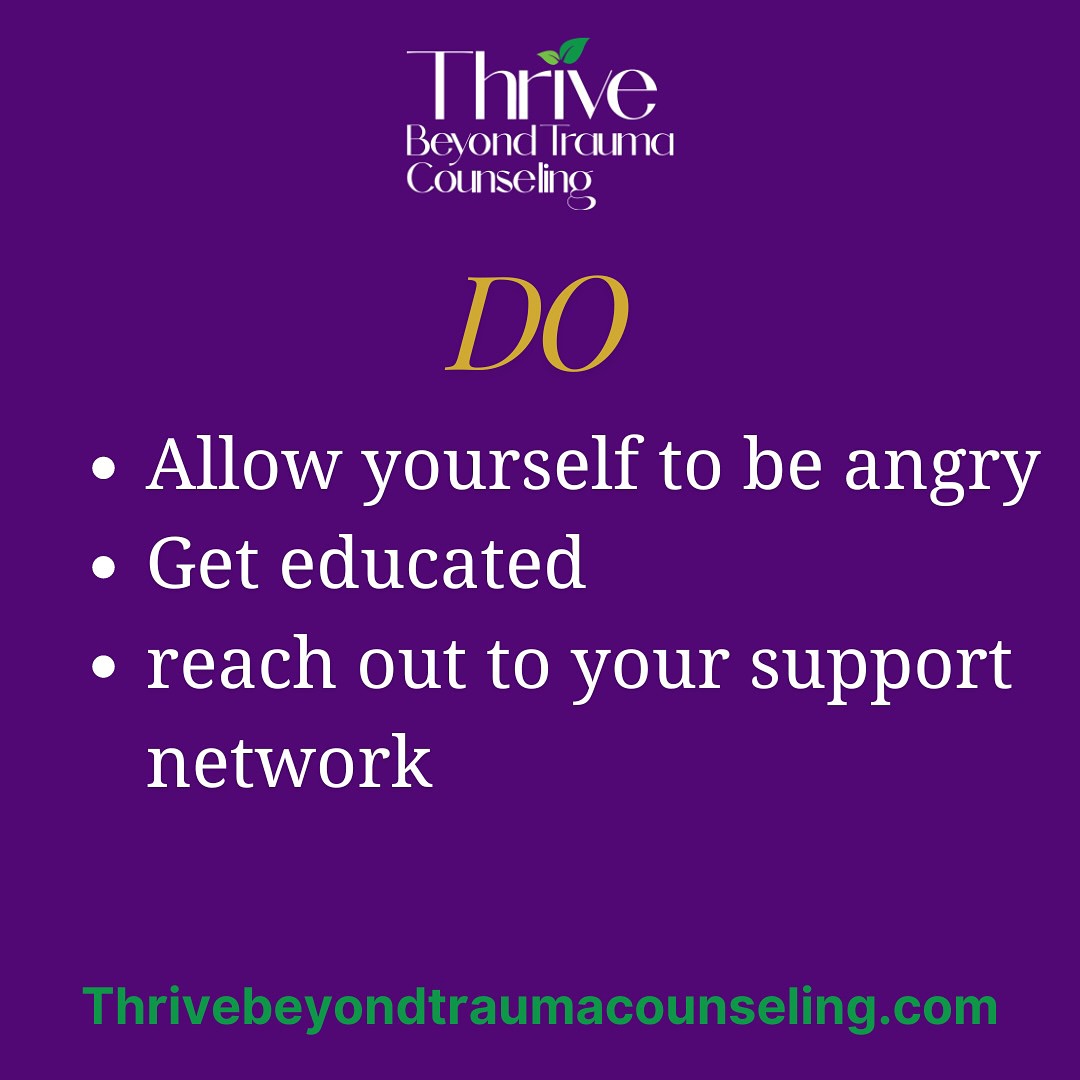
DO

This list focuses on honoring your own experience and prioritizing your self-care and understanding.

  • Allow yourself to be angry: Your anger is a valid response to the hurt and violation you’ve experienced. Don’t rush to suppress it. Give yourself permission to feel and process it.
  • Get educated: Knowledge is empowering. Understanding the nature of betrayal, betrayal trauma, and narcissistic abuse can validate your experience and help you see the situation for what it truly is.
  • Reach out to your support network: You don’t have to go through this alone. Connect with trusted friends, family, or support groups who can offer a safe space, validation, and a listening ear.

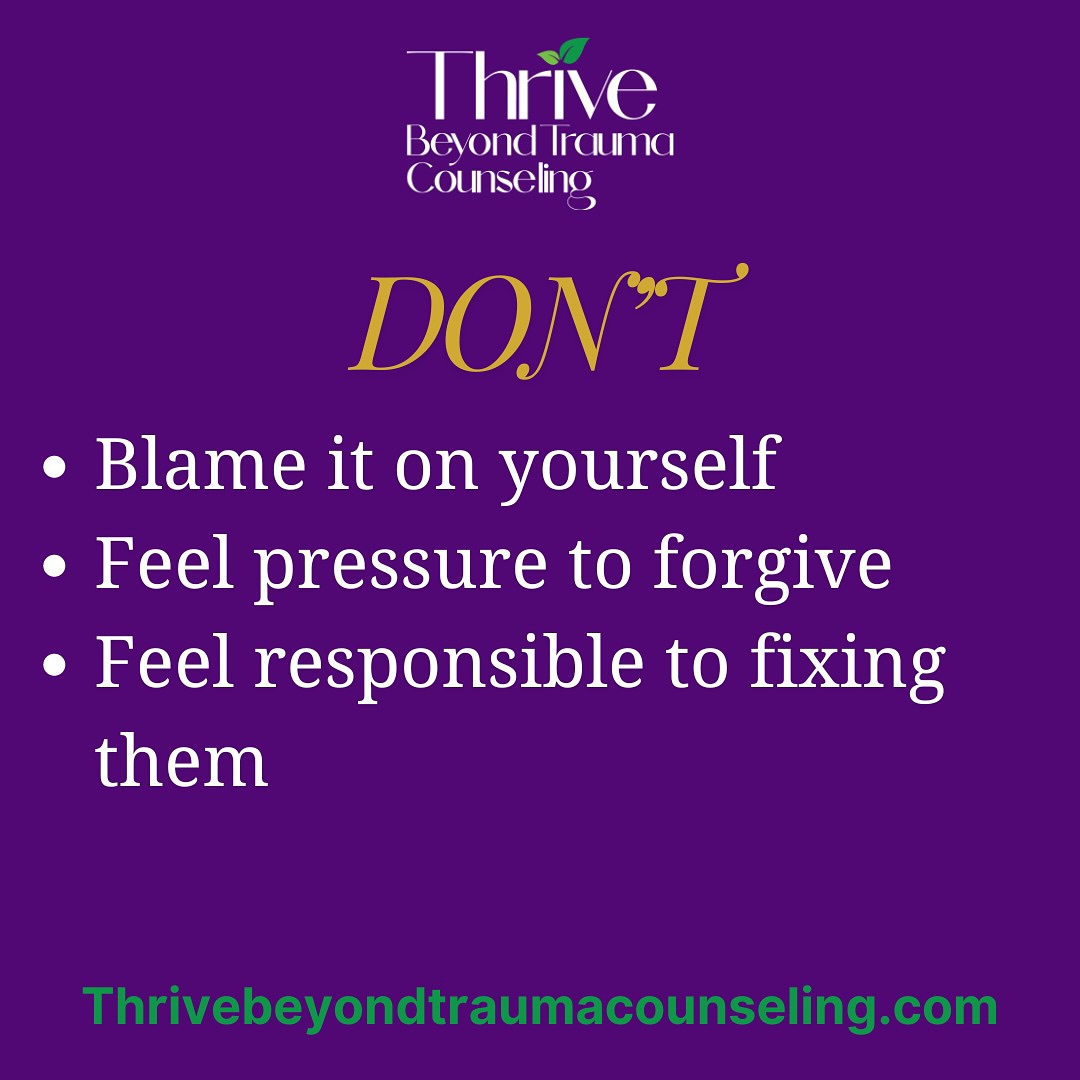
DON’T

Equally important to what you should do is understanding what you should not do. This list focuses on releasing external pressures and burdens that aren’t yours to carry.

  • Blame it on yourself: The betrayal was a result of someone else’s actions and choices, not yours. You are the victim of a breach of trust, and the responsibility lies solely with the betrayer.
  • Feel pressure to forgive: Forgiveness is a deeply personal and complex process, not a requirement for healing. Healing is about you, and it can happen without, or long before, you choose to offer forgiveness (if you ever do).
  • Feel responsible to fixing them: This is one of the most common pitfalls. You cannot fix, change, or heal someone else. Their behaviors, issues, and journey are not your responsibility to manage. Focus all that energy back onto your own healing.

Healing from betrayal trauma is a journey, not a destination. Remember to be patient and gentle with yourself through this process. These initial steps are about protecting your heart and prioritizing your own well-being. You are not alone, and healing is possible.

At Thrive Beyond Trauma Counseling, we understand the specific, complex challenges of healing from narcissistic abuse and betrayal trauma. Our specialists are here to provide the dedicated support and expert guidance you need to navigate this journey toward safety and recovery. You don’t have to navigate this path alone.

Address: Suite C, 37923 W. 12 Mile Rd, Farmington Hills, MI

Phone: (248) 392-3733

FOLLOW US ON

If you are in crisis or experiencing an emergency, please call 911 or your local emergency services, or visit the nearest emergency room.

Thrive Beyond Trauma Counseling does not provide crisis or emergency services.

Scroll to top