Thrive Beyond Trauma Counseling
Healing Doesn't End at Survival; It Begins With Thriving. Helping Individuals, Couples, & Families Heal, Grow & Thrive Beyond Trauma.
Thrive Beyond Trauma Counseling
Thrive Beyond Trauma Counseling
Healing Doesn't End at Survival; It Begins With Thriving. Helping Individuals, Couples, & Families Heal, Grow & Thrive Beyond Trauma.
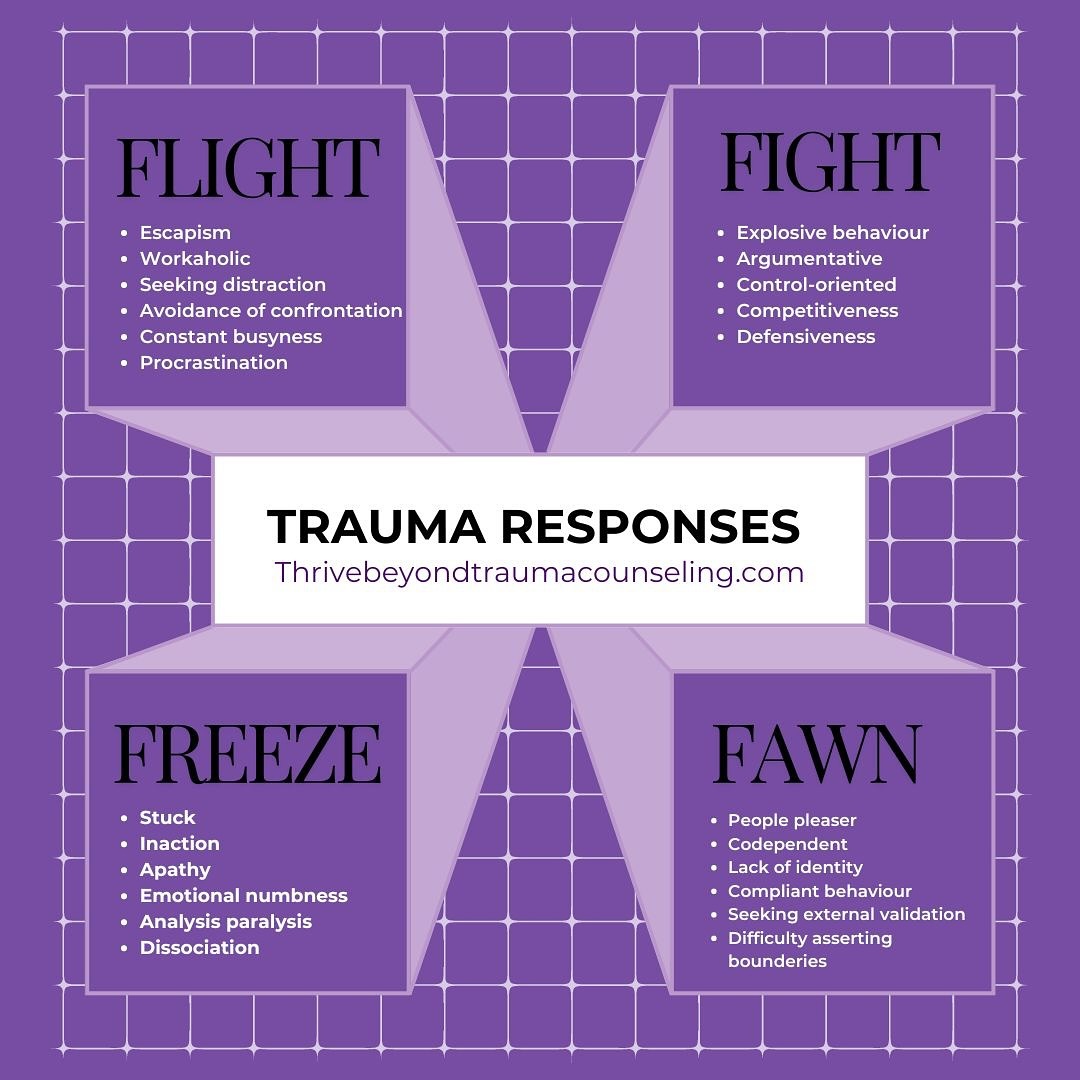
Understanding Trauma Responses
Trauma responses are not signs of weakness; they are biological adaptations: the body and mind’s way of trying to protect us when we perceive a threat. By identifying these patterns, we can begin the compassionate work of healing.
Flight
- Escapism: Using daydreams, media, or physical travel to mentally distance yourself from reality.
- Workaholic: Over-committing to tasks to ensure you are too busy to process difficult emotions.
- Seeking distraction: Constantly looking for external stimuli to avoid sitting with your own thoughts.
- Avoidance of confrontation: Steering clear of difficult conversations or conflicts to maintain a sense of safety.
- Constant busyness: Keeping your schedule packed to prevent quiet moments where feelings might surface.
- Procrastination: Delaying tasks as a way to avoid the stress or pressure associated with completing them.
Fight
- Explosive behaviour: Reacting with sudden, intense outbursts of anger or frustration when triggered.
- Argumentative: Engaging in conflict or debate as a way to establish dominance or protect oneself.
- Control-oriented: Attempting to micromanage your environment or the people around you to ensure safety.
- Competitiveness: Viewing interactions as win-lose scenarios to maintain a sense of superiority or security.
- Defensiveness: Automatically pushing back against feedback or criticism to protect against perceived attacks.
Freeze
- Stuck: Feeling physically or mentally unable to move forward or make decisions.
- Inaction: The tendency to become paralyzed or unable to initiate tasks when overwhelmed.
- Apathy: A sense of detachment where you feel unable to care about or engage with your surroundings.
- Emotional numbness: Feeling “blank” or cut off from your emotions as a way to dampen overwhelming pain.
- Analysis paralysis: Overthinking every possibility to the point that you cannot take any action at all.
- Dissociation: Feeling detached from your body, reality, or your own sense of self.
Fawn
- People pleaser: Prioritizing the needs and happiness of others over your own to avoid conflict.
- Codependent: Over-relying on others for your sense of self-worth or emotional stability.
- Lack of identity: Struggling to know who you are or what you want outside of being needed by others.
- Compliant behaviour: Agreeing with others or doing what is asked to keep the peace and stay safe.
- Seeking external validation: Depending on praise or approval from others to feel secure or “okay.”
- Difficulty asserting boundaries: Finding it painful or impossible to say “no” to the demands of others.
At Thrive Beyond Trauma Counseling, we recognize these responses not as flaws, but as adaptive coping mechanisms developed for survival. Understanding your default trauma response is the first powerful step toward healing. If you are tired of living in survival mode and are ready to move toward thriving, our compassionate counselors are here to help you navigate this journey. Reach out today to schedule your initial consultation and begin your path beyond trauma.
Address: Suite C, 37923 W. 12 Mile Rd, Farmington Hills, MI
Phone: (248) 392-3733
FOLLOW US ON
If you are in crisis or experiencing an emergency, please call 911 or your local emergency services, or visit the nearest emergency room.
Thrive Beyond Trauma Counseling does not provide crisis or emergency services.