Thrive Beyond Trauma Counseling
Healing Doesn't End at Survival; It Begins With Thriving. Helping Individuals, Couples, & Families Heal, Grow & Thrive Beyond Trauma.
Thrive Beyond Trauma Counseling
Thrive Beyond Trauma Counseling
Healing Doesn't End at Survival; It Begins With Thriving. Helping Individuals, Couples, & Families Heal, Grow & Thrive Beyond Trauma.
10 Things You Didn't Know Were Trauma Responses
Have you ever found yourself reacting to a situation in a way that feels automatic, overwhelming, or perhaps even a little confusing afterwards? While we often associate trauma with big, immediate reactions (like the classic “fight or flight”), the effects of trauma can be subtle, lasting, and show up in many different ways in our daily lives. In fact, many of our common coping mechanisms, habits, and personality traits are actually trauma responses in disguise. These responses are designed to protect us, but over time, they can become deeply ingrained patterns that are no longer helpful and may even be harmful. Understanding why we act the way we do is the first step toward healing and creating lasting change. Let’s explore 10 common, but often unrecognized, things you might not have known are trauma responses.
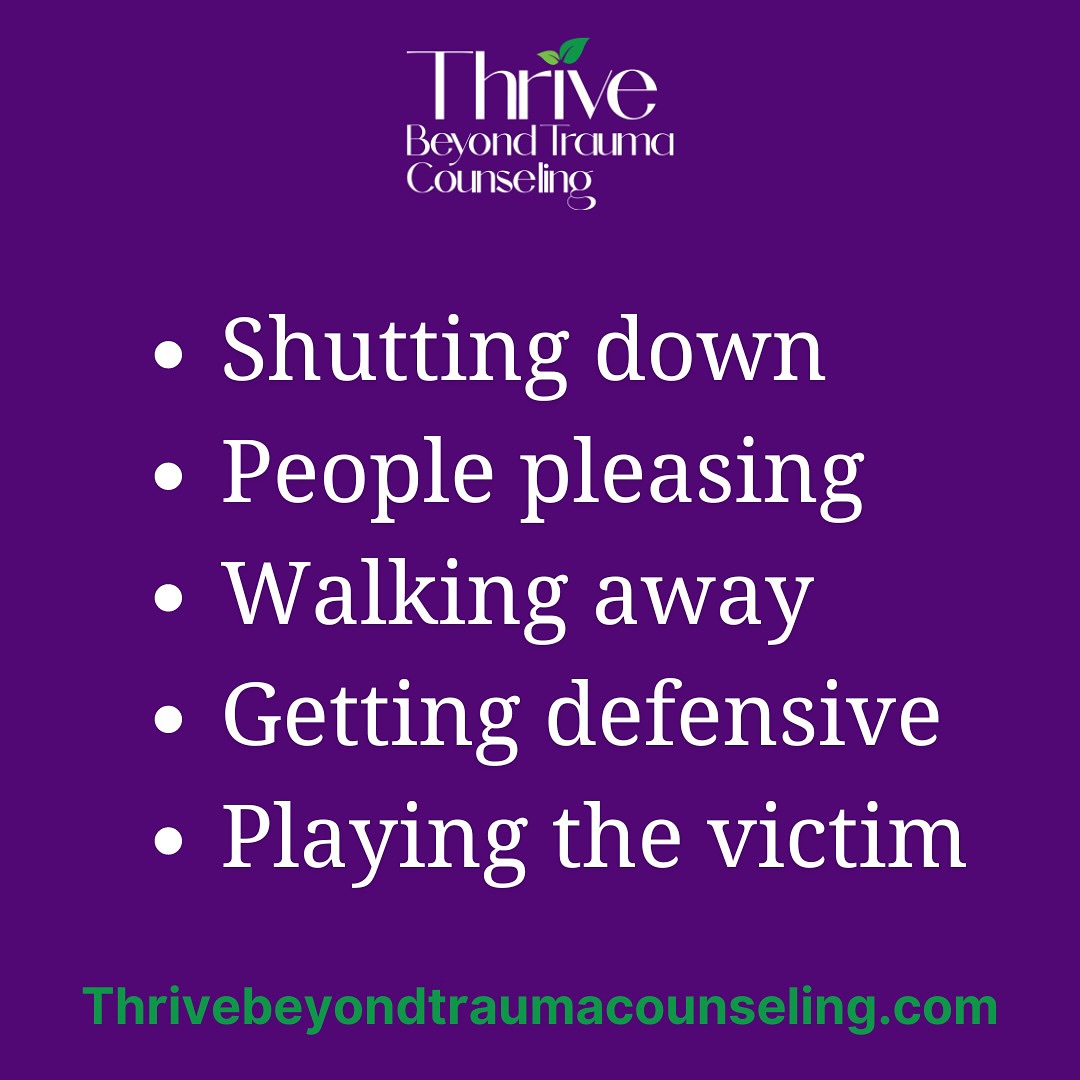
Shutting down
Unlike emotional numbness (which is an overall state), shutting down is a specific response to a stressor. It’s a collapse. Your mind and body essentially decide that fighting or fleeing is useless, so you withdraw and disengage entirely. This can look like being unable to speak, stare into space, or feeling physically immobilized.
People pleasing
While being kind is a positive trait, people pleasing is driven by fear. It’s a response (often called a “fawn” response) that attempts to create safety by placating others and avoiding conflict at any cost. This involves suppressing your own needs, feelings, and boundaries to make sure everyone else is comfortable.
Walking away
When a conversation gets tense, do you immediately look for the exit? Walking away without resolving a conflict is a form of flight response. It’s an automatic impulse to remove yourself from a situation that feels emotionally dangerous, even when it might be safe and necessary to stay and communicate.
Getting defensive
If you find yourself automatically reacting with “it wasn’t my fault” or immediately pointing out why the other person is wrong, it’s a sign you are feeling threatened. Defensiveness is a protective wall meant to shield you from perceived criticism, blame, or rejection.
Playing the victim
This can be a difficult concept to understand. “Playing the victim” as a response isn’t about manipulating for attention; it’s about a deeply held belief that you are inherently helpless and that you have no power to change your situation. It’s a direct reflection of a trauma where you were a victim and learned that you truly were powerless to protect yourself.
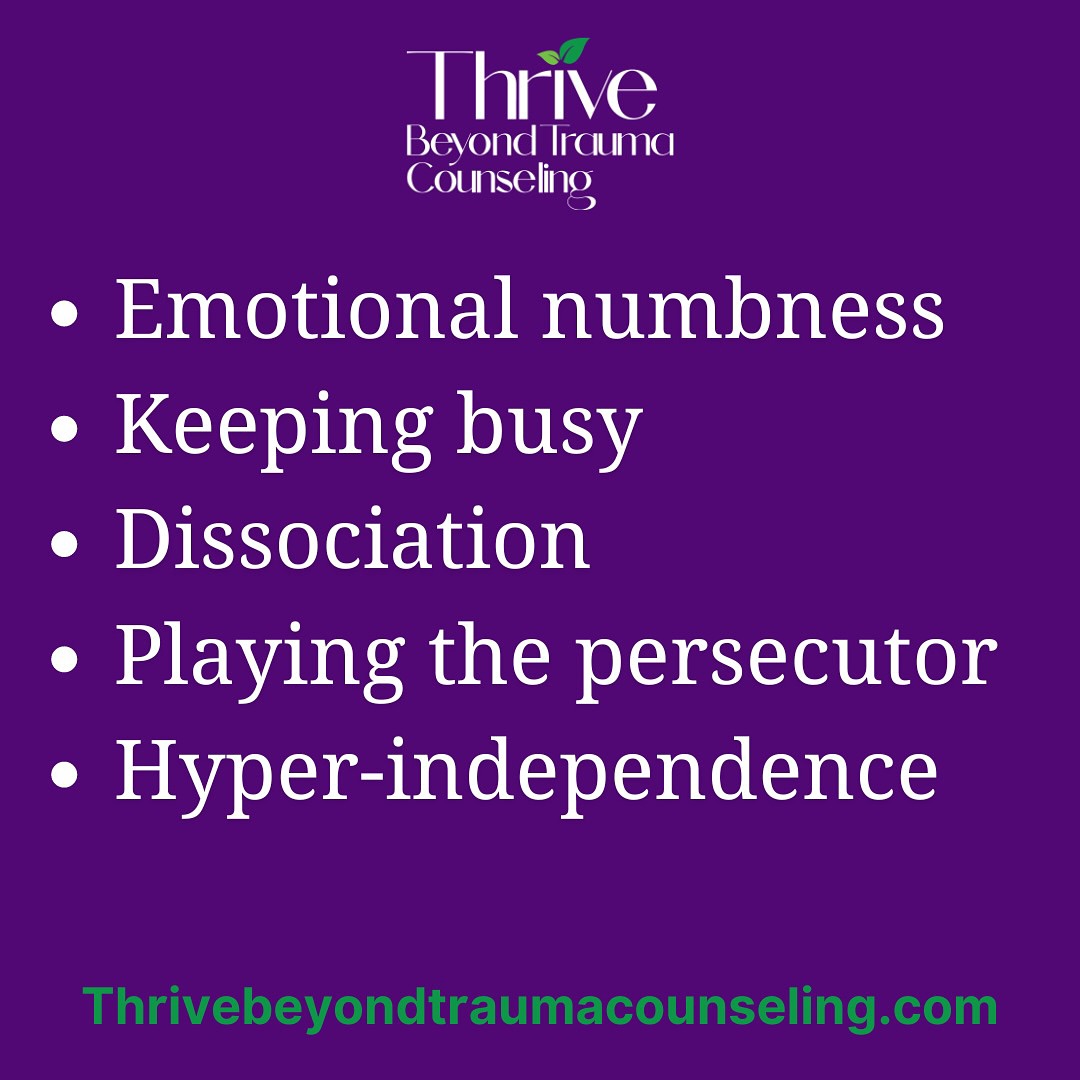
Emotional numbness
This is more than just feeling “calm.” Emotional numbness is a response that helps you detach from pain when you don’t have the resources to process it. While this can be a survival mechanism in the moment, it can eventually lead to feeling completely cut off from both your positive and negative emotions, leaving you feeling empty or robotic.
Keeping busy
Are you always on the go, with an endless to-do list? This kind of excessive busy-ness is a common way to distract yourself from uncomfortable feelings, difficult thoughts, and painful memories. If you constantly feel a need to do more to avoid feeling more, it could be a trauma response.
Dissociation
Dissociation can feel like being “checked out,” on autopilot, or even having an out-of-body experience. It’s a mental escape hatch that your mind uses when a situation feels too dangerous or overwhelming to cope with. Chronic dissociation makes it difficult to stay present and connected in your relationships and your life.
Playing the persecutor
For some survivors, adopting a critical, blaming, or even aggressive stance can be a way to regain a sense of control and power that was taken away. By preemptively attacking (verbally or emotionally), you prevent others from hurting you first. This is a complex response rooted in a deep need for self-protection.
Hyper-independence
If you take pride in the fact that you “don’t need anybody” and struggle to ask for or accept help, this could be a trauma response. Hyper-independence often stems from a history of having your needs ignored or betrayed by the people who were supposed to care for you. It’s a way of ensuring you will never be that vulnerable again.
At Thrive Beyond Trauma Counseling, we specialize in helping individuals like you understand and heal the root causes of their trauma responses. Our compassionate, trauma-informed therapists are here to guide you on your journey toward resilience, empowerment, and a life where you are thriving, not just surviving. If you are ready to explore your healing, we are ready to support you.
Address: Suite C, 37923 W. 12 Mile Rd, Farmington Hills, MI
Phone: (248) 392-3733
FOLLOW US ON
If you are in crisis or experiencing an emergency, please call 911 or your local emergency services, or visit the nearest emergency room.
Thrive Beyond Trauma Counseling does not provide crisis or emergency services.