Thrive Beyond Trauma Counseling
Healing Doesn't End at Survival; It Begins With Thriving. Helping Individuals, Couples, & Families Heal, Grow & Thrive Beyond Trauma.
Thrive Beyond Trauma Counseling
Thrive Beyond Trauma Counseling
Healing Doesn't End at Survival; It Begins With Thriving. Helping Individuals, Couples, & Families Heal, Grow & Thrive Beyond Trauma.
What Trauma Healing Actually Looks Like
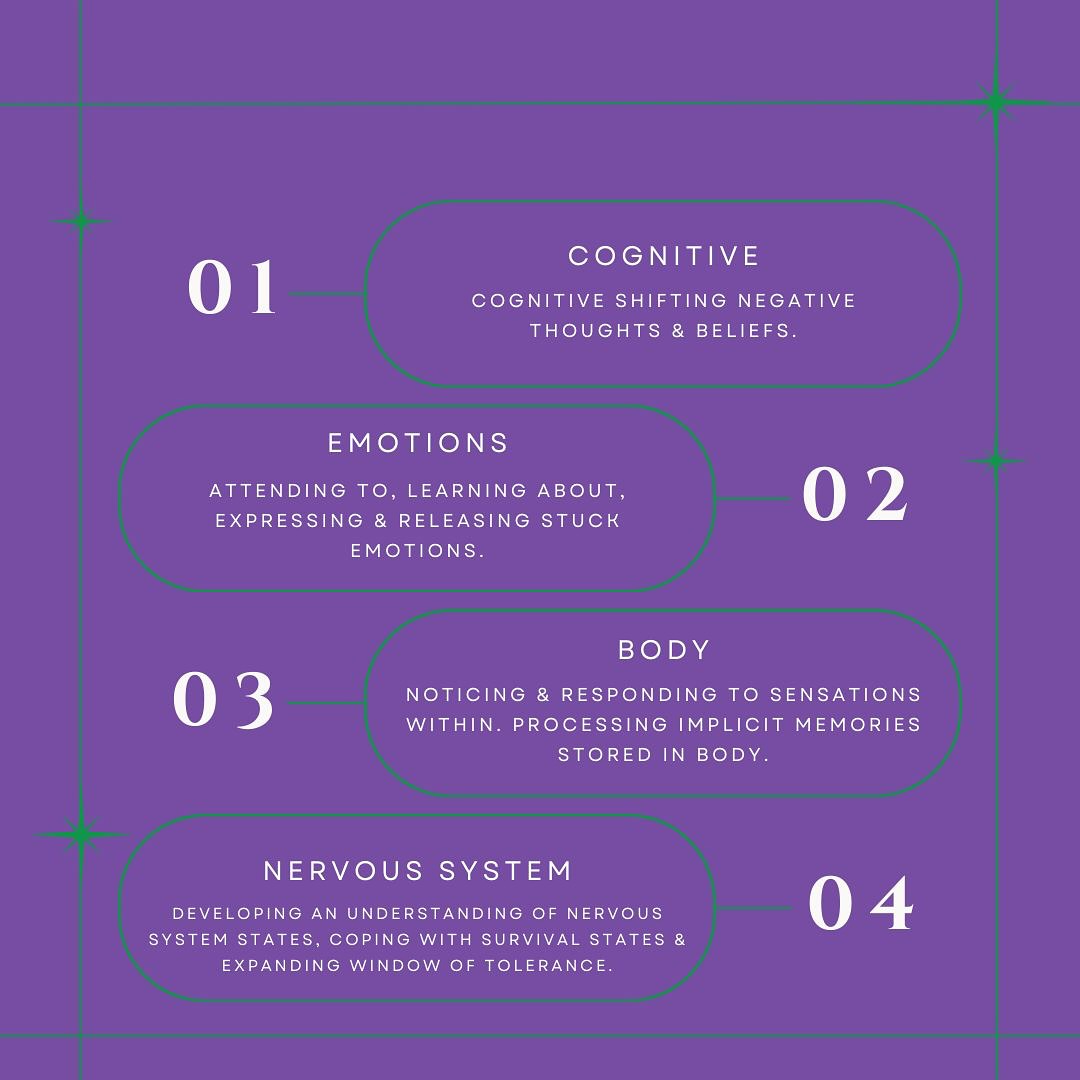
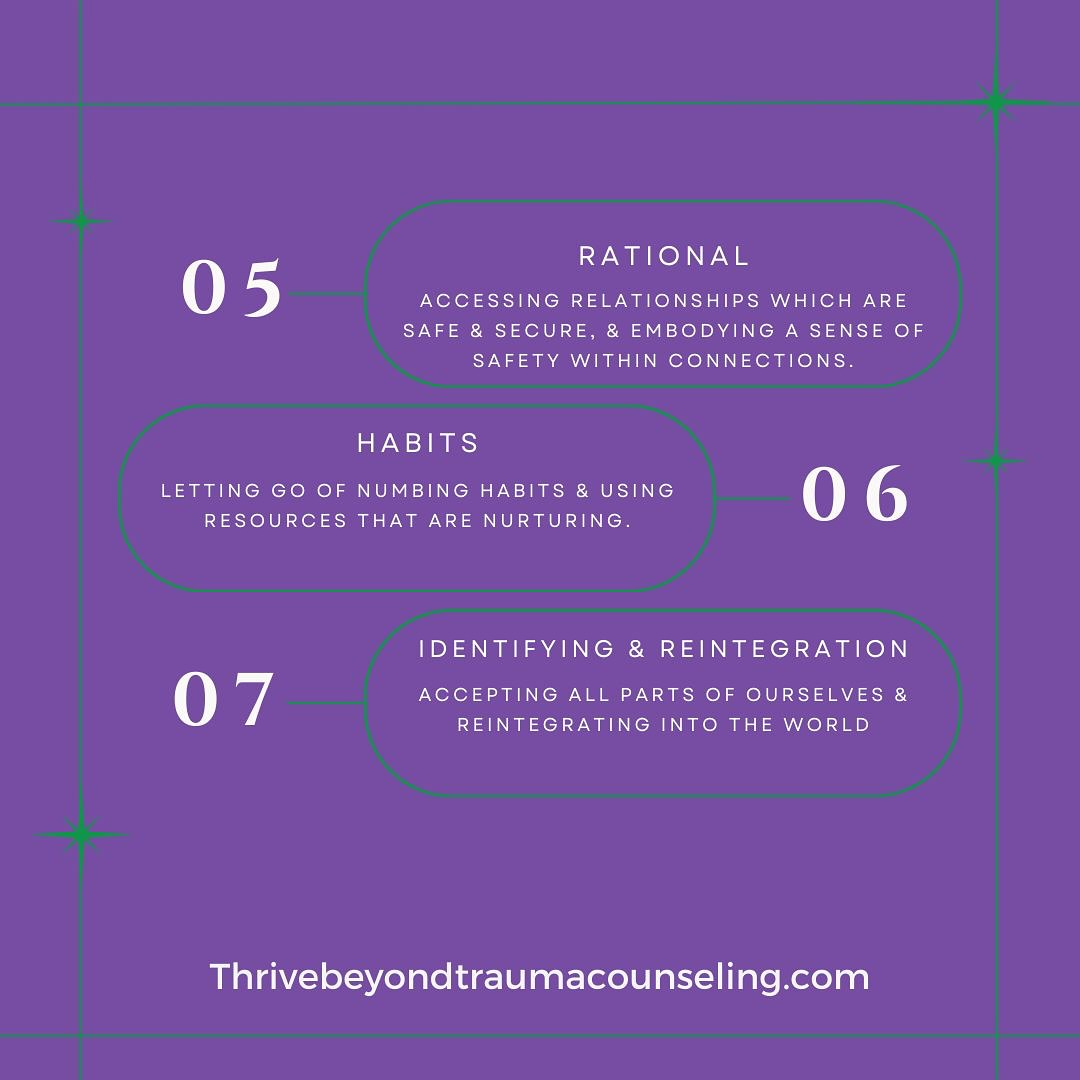
We all hear about “healing” after a traumatic experience, but what does that path really look like? It’s not a single moment of recovery, but a deeply personal, complex, and often windy journey that unfolds over time. At Thrive Beyond Trauma Counseling, we believe in providing you with a clear, realistic map for this process. Forget the abstract clichés. Healing from trauma involves rewiring how your mind, body, and spirit operate. We’ve broken down this transformation into 7 key areas. If you’ve been following our journey on Instagram, you’ve seen these steps before, but here we’ll dive deeper into exactly how each one contributes to your thriving.
Cognitive
Trauma has a sneaky way of distorting your worldview. It can breed core beliefs like “I am not safe,” “I am broken,” or “It was my fault.” The first stage of healing is about becoming an internal detective. You learn to recognize these self-sabotaging thought patterns as they arise. This isn’t just “positive thinking”; it’s a profound process of challenging those negative beliefs with reality and gently, but deliberately, replacing them with thoughts that are true, empowering, and supportive of your well-being. This is where you begin to rewrite your story from victim to survivor.
Emotions
Trauma often gets ‘stuck’ in our systems because the overwhelming emotions at the time couldn’t be fully processed. This stage is all about creating a safe space to feel. You’ll learn to identify the subtle nuances of your emotions rather than just labeling everything as “bad” or “sad.” Attending to your feelings means giving them attention without judgment. We work on techniques for safely expressing these emotions: whether through journaling, somatic experiencing, or verbalizing; and ultimately releasing them so they no longer hold power over you. It’s a journey from emotional suppression to emotional freedom.
Body
We often say “the body keeps the score.” Trauma isn’t just in your head; it lives in your muscles, your posture, and your nervous system. In this step, you will cultivate somatic awareness: learning to tune in and listen to the subtle sensations your body sends (tightness, warmth, tension). These sensations are often linked to implicit memories; memories that have no words but exist as physical feelings. By noticing and gently responding to these sensations (rather than ignoring or fearing them), you give your body a chance to process and release the residual trauma it has been carrying for years.
Nervous System
A dysregulated nervous system is at the core of most trauma symptoms. It leaves you constantly scanning for danger (fight or flight) or feeling completely shut down (freeze). The path to healing requires understanding your own nervous system’s language. You will learn to identify when you are in a survival state and, critically, learn specific tools (like breathing exercises, grounding techniques, or movement) to cope with them and safely return to a place of social engagement and calm. The long-term goal is to expand your ‘window of tolerance,’ making it easier for you to navigate life’s challenges without spiraling into old trauma responses.
Rational
Trauma often breaks trust in others. The “Rational” step is about meticulously rebuilding that capacity for safe connection. This isn’t about being friends with everyone. It’s about becoming intentional in identifying and accessing relationships that are truly safe and secure. It involves discerning who respects your boundaries and supports your growth. Crucially, it’s also about learning to embody a sense of safety within these connections, allowing yourself to trust and be vulnerable in a healthy, supported way. This is where you reclaim the joy of authentic, safe relationships.
Habits
We often develop coping mechanisms to survive: many of which become ‘numbing habits’ that temporarily dull the pain but prevent true healing (e.g., substance use, doom-scrolling, overworking, people-pleasing). Healing involves the conscious, difficult, and brave work of identifying these numbing habits and choosing to let them go. In their place, we help you discover and integrate ‘nurturing resources’—healthy habits that genuinely feed your soul and support your nervous system. This is a crucial pivot from simply avoiding pain to actively cultivating a life that feels good.
Identifying & Reintegration
The final step is the summation of all the parts. Trauma can make us feel fragmented, like we are a different person before and after. This stage is about accepting ALL parts of ourselves: including the parts that were hurt, the parts that were angry, and the parts that learned to survive. It’s about a deep self-compassion. This full acceptance allows for a beautiful reintegration. You are no longer defined solely by the trauma, but by the whole, resilient person you have become. This is the moment you fully step back into the world, not as you were, but as a thriver, empowered by your entire journey.
At Thrive Beyond Trauma Counseling, we understand the 7 steps intimately and have designed our therapy practices to support you through each one. Whether you are struggling to rewrite negative beliefs, calm a hypervigilant body, or rebuild trust, we are here with specialized tools and compassionate guidance. You deserve a life defined not by what happened to you, but by the thriving person you are. Contact us today!
Address: Suite C, 37923 W. 12 Mile Rd, Farmington Hills, MI
Phone: (248) 392-3733
FOLLOW US ON
If you are in crisis or experiencing an emergency, please call 911 or your local emergency services, or visit the nearest emergency room.
Thrive Beyond Trauma Counseling does not provide crisis or emergency services.