Dealing with inconsistency in people can be exhausting and confusing. Whether it’s a friend who acts differently depending on who is in the room or a colleague who says one thing to your face and another behind your back, two-faced behavior is a difficult reality to navigate. In this post, we’ll explore why people act this way and, more importantly, what you can do to protect your peace.
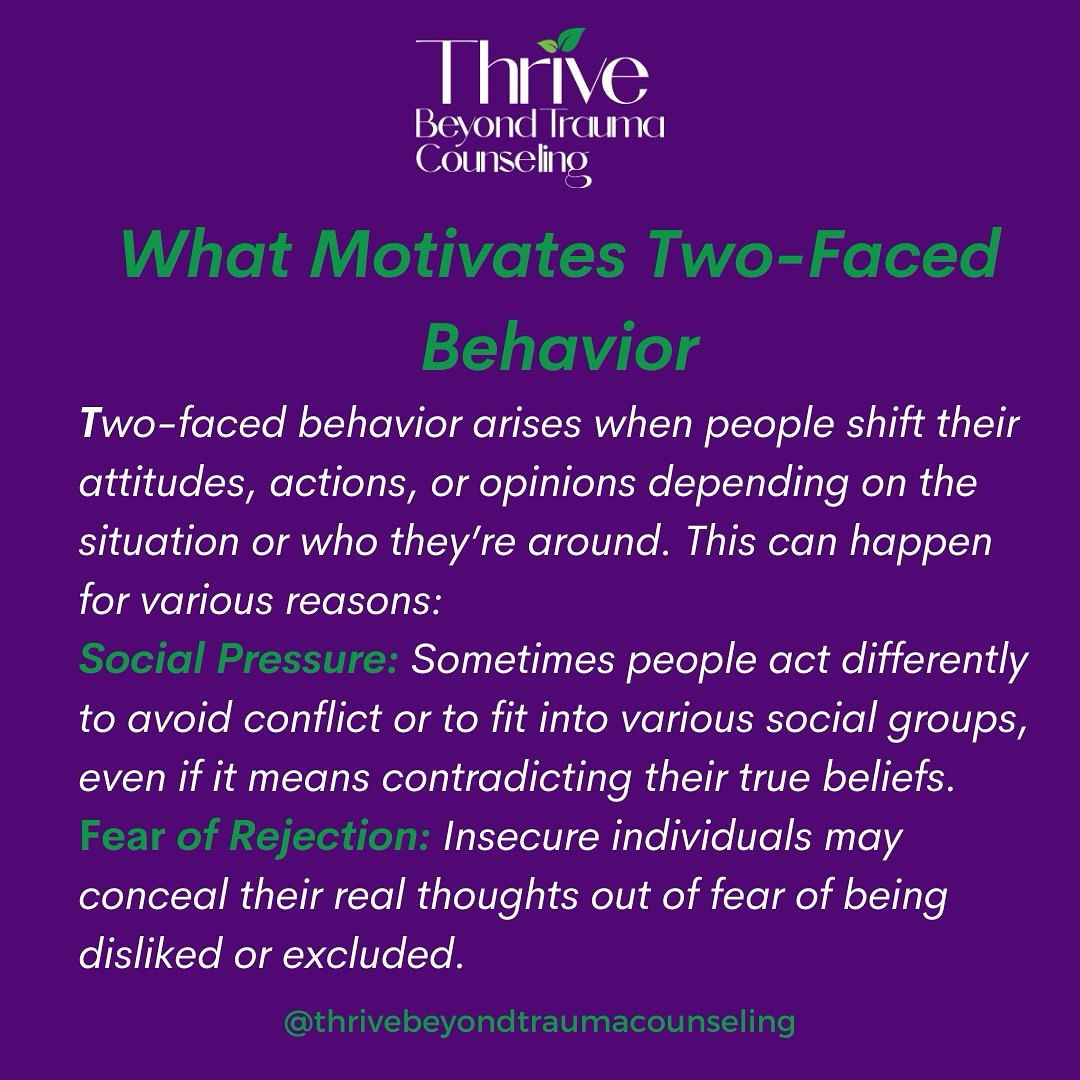
What Motivates Two-Faced Behavior
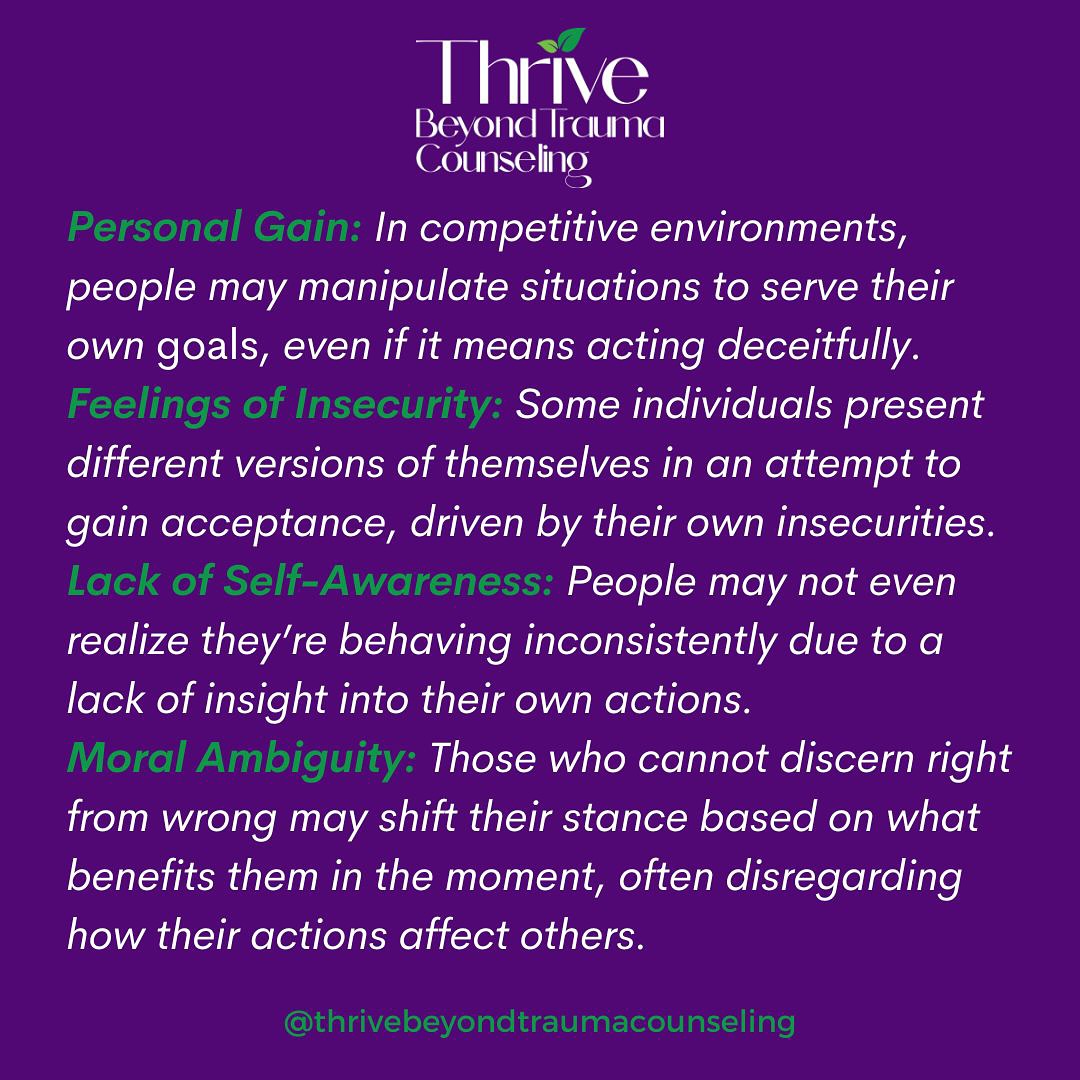
Two-faced behavior arises when people shift their attitudes, actions, or opinions depending on the situation or who they’re around. This can happen for various reasons:
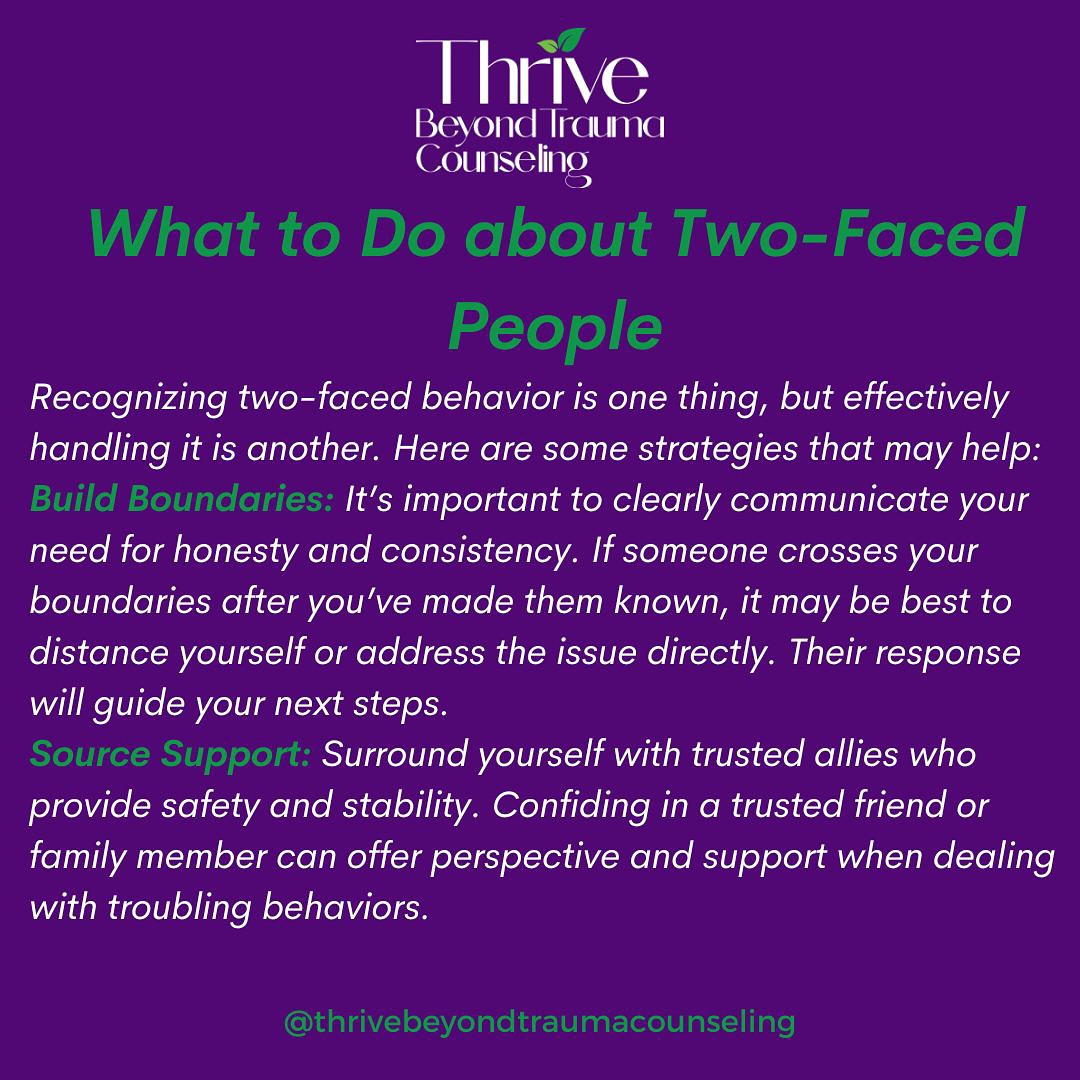
What to Do about Two-Faced People
Recognizing two-faced behavior is one thing, but effectively handling it is another. Here are some strategies that may help:
Build Boundaries
It’s important to clearly communicate your need for honesty and consistency. If someone crosses your boundaries after you’ve made them known, it may be best to distance yourself or address the issue directly. Their response will guide your next steps.
Source Support
Surround yourself with trusted allies who provide safety and stability. Confiding in a trusted friend or family member can offer perspective and support when dealing with troubling behaviors.
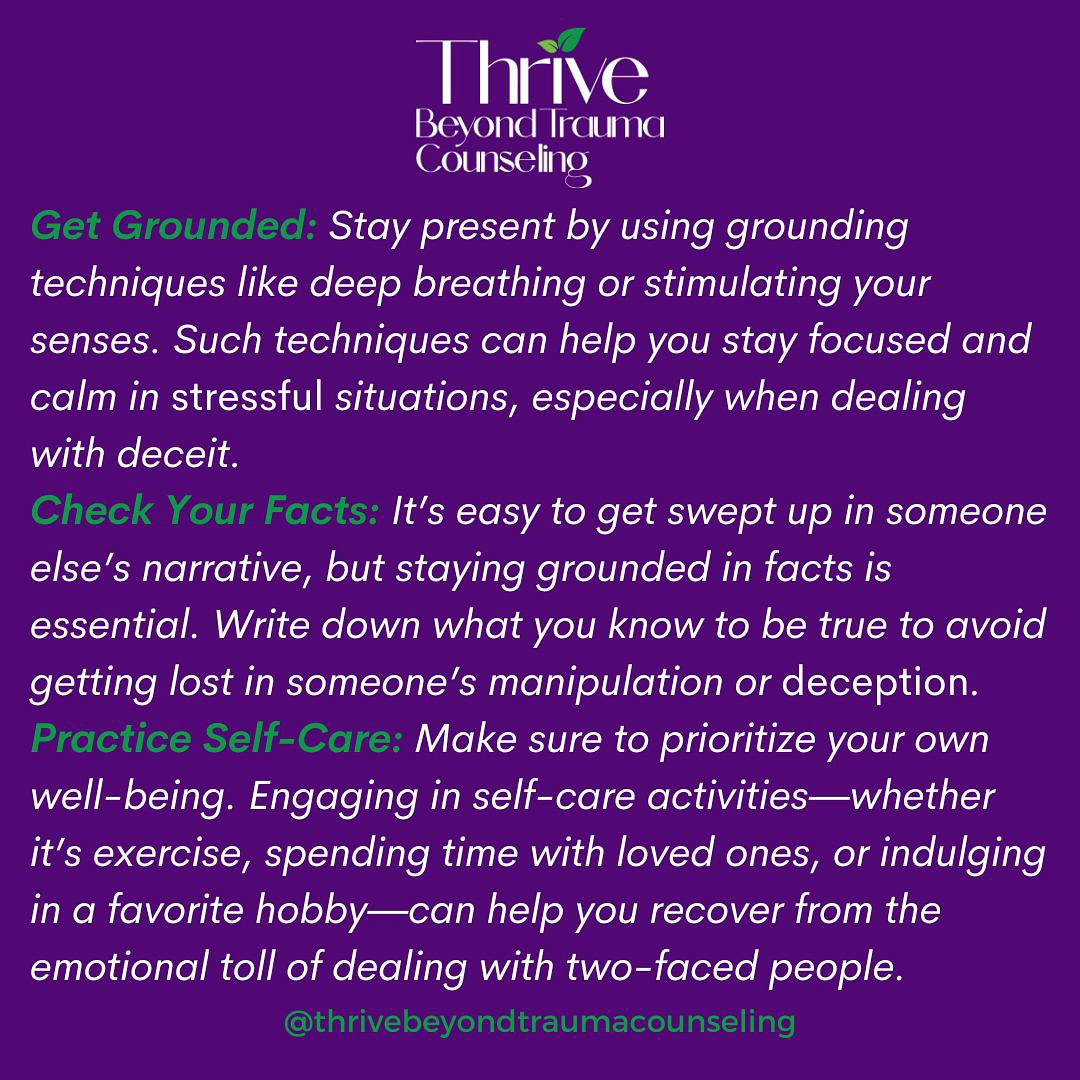
Get Grounded
Stay present by using grounding techniques like deep breathing or stimulating your senses. Such techniques can help you stay focused and calm in stressful situations, especially when dealing with deceit.
Check Your Facts
It’s easy to get swept up in someone else’s narrative, but staying grounded in facts is essential. Write down what you know to be true to avoid getting lost in someone’s manipulation or deception.
Practice Self-Care
Make sure to prioritize your own well-being. Engaging in self-care activities: whether it’s exercise, spending time with loved ones, or indulging in a favorite hobby; can help you recover from the emotional toll of dealing with two-faced people.
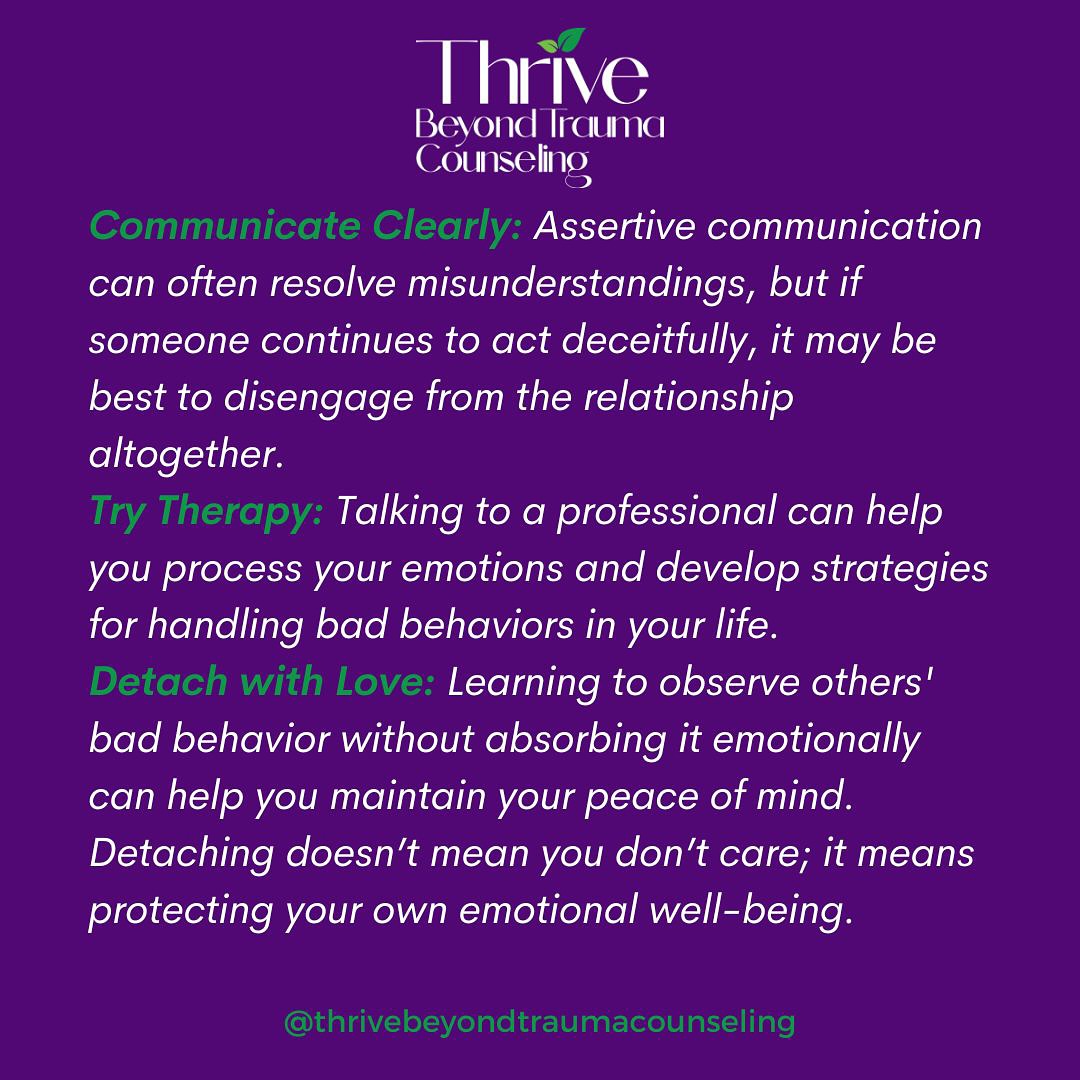
Communicate Clearly
Assertive communication can often resolve misunderstandings, but if someone continues to act deceitfully, it may be best to disengage from the relationship altogether.
Try Therapy
Talking to a professional can help you process your emotions and develop strategies for handling bad behaviors in your life.
Detach with Love
Learning to observe others’ bad behavior without absorbing it emotionally can help you maintain your peace of mind. Detaching doesn’t mean you don’t care; it means protecting your own emotional well-being.
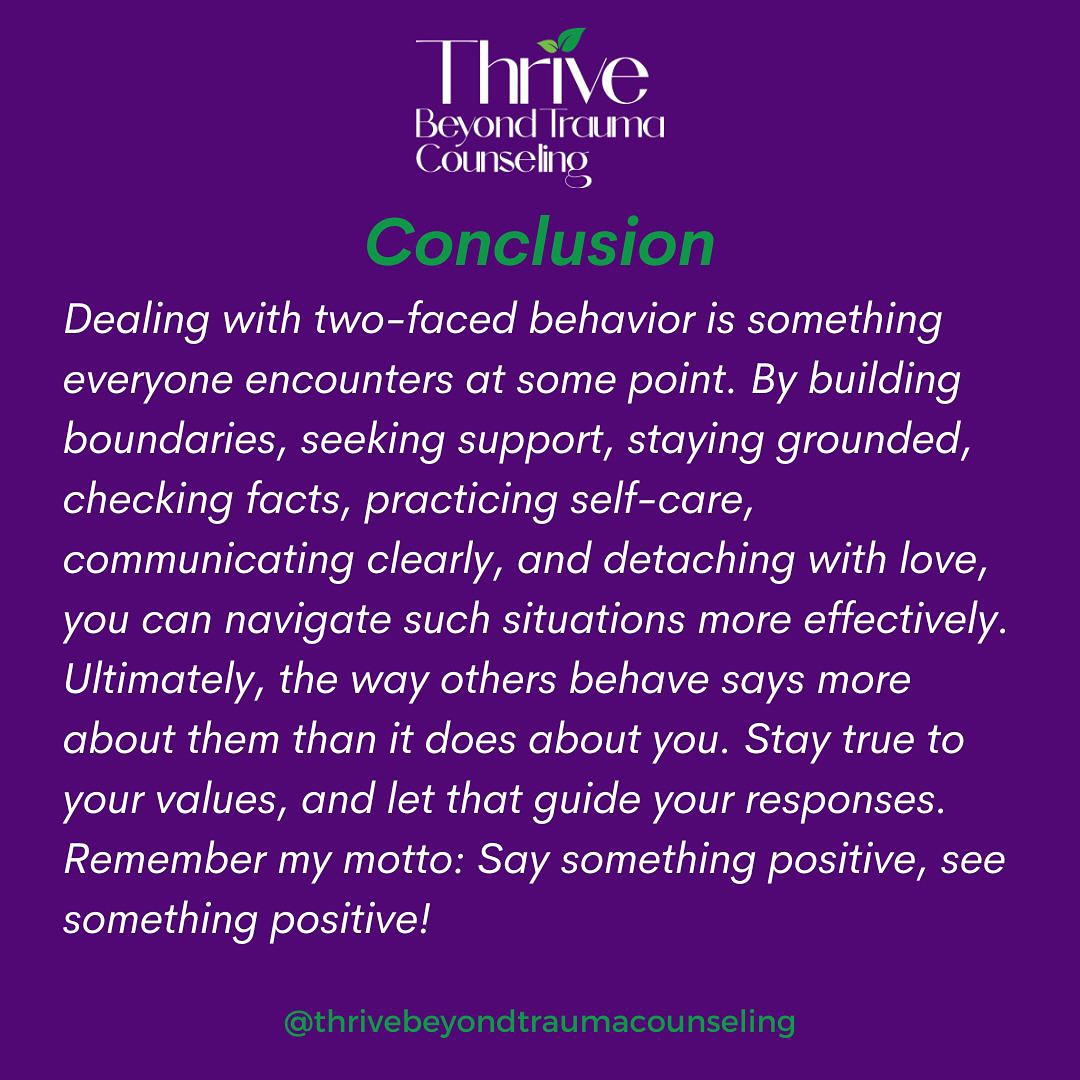
Conclusion
Dealing with two-faced behavior is something everyone encounters at some point. By building boundaries, seeking support, staying grounded, checking facts, practicing self-care, communicating clearly, and detaching with love, you can navigate such situations more effectively.
Ultimately, the way others behave says more about them than it does about you. Stay true to your values, and let that guide your responses.
Remember my motto: Say something positive, see something positive!
At Thrive Beyond Trauma Counseling, we help you navigate complex relational dynamics and build the resilience needed to protect your emotional health. If you are struggling with the effects of deceit or manipulation in your life, our professional team is here to support you. Reach out today to start your journey toward clarity and peace.
Address: Suite C, 37923 W. 12 Mile Rd, Farmington Hills, MI
Phone: (248) 392-3733
If you are in crisis or experiencing an emergency, please call 911 or your local emergency services, or visit the nearest emergency room.
Thrive Beyond Trauma Counseling does not provide crisis or emergency services.