Email: Info@thrivebeyondtraumacounseling.com
Call: (248) 392- 3733 | Fax: (657) 439-3825
Sexual coercion is a topic that is often misunderstood, yet it impacts a significant portion of the population. It is a form of pressure that blurs the lines of consent and can leave lasting emotional scars. Understanding what it is, how it manifests, and how we can prevent it is the first step toward building healthier, more respectful relationships.
What is Sexual Coercion?
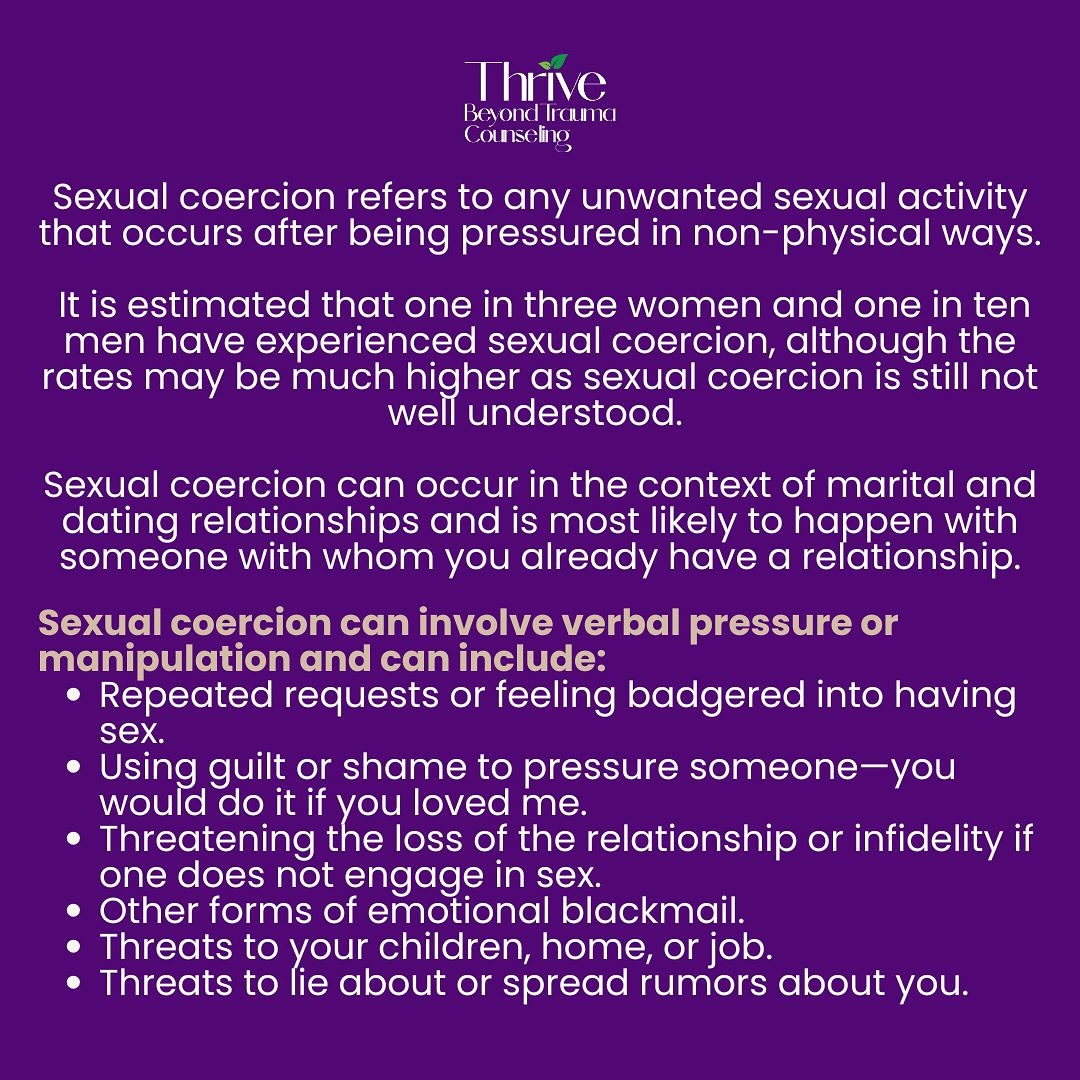
Sexual coercion refers to any unwanted sexual activity that occurs after being pressured in non-physical ways. It is far more common than many realize. It is estimated that one in three women and one in ten men have experienced sexual coercion, though actual rates may be much higher because the behavior is often normalized or misunderstood. Coercion is most likely to happen with someone you already have a relationship with, such as a dating partner or spouse. It involves verbal pressure or manipulation, including:
The Consequences of Sexual Coercion
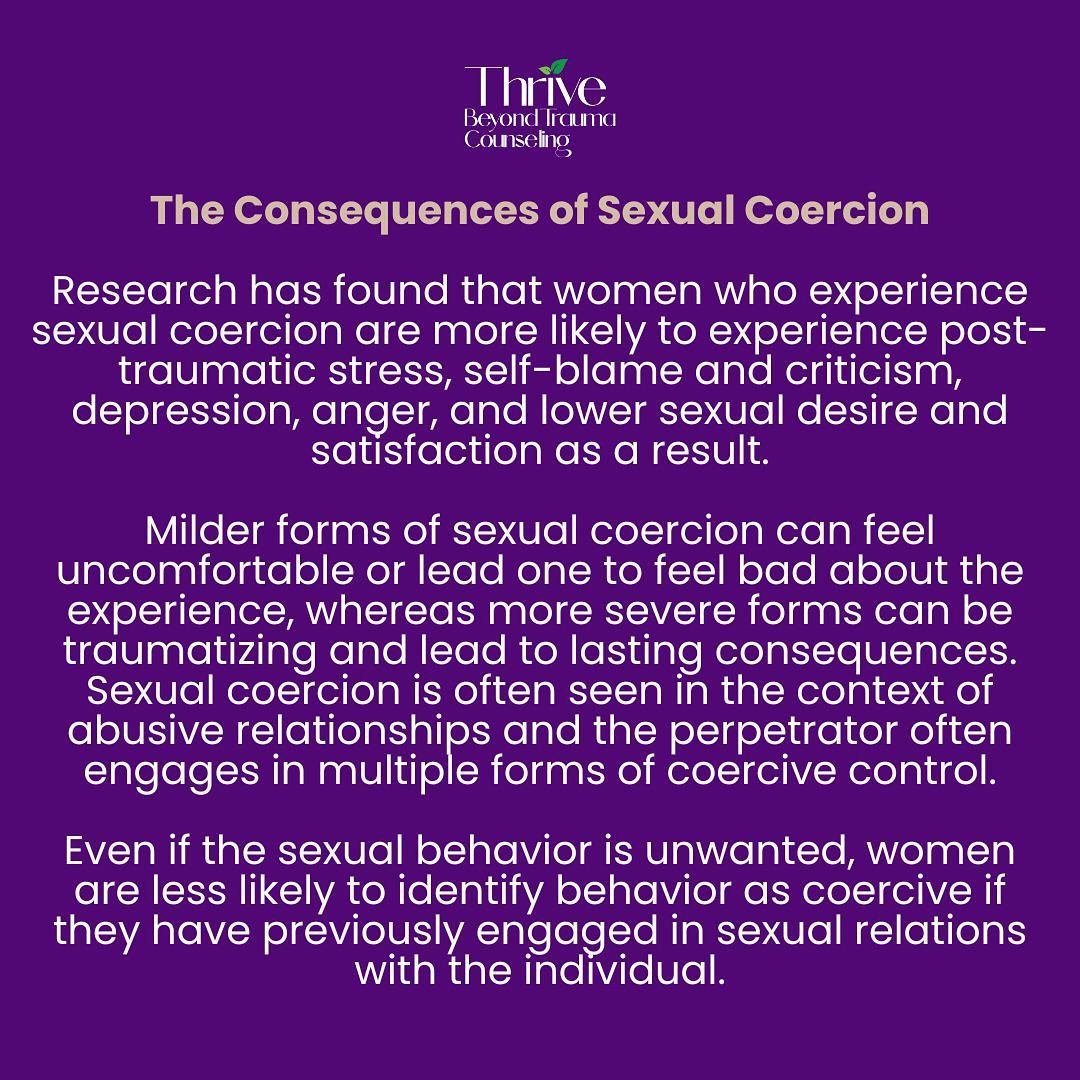
The impact of this behavior is profound. Research has found that women who experience sexual coercion are more likely to experience post-traumatic stress, self-blame and criticism, depression, anger, and lower sexual desire.
The severity can vary, but the harm is always present:
Sexual coercion is often seen in the context of abusive relationships where the perpetrator engages in multiple forms of coercive control. Interestingly, women are less likely to identify behavior as coercive if they have previously engaged in sexual relations with that individual, which makes education on this topic even more vital.
Is Sexual Coercion a Crime?
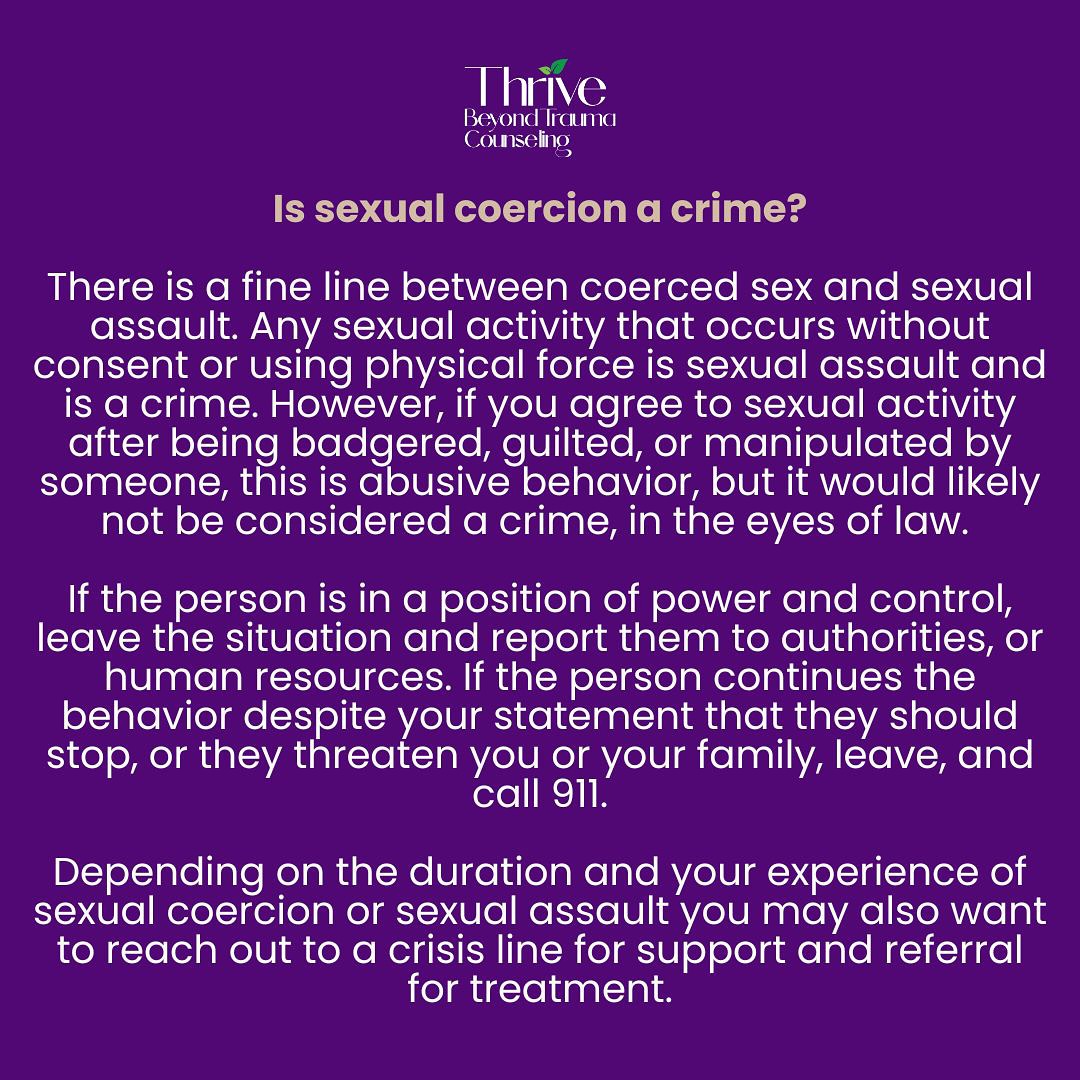
There is a fine line between coerced sex and sexual assault. Any sexual activity that occurs without consent or using physical force is sexual assault and is a crime. However, if you agree to sexual activity after being badgered, guilted, or manipulated, this is abusive behavior, but it would likely not be considered a crime in the eyes of the law. If you find yourself in this situation:
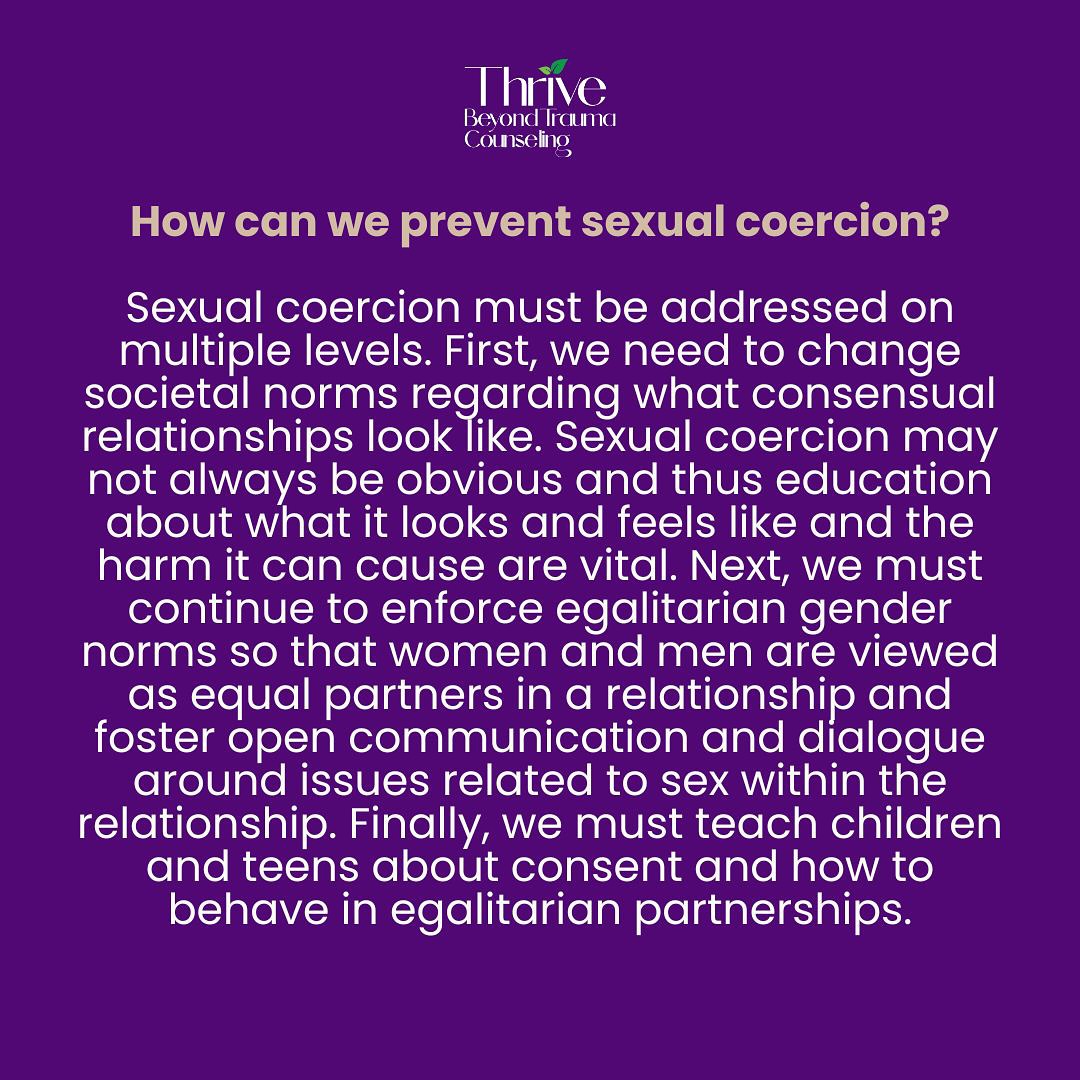
How Can We Prevent Sexual Coercion?
Preventing sexual coercion requires change on multiple levels:
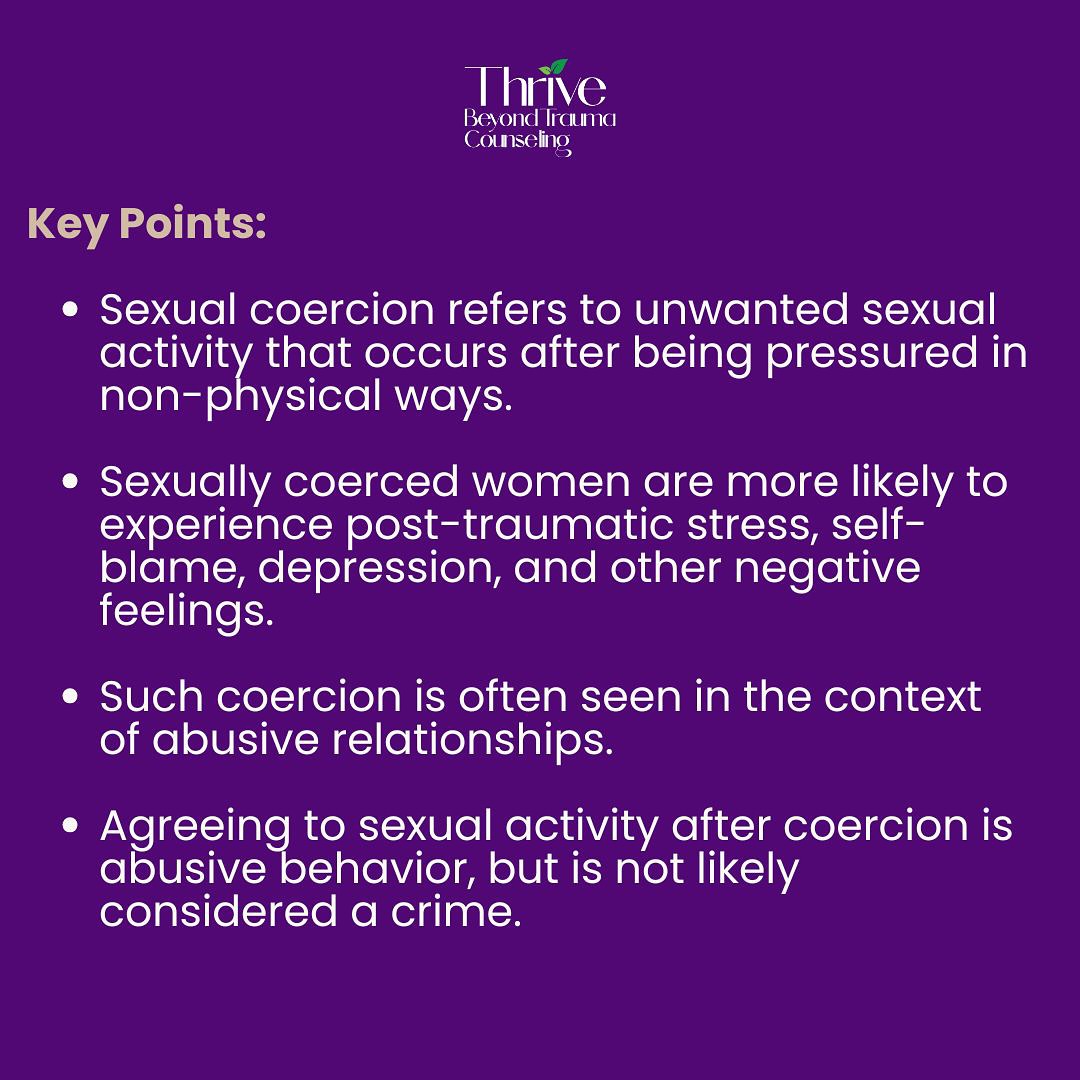
Key Points to Remember:
At Thrive Beyond Trauma Counseling, we are dedicated to helping survivors heal from the impact of sexual coercion and coercive control. If you or someone you love has been affected, you don’t have to navigate the healing process alone. Reach out to us today to learn more about our counseling services and how we can support your journey toward recovery.
Address: Suite C, 37923 W. 12 Mile Rd, Farmington Hills, MI
Phone: (248) 392-3733
If you are in crisis or experiencing an emergency, please call 911 or your local emergency services, or visit the nearest emergency room.
Thrive Beyond Trauma Counseling does not provide crisis or emergency services.