Partner Betrayal Trauma

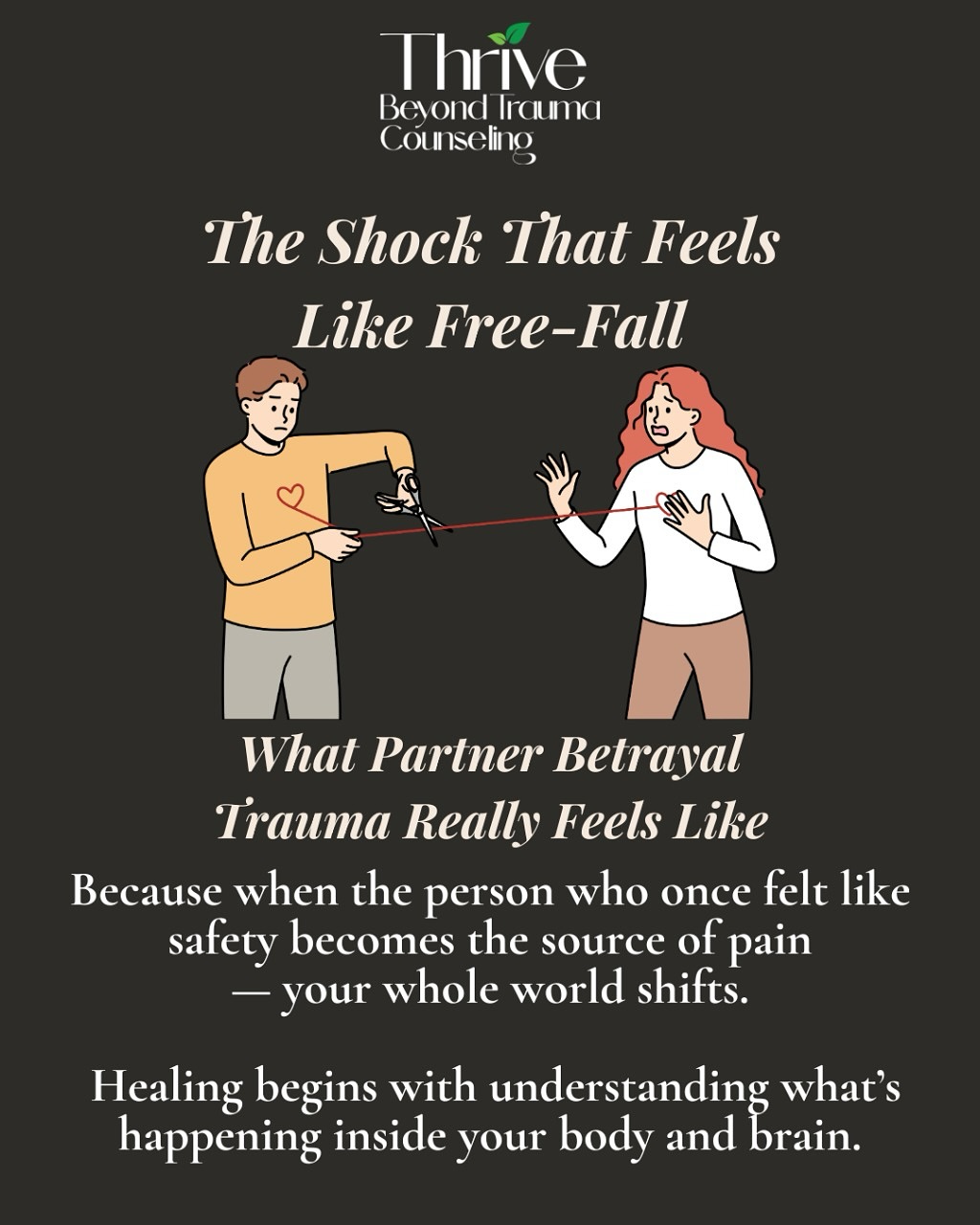
When Trust Breaks: What Partner Betrayal Trauma Really Feels Like

Betrayal doesn’t just hurt — it rearranges everything you thought was true. It changes how you breathe, how you sleep, how you see yourself when you look in the mirror. You keep functioning on the outside, but inside your world has tilted.

1. When the Ground Gives Way

The moment the truth surfaces, your body reacts before your mind can.

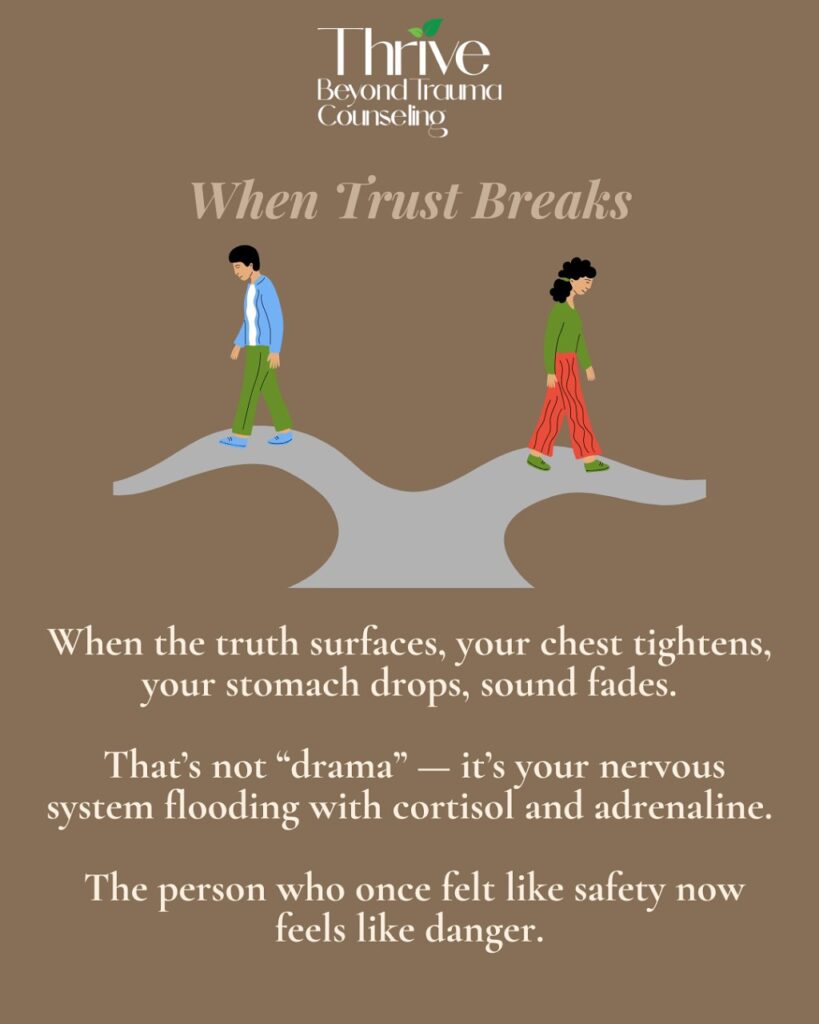
Your chest tightens, your stomach drops, sound fades.

That’s not drama; that’s adrenaline and cortisol flooding your system — the same chemistry that ignites during physical danger.

The person who once meant safety suddenly signals threat.

It feels like free-fall.

2. The Days After — A Mind That Can’t Stop Replaying

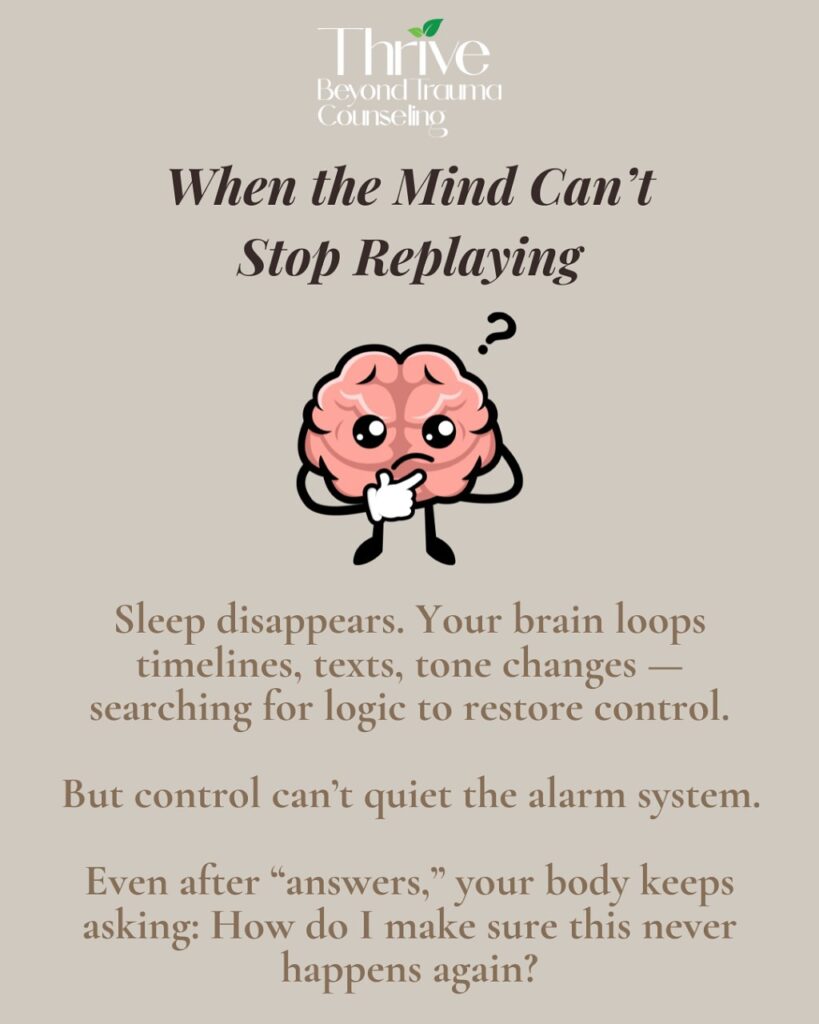
Sleep becomes impossible. Your thoughts circle timelines, texts, tone shifts. The brain’s hippocampus — its memory organizer — tries to stitch the story together, hoping that logic might restore control, but control can’t quiet the alarm system.

Even after “getting answers,” peace doesn’t come; the brain is still asking, “How do I make sure this never happens again?”

3. When Love and Rage Collide

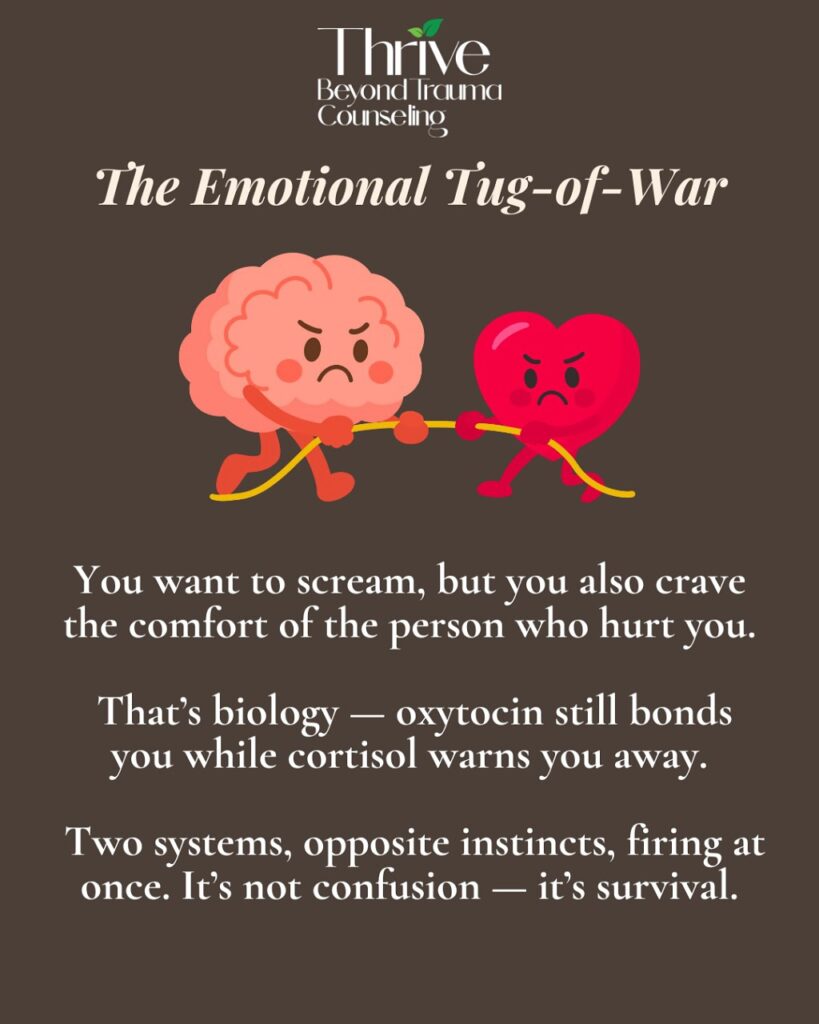
Some moments you want to scream; others you ache for the comfort of the person who caused the pain.

It feels irrational, but it’s biology.

Oxytocin, the bonding chemical, still ties your body to the person it trusted, while cortisol warns you to stay away.

Two opposite systems fire at once — a tug-of-war between attachment and protection.

That confusion isn’t weakness; it’s your nervous system trying to survive heartbreak and hold on to familiarity at the same time.

4. Hypervigilance — Living on Alert

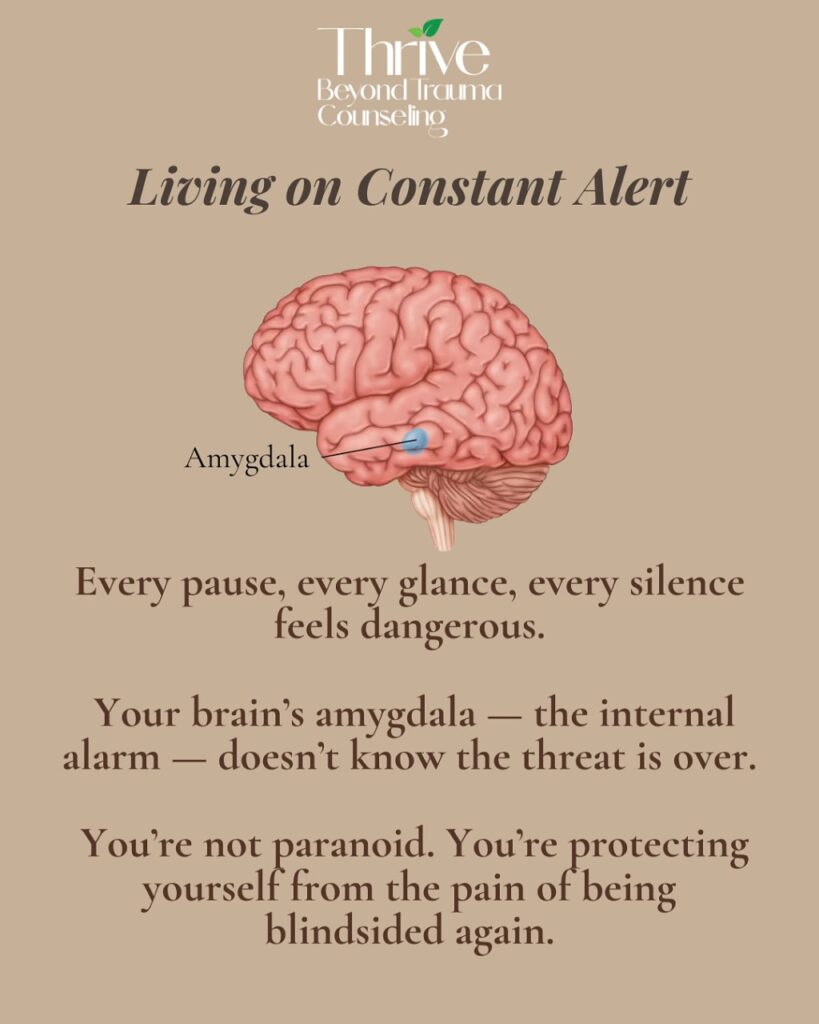
Every tone change, pause, or glance feels loaded. You start scanning for danger, checking phones, reading micro-expressions. It’s exhausting, but the amygdala, your brain’s alarm center, doesn’t know the threat has passed. It keeps you on watch so you won’t be blindsided again.

You’re not being “paranoid” — you’re trying to feel safe in a world that suddenly isn’t.

5. The Body That Can’t Calm Down

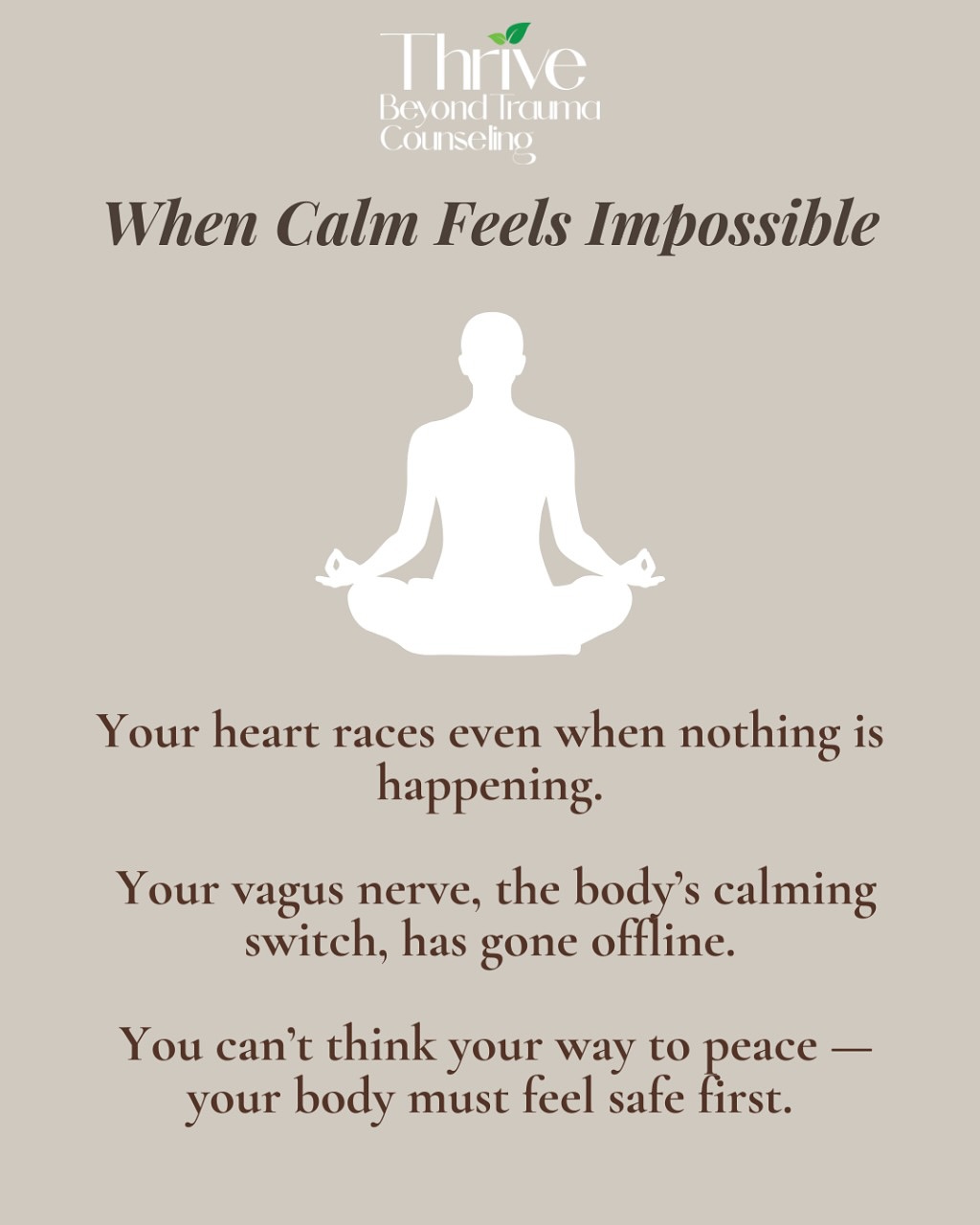
Even when nothing is happening, your heart races or your stomach twists. Your vagus nerve, the body’s calming switch, has gone offline. That’s why talking yourself into calm rarely works; the body needs to feel safety before the mind can believe it.

Somatic grounding, EMDR, and slow breathing exercises begin restoring that rhythm, teaching the body that the emergency is over.

6. The Inner Interrogation

Thoughts spiral: How did I miss it? Maybe if I’d been different…

Self-blame becomes a way to make sense of chaos.

It’s a trauma reflex; if I caused it, maybe I can prevent it.

But self-criticism releases the same stress chemistry as the betrayal itself, keeping the cycle alive.

Healing begins when compassion returns: you didn’t fail; you trusted.

7. Silence and Isolation

It’s tempting to pull away — to avoid the pity or the opinions. Yet isolation feeds cortisol and drops oxytocin, deepening the sense of threat. Speaking the truth in safe spaces — with trained betrayal-trauma therapists or support groups — isn’t weakness; it’s physiology.

The nervous system calms when it feels witnessed.

8. Losing Your Reflection

You start to miss the version of you who laughed easily, who felt confident in love. That person feels unreachable. It’s not vanity — it’s identity disorientation. Your sense of self was co-regulated with someone who is no longer emotionally safe.

The brain can rebuild new neural associations through therapy and self-validation: I can trust my perception again. I can be steady inside my own skin.

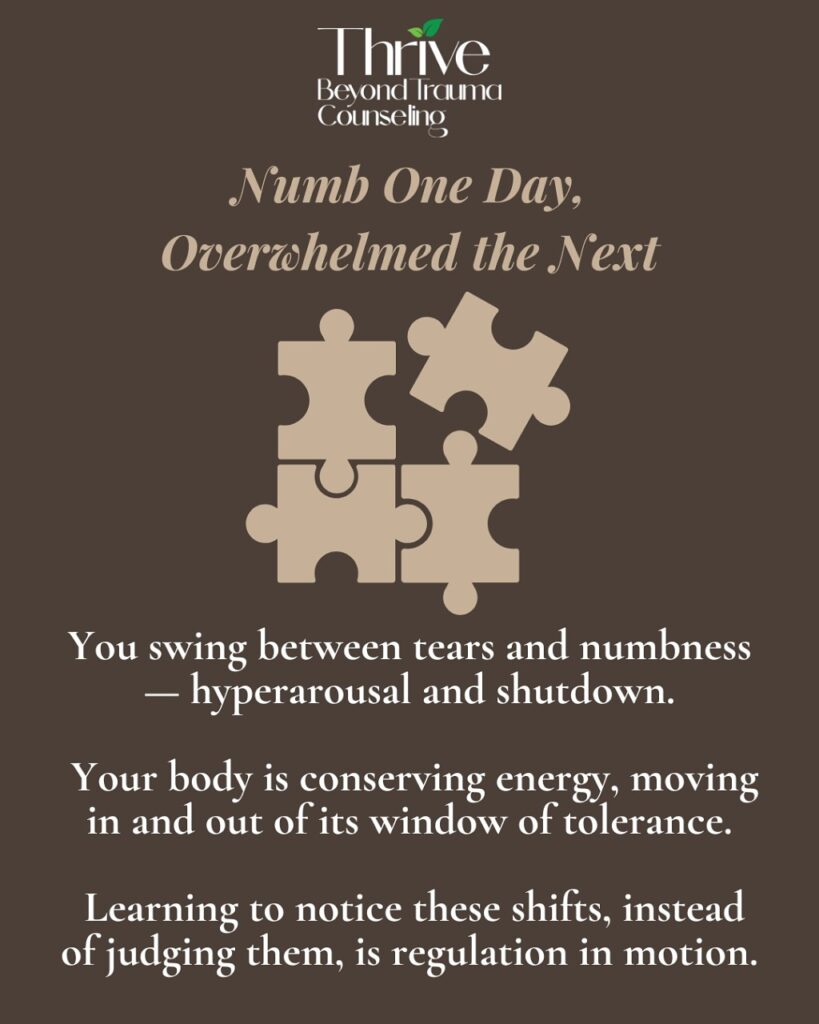
9. Numb One Day, Overwhelmed the Next

You cry until you’re hollow, then feel nothing for days.

This swing between hyper-arousal and shutdown is your body conserving energy — a rhythm trauma researchers call the window of tolerance.

Learning to notice these shifts, rather than fight them, is the first step back toward regulation.

10. Missing What Was Good

The hardest truth: you can still miss the person who hurt you.

Your brain longs for the last moment it felt safe, not for the betrayal itself.

That longing doesn’t mean you’re weak; it means your attachment system remembers connection.

Healing rewires that need into self-trust — teaching your body that peace can come from within, not from proof outside of you.

A Gentle Pause Before We Continue

If any of this feels familiar, take a breath.

You’re not broken; your body is protecting you exactly as it should.

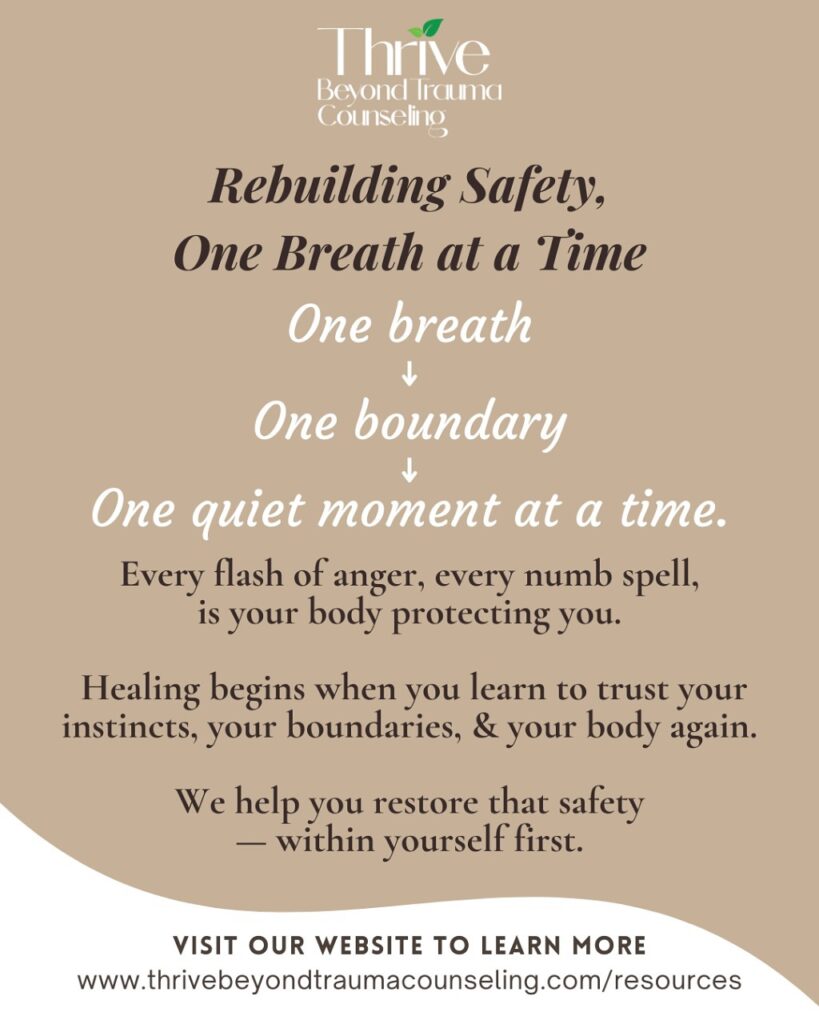
Every flash of anger, every numb spell, every urge to check and re-check — these are survival signals, not flaws.

At Thrive Beyond Trauma Counseling, we specialize in helping betrayed partners rebuild safety after discovery — while also supporting the partner in recovery from addiction or compulsive behaviors.

We guide both individuals and couples through a structured healing process that begins not with reconciliation, but with stabilization, self-trust, and clarity.

You don’t have to decide the future of your relationship today.

The first step is learning how to trust yourself again — your instincts, your body, your boundaries, and your decisions.

Next week, in Part 2 — How Betrayal Rewires the Brain and How It Heals, we’ll explore what happens inside the nervous system, how therapies like EMDR, CSAT, and CCPS calm the alarm, and how relational recovery becomes possible only after internal safety is restored.

Because this story doesn’t end with what broke you — it continues with what you’re rebuilding:

one breath, one boundary, one quiet moment of safety at a time.

📍 Suite C, 37923 W. 12 Mile Rd, Farmington Hills, MI

📞 (248) 392-3733

Scroll to top