Setting Boundaries for Yourself

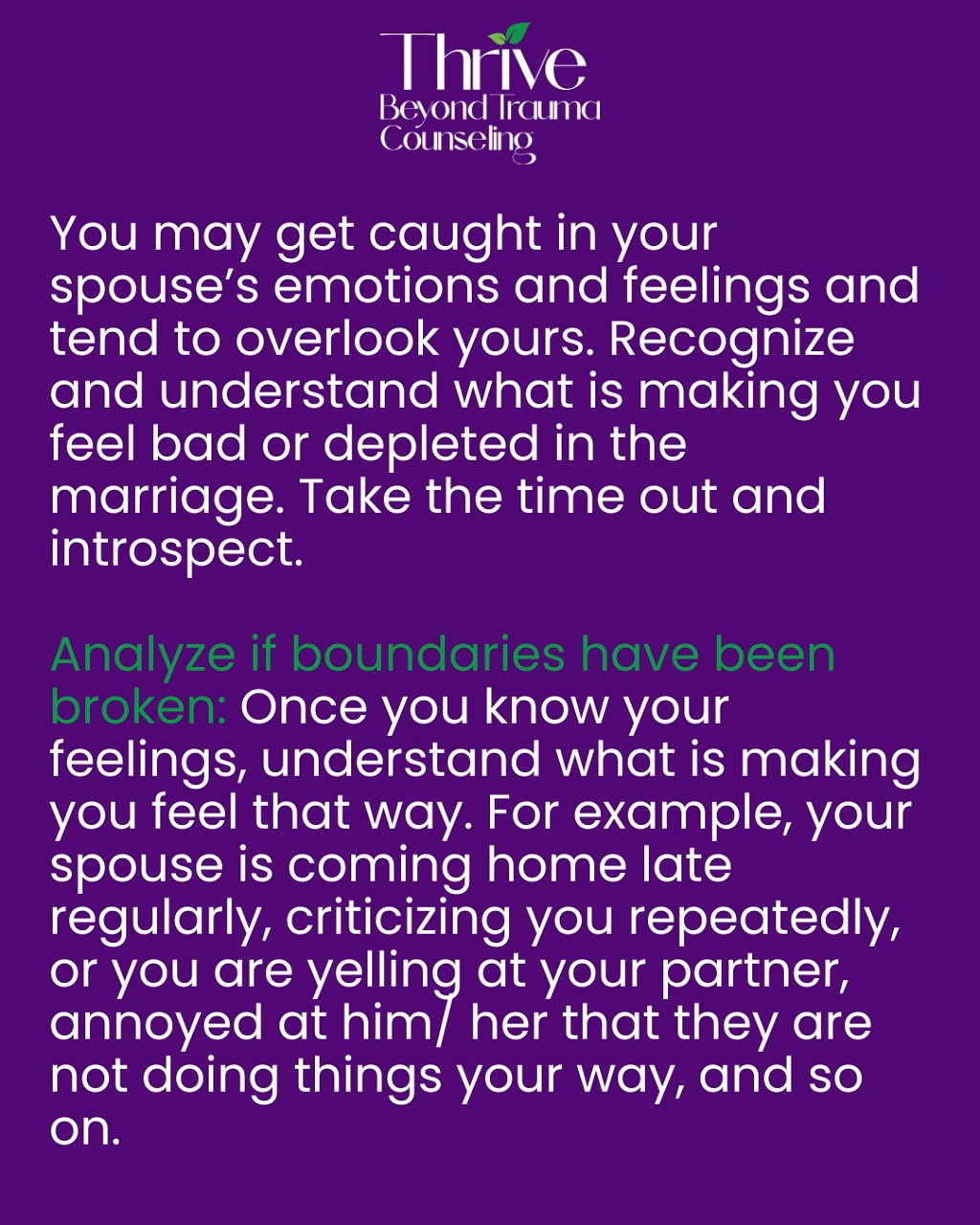
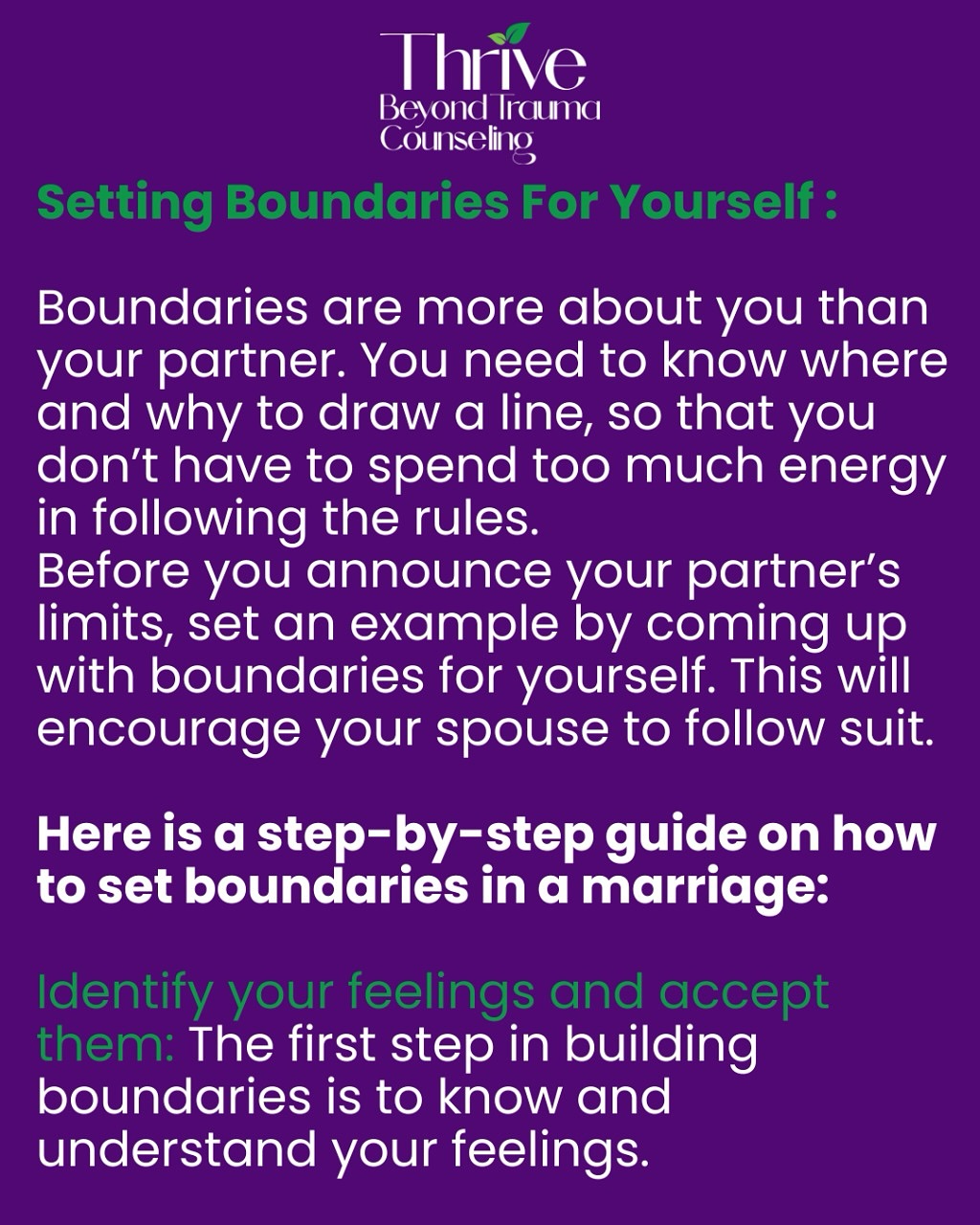
In the world of emotional and relational wellness, few tools are as vital as setting boundaries. Whether in personal relationships, at work, or with oneself, setting boundaries for yourself helps define emotional space, build self-worth, and prevent burnout. For individuals navigating trauma, anxiety, or relationship conflict, boundaries are not just helpful: they’re necessary.

At our therapy clinic in Farmington Hills, we guide clients through this transformative process, helping them move from confusion or guilt to clarity and confidence; both in person and through virtual therapy across Michigan.

What Does It Mean to Set Boundaries for Yourself?

Personal boundaries are the invisible lines that separate your needs, emotions, values, and time from the demands or expectations of others. These boundaries ensure that you prioritize your mental and emotional well-being without guilt. Healthy boundaries help you:

  • Recognize what behaviours are acceptable and what are not
  • Say no without overexplaining or feeling selfish
  • Protect your emotional energy
  • Create safety in relationships

At their core, boundaries represent self-awareness, self-advocacy, and emotional regulation.

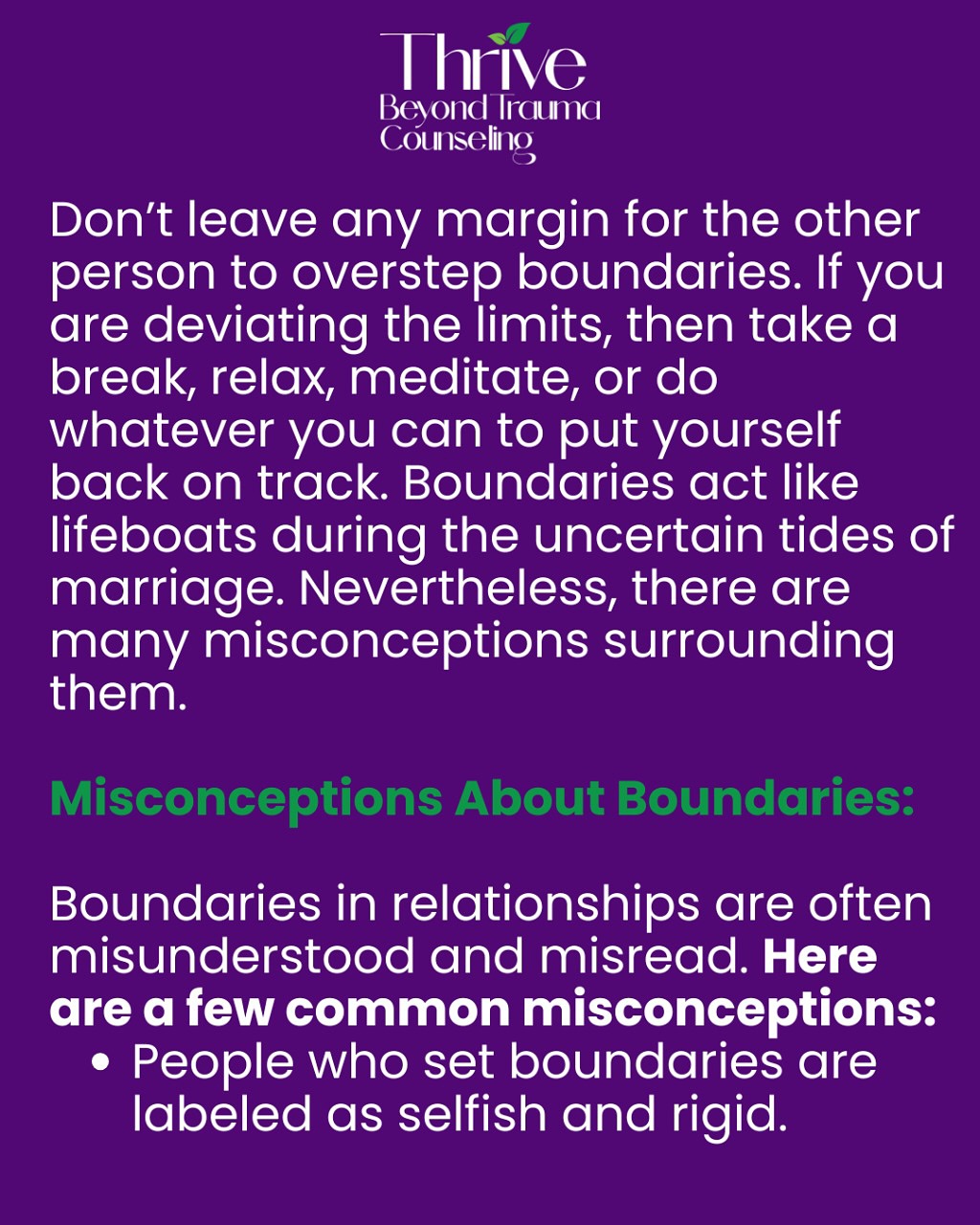
Common Misconceptions About Boundaries

There’s a persistent stigma around boundary-setting: one that prevents many from embracing this powerful act of self-care. Let’s debunk a few common myths:

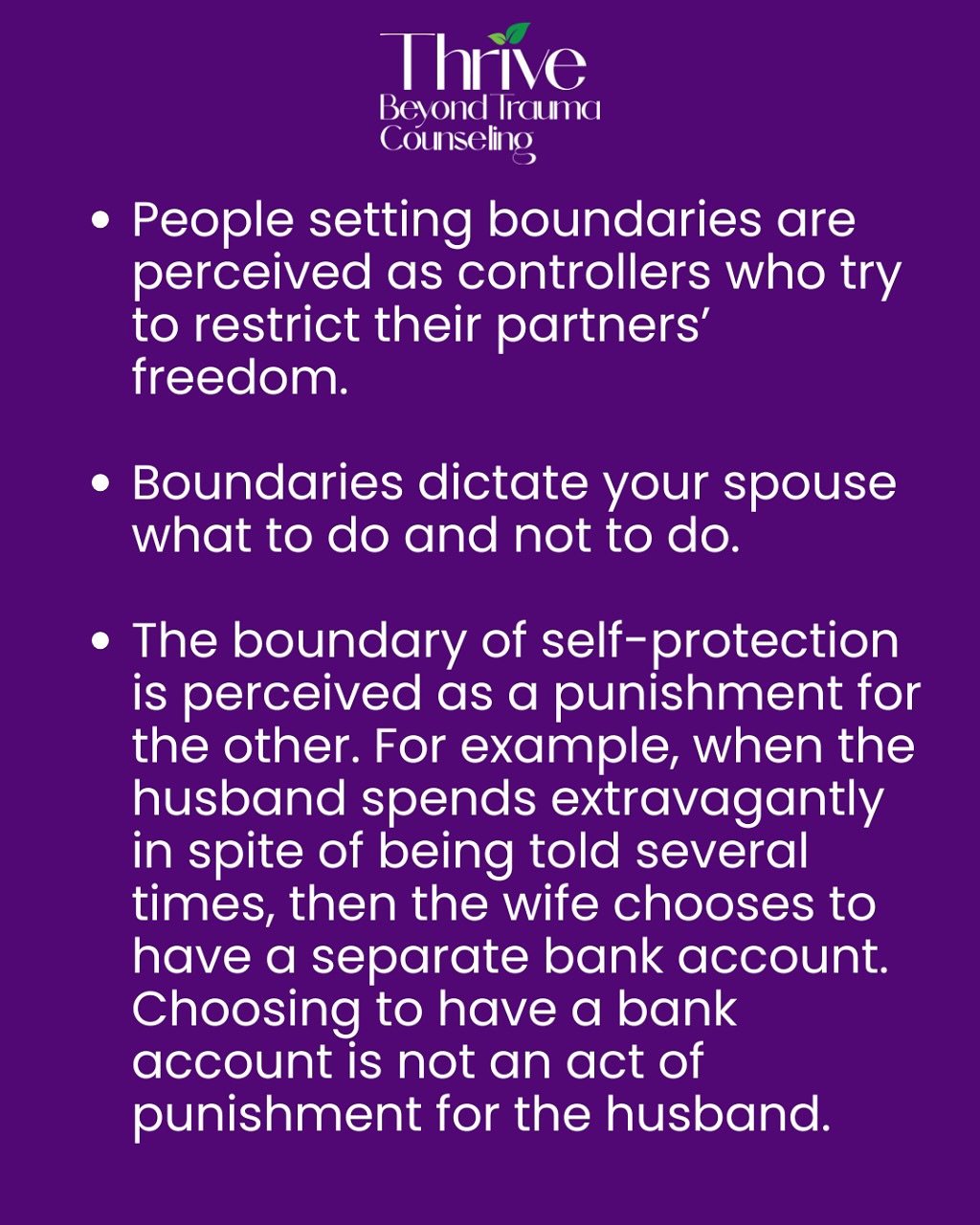
“Boundaries mean pushing people away.” | Truth: Boundaries invite closeness built on mutual respect, not fear or resentment.

“Setting boundaries is selfish.” | Truth: Taking care of your emotional health benefits everyone around you. Boundaries foster honest, sustainable relationships.

“Only people with trauma need boundaries.” | Truth: Everyone benefits from boundaries. They’re part of emotional hygiene, not a sign of brokenness.

“Boundaries are rigid or permanent.” | Truth: Like you, boundaries can evolve. Flexibility is a strength, not a weakness.

How to Set Healthy Boundaries

At our practice, we support clients in identifying and reinforcing healthy boundaries by guiding them through this process:

  • Identify Your Emotions and Needs
  • Tune into your feelings. Discomfort often signals a boundary violation.
  • Recognize Boundary Violations
  • Reflect on where your emotional, physical, or mental space feels invaded or overlooked.
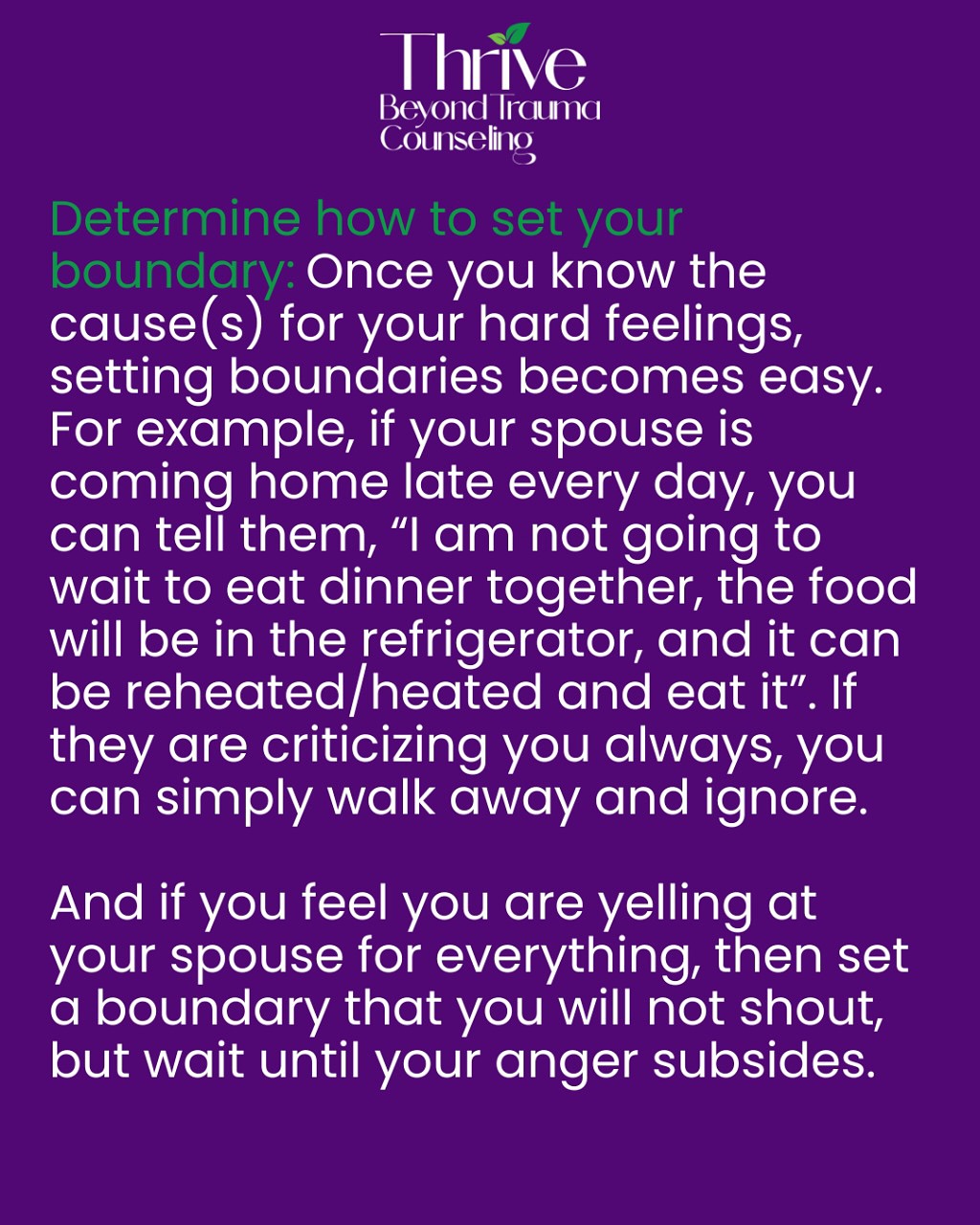
  • Decide What Boundaries You Need
  • Determine limits that support your well-being: emotionally, physically, mentally, or relationally.
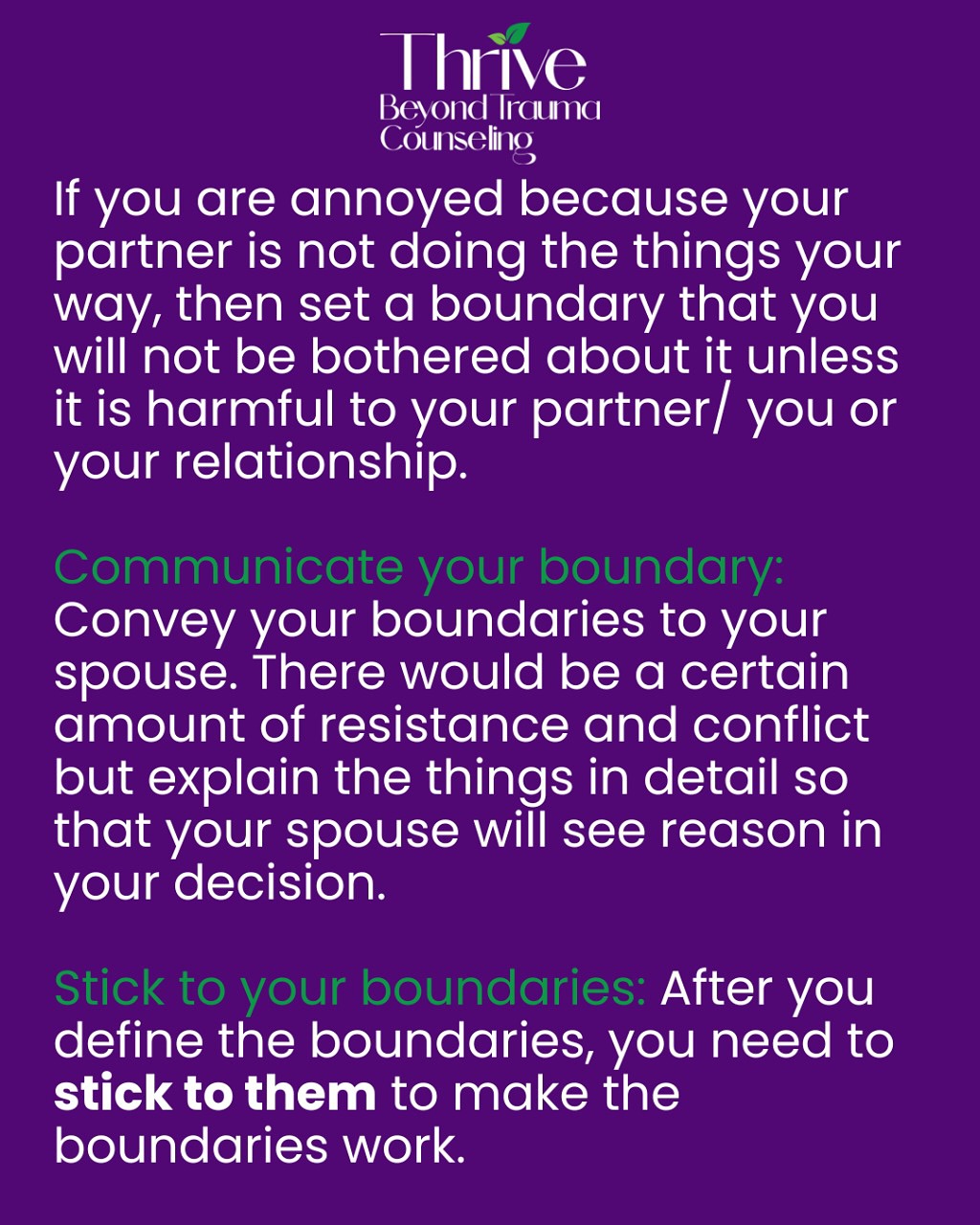
  • Communicate Clearly and Respectfully
  • Use “I” statements and express needs without blame or guilt.
  • Hold Your Boundaries Firmly
  • Reinforce your limits consistently, even if others resist at first.

Begin Your Boundary-Setting Journey With Professional Support

Whether you’re healing from a difficult relationship, managing anxiety, or recovering from trauma, learning to set boundaries can be a life-changing step. At our Farmington Hills therapy clinic, we specialize in guiding individuals through this journey with compassion, evidence-based techniques, and customized care. We also offer virtual therapy sessions across Michigan, making support accessible wherever you are.

Your Journey Is Separate, And Sacred

One of the most important shifts in this process is understanding that your healing is your own. It is not measured by how quickly you can trust again. It is not dependent on your partner’s progress. You are not “falling behind.” You are healing a neurological injury, not failing a relationship test. This means reclaiming your sense of safety, identity, intuition, and emotional stability; on your own terms.

At Thrive Beyond Trauma Counseling, we help you build clear, healthy boundaries that protect your peace, strengthen your relationships, and support lasting emotional well-being. If you’re ready to move from overwhelm to clarity, connect with us and begin your journey toward confident, self-respecting living today.

Address: Suite C, 37923 W. 12 Mile Rd, Farmington Hills, MI

Phone: (248) 392-3733

FOLLOW US ON

If you are in crisis or experiencing an emergency, please call 911 or your local emergency services, or visit the nearest emergency room.

Thrive Beyond Trauma Counseling does not provide crisis or emergency services.

Scroll to top